Temperature22 – 28 °C
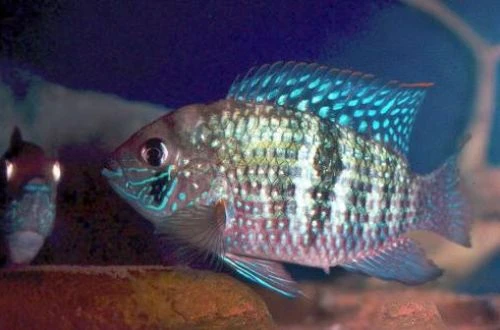
The Blue Acara, also known as the Electric Blue Acara, or by its scientific name Andinoacara pulcher, belongs to the Cichlidae family. Maintaining its popularity among aquarists for many years, this species attracts with its unpretentiousness in keeping and successful breeding. However, it is often observed that fish kept in home and commercial aquariums appear significantly paler than their wild counterparts. This phenomenon is primarily explained by hybridization and inbreeding.
Adult specimens of this fish reach a length of about 13–15 cm. The coloration of the Blue Acara can vary significantly but invariably includes blue and azure tones. A distinct dark spot is usually present in the center of the body, from which a stripe extends towards the eyes. Males can be distinguished by their pointed dorsal and anal fins, while females are generally smaller and have a more rounded shape.
The natural habitat of this species is limited regions of Venezuela located along the coast, as well as the islands of Trinidad and Tobago in South America. They can be found in a wide variety of aquatic conditions — from murky backwaters in tropical forests to clear mountain streams.
This peaceful and calm species coexists well with other fish of similar size, including South American cichlids, characins, and Corydoras catfish. However, it should be remembered that smaller aquarium inhabitants can accidentally become prey for the carnivorous Acara.
For comfortable keeping of a pair of Acaras, an aquarium of at least 100 liters is required. For decoration, it is recommended to use a soft sandy substrate and several shelters made of driftwood. Floating plants not only create a natural environment but also serve as an additional source of shade. Rooted live plant species should be avoided, as energetic Acaras tend to damage or uproot them. More resilient species, such as hardy Anubias, Echinodorus, and Java fern, have a good chance of thriving. Lighting should be subdued. Despite the significant diversity of biotopes in the wild, this fish is quite sensitive to water quality. The accumulation of nitrogenous compounds negatively affects the well-being of the fish and can lead to serious health problems. Therefore, critical conditions for successful keeping include a productive filter with effective biological filtration, as well as regular partial water changes and timely cleaning of the substrate.
By nature, the Blue Acara is a carnivorous fish. Its diet should consist mainly of protein-rich foods, such as pieces of mussels and shrimp, earthworms, or bloodworms. For those who prefer to avoid working with live or frozen foods, specialized freeze-dried products from trusted manufacturers will serve as an excellent alternative.
Breeding this cichlid in a home aquarium is considered one of the easiest. During the breeding season, the male and female form a pair, occupying a specific area or territory on the bottom. For spawning, the fish choose flat stones or wide plant leaves, both live and artificial. The female lays about 200 eggs and stays nearby, guarding them. The male, meanwhile, swims a little further, patrolling the territory and warding off intruders. The incubation period lasts approximately 28–72 hours, after which the hatched fry begin to swim freely in search of food after another 3 days. Nevertheless, they remain under the care of the female and do not leave the territory guarded by the male for about two more weeks. If the aquarium is small (e.g., 100 liters) and contains several fish, it is recommended to conduct spawning in a separate tank, as the male may show aggression during the breeding period, protecting the offspring. Soft, slightly acidic water with a temperature of about 28°C stimulates spawning. Systematically bringing water parameters to these values will accelerate the onset of spawning behavior.
The main cause of most diseases in these fish is unsuitable keeping conditions and poor-quality nutrition. If initial symptoms are observed, it is first necessary to check water parameters and the concentration of dangerous substances such as ammonia, nitrites, and nitrates. If the indicators deviate from the norm, they should be brought back into order, and only then should treatment begin.
When choosing a Blue Acara, preference should be given to active individuals with bright, clear coloration and undamaged fins. Avoid fish with signs of emaciation, sunken bellies, body film, or unnatural behavior, such as constantly staying near the surface or trying to hide in a corner. It is important to carefully inspect the aquarium in the store: the presence of sick or dead fish next to the chosen specimen is a serious reason to refuse the purchase. It is recommended to clarify the keeping conditions and diet with the seller, as the health of cichlids directly depends on water quality and regularity of feeding.
The essentials: size, tank volume, water parameters and care
An adult reaches 13–15 cm in length. Plan the tank around the maximum size: the fish quickly outgrows a cramped setup.
The recommended volume is 100 L. A smaller tank speeds up nitrate build-up and raises stress levels.
Temperature 22–28 °C, pH 6.5–8, hardness 5–26 dGH. Stability matters more than exact values: sudden swings are harder on the fish than a small deviation from the ideal.
Around 10 years when kept properly. Lifespan depends directly on tank volume, water quality and a varied diet.
Temperament: semi-peaceful (dangerous to smaller ones). Not a predatory species, but small fish that fit in its mouth will eventually be eaten.
Recommended setup: mixed (solitary / pair / group). Ignoring this is a common cause of stress and disease.
Diet type: any (universal). Feed small portions that are finished within a couple of minutes — overfeeding does more harm than underfeeding.
The scientific name of the species is Andinoacara pulcher, family Cichlids (Cichlidae). It also appears in the literature as: Aequidens pulcher, Aequidens pulchrus, Cychlasoma pulchrum.
The water suits 33 of 208 plants in the catalogue — the easiest ones are shown first.
African Water FernAmazon FrogbitAnubiasAsian WatermossBlue BuceBuceChristmas MossDwarf African FernFloating CrystalwortFloating Water SpriteGiant VallisneriaGlobefruit LudwigiaGreater DuckweedJapanese RushJava FernJava MossJungle ValNair's LagenandraPelliaSchismatoglottisStringy MossSüsswassertangTaiwan MossWater Spangles
This fish digs through the substrate and pulls rooted plants out.
African Onion PlantAfzelius's AnubiasAmazon SwordAnacharisArrowhead CryptBalansa Water TrumpetBanana PlantBarth's SwordBeckett's Water TrumpetBladderwort CarpetBog MossBoivin's AponogetonBolivian Chain SwordBrazilian PennywortBroad-leaf Water SpriteBrookweedBrown's LimnophilaCardinal PlantCaribbean MintCarolina Micro SwordCognac AmmanniaCongo AnubiasCreeping JennyCreeping RushCreeping SpotflowerCreeping StaurogyneCrinkled AponogetonCupheaCutleaf WatermilfoilCylindricfruit LudwigiaDark SwordDelta ArrowheadDense MayacaDitch StonecropDwarf AmbuliaDwarf Baby TearsDwarf CloverDwarf CloverDwarf HairgrassDwarf Hygrophila
Matched by family, categories and overlapping keeping conditions
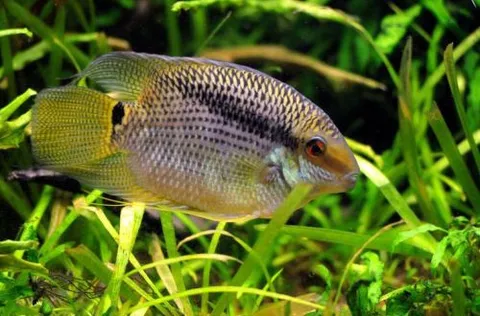
Mesonauta festivus
The Festivum cichlid, or Mesonauta festivus, belongs to the Cichlidae family. These fish are an excellent choice for beginner aquarists, as they are hardy and undemanding. They are easy to keep and breed, and can…
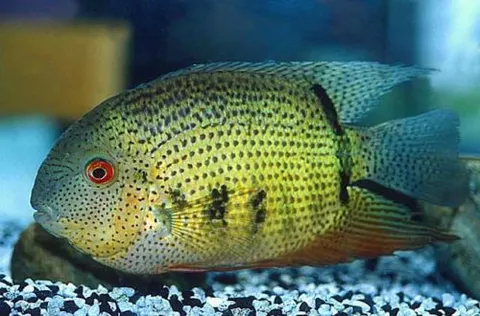
Heros notatus
The Cichlasoma Severum Notatus, scientifically known as Heros notatus, is a member of the Cichlidae family. This large and beautiful fish possesses a range of qualities highly valued by hobbyists: it is hardy, easy to…
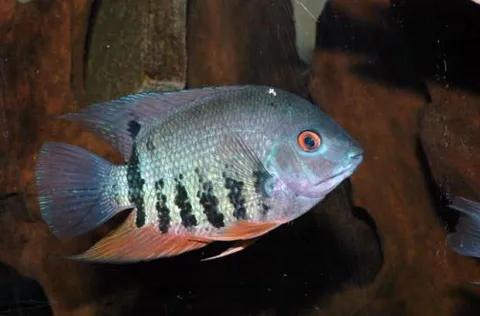
Heros efasciatus
Cichlidae is the family to which the Severum Efasciatus cichlid belongs, known by its scientific name Heros efasciatus. This cichlid, native to South America, is one of the most popular, alongside Discus. It attracts…
Thorichthys meeki
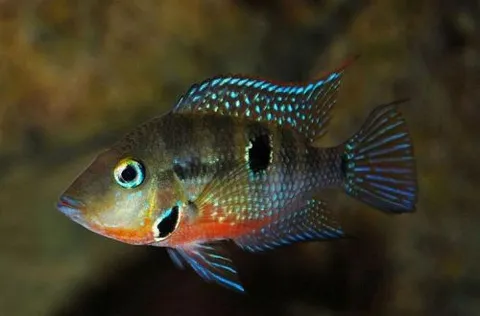
Thorichthys meeki, also known as the Firemouth Cichlid, bears the scientific name Thorichthys meeki and belongs to the family Cichlidae. This species attracts the attention of aquarists, especially American cichlid…