Temperature18 – 24 °C
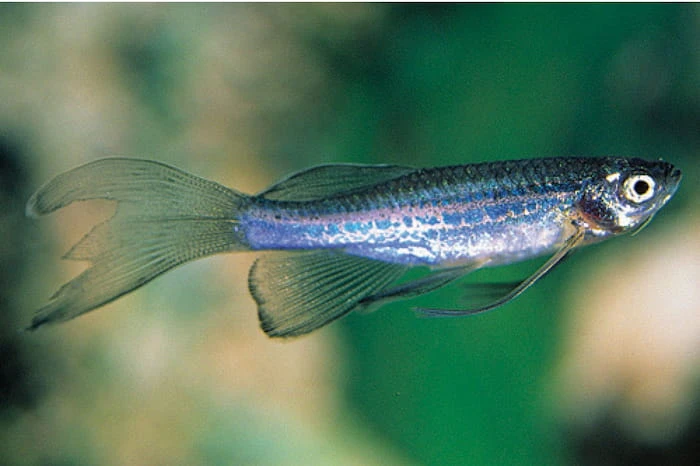
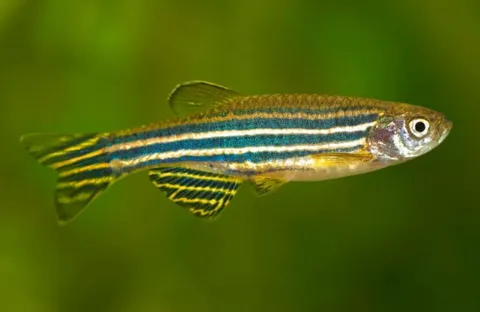
The Blue Danio, known by its scientific name Danio rerio, belongs to the carp family (Cyprinidae). This variation of the classic Danio rerio stands out for its silvery-blue coloration, consisting of numerous small speckles, as well as graceful long fins. This species likely originated from the "Leopard Danio," a selective breeding form, as evidenced by its characteristic spotted pigmentation resembling a scattering of fine blue powder.
These slender fish, growing no more than 4 cm in length, have a laterally compressed body and short barbels at the corners of their mouths, indicating their kinship with other cyprinids. A characteristic feature is their long, gracefully flowing fins. The body's base coloration consists of numerous small blue dots, which from a distance merge into a solid background. These are complemented by several noticeable pinkish-golden stripes running from the tail to the mid-body.
The Blue Danio is not found in the wild, as it was selectively bred from the Leopard Danio species.
For comfortable existence, Blue Danios need the company of their kin, so the best solution would be to acquire a group of five or more individuals. An insufficient number of these fish in a school can lead to their lethargy and dull coloration, and keeping them completely alone often results in death. Other Danio species, as well as many active and peaceful small fish, will make excellent companions. It is important to note that the long fins of Blue Danios can attract the attention of some species, such as barbs, which may instinctively nip at them, causing injuries. Therefore, before introducing new tankmates, ensure that their behavior does not pose a threat to the Danio's fins.
These fish require clean water with moderate current, which can be easily provided by installing a powerful filter that will be responsible for both purification and water circulation. The lighting in the aquarium should be subdued. It is important to perform weekly partial water changes. When decorating the aquarium, it is recommended to use fine gravel or sand as a substrate and plant a large number of plants in groups along the walls, leaving enough open swimming space.
These fish are unpretentious in their diet and accept almost any food: live (such as bloodworms, tubifex), frozen, and dry commercial foods. Nowadays, specialized foods for all Danio species, containing freeze-dried meat, are readily available in pet stores, eliminating the need to constantly buy live food. Nevertheless, it is sometimes useful to diversify the diet, for example, by offering live bloodworms — then you can observe the fish's hunting behavior.
Breeding Blue Danios in captivity is as easy as with their other relatives. Before spawning, the fish form a pair, which is then moved to a separate tank. First, the female is introduced, who is larger than the male and has a more rounded abdomen; the male joins her a day later. The minimum volume for a spawning tank is 20 L. The bottom is covered with a 4–5 cm layer of large pebbles, and a few plants will help diversify its appearance. For equipment, an aerator or an air-driven filter is sufficient, as a regular filter can suck in eggs and fry. After the pair is in the separate tank, adding a couple of glasses of cold water can stimulate spawning, mimicking the rainy season. The female lays eggs in open water, where the male fertilizes them. As they sink to the bottom, the eggs roll between the pebbles or marbles, protecting them from being eaten by the parents. After spawning is complete, the pair is returned to the main aquarium. Fry hatch in approximately 7 days.
Under favorable conditions, fish usually do not encounter health problems. However, if maintenance parameters deteriorate, the external body coverings are primarily affected by fungal and bacterial infections, as well as the fins and tail.
When selecting individuals in a store, pay attention to their activity: healthy fish stay in a school, swim quickly, and show no signs of lethargy or apathy. Inspect the skin for the absence of spots, ulcers, film, or fin damage, as these fish are prone to bacterial and fungal infections under poor keeping conditions. Avoid buying fish with severely sunken bellies or body deformities. Since this species is often sold with long fins, check their integrity — they should not be nipped or show signs of injury from aggressive tankmates in the community aquarium.
The essentials: size, tank volume, water parameters and care
An adult reaches 4–5 cm in length. Plan the tank around the maximum size: the fish quickly outgrows a cramped setup.
The recommended volume is 80 L. A smaller tank speeds up nitrate build-up and raises stress levels.
Temperature 18–24 °C, pH 6–8, hardness 5–19 dGH. Stability matters more than exact values: sudden swings are harder on the fish than a small deviation from the ideal.
Around 4 years when kept properly. Lifespan depends directly on tank volume, water quality and a varied diet.
Temperament: peaceful, active/mobile. Keep this in mind when choosing tank mates.
Recommended setup: schooling (usually from 5–6 individuals and more). Ignoring this is a common cause of stress and disease.
Diet type: any (universal). Feed small portions that are finished within a couple of minutes — overfeeding does more harm than underfeeding.
The scientific name of the species is Danio rerio, family Cyprinids (Cyprinidae). It also appears in the literature as: Barilius rerio, Brachydanio frankei, Brachydanio rerio.
The water suits 196 of 208 plants in the catalogue — the easiest ones are shown first.
Afzelius's AnubiasAnacharisAnubiasBrazilian PennywortDwarf CloverDwarf CloverDwarf HygrophilaDwarf SagittariaDwarf ValGuppy GrassHornwortJava FernJava MossMoneywortMud SwordNarrow Leaf AnacharisNarrow-leaf CloverStringy MossSüsswassertangTaiwan MossTape GrassTemple PlantUssuri WatermilfoilWater Wisteria
Matched by family, categories and overlapping keeping conditions
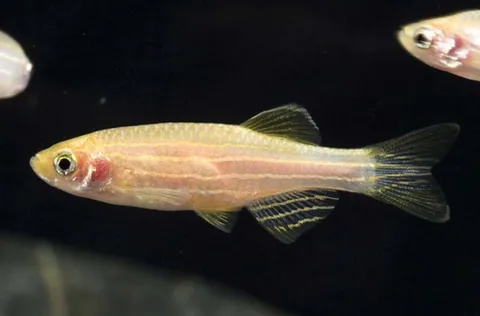
Danio rerio
The Albino Zebra Danio, scientifically known as Danio rerio, is a member of the Cyprinidae family. This fish is a natural morphological form of the Zebra Danio and is found in the wild. Its key difference from its…
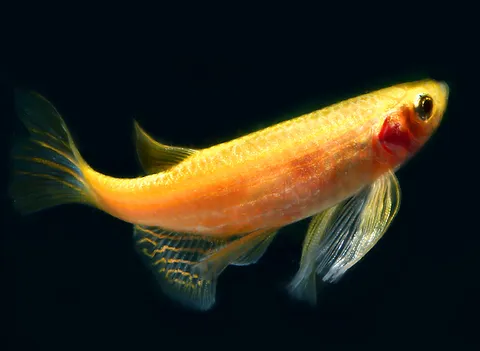
Danio rerio
A representative of the Cyprinidae family, known as the Gold Danio, bearing the scientific name Danio rerio, is similar in appearance and behavior to its brethren, with the exception of one important feature – its…
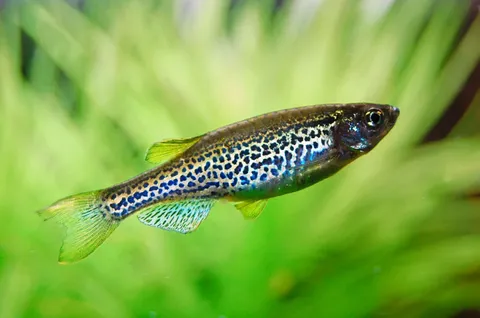
Danio rerio
The Leopard Danio, known scientifically as Danio rerio, belongs to the family Cyprinidae. This easily recognizable and vibrant fish is considered one of the most popular varieties of Danio rerio. It is not found in the…
Danio rerio
The Zebra Danio (scientific name Danio rerio) belongs to the carp family (Cyprinidae). This species was one of the first tropical fish to be actively bred as aquarium pets. Currently, this fish is very popular due to…