Temperature18 – 24 °C
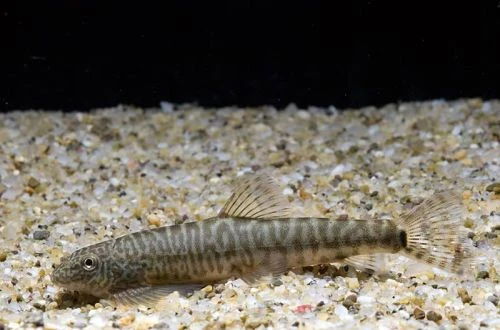
Erromyzon sinensis, otherwise known as the Chinese Erromyzon, belongs to the family Balitoridae, or river loaches. This is the scientific name of the species. Outside of Asia, it is not often found in aquariums. This species presents certain difficulties in keeping, and in combination with its modest coloration, this makes it attractive only to a small group of enthusiastic aquarists.
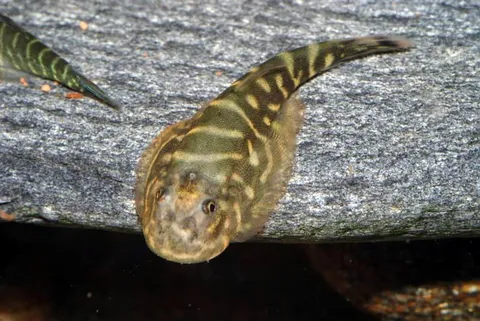
Adult fish reach a length of about 4 cm. Their body is elongated and slightly flattened. Paired fins are positioned horizontally, shifted towards the lower part of the body, which helps the fish to firmly attach to various surfaces, such as rocks, and effectively resist strong currents. The coloration of Erromyzon sinensis is predominantly dark, complemented by a pattern of light lines and irregularly shaped speckles. Distinguishing males from females is quite difficult, as sexual dimorphism is weakly expressed.
The natural habitat of this species is in southern China. Erromyzon is found in the upper and middle reaches of the Zhujiang River, or Pearl River, which is the third longest in the country. Its range is limited to the Guangxi and Guangdong provinces. It prefers sections of rivers and their tributaries that flow through hilly terrain, where the water is often fast and turbulent, forming numerous cascades and rapids. Aquatic vegetation here mainly grows along the shoreline. The bottom consists of rocky and sandy areas, among which large boulders and fragments of rock are found.
Erromyzon sinensis are territorial but get along well with their conspecifics; the main condition is to place food sources in different places to avoid competition. They are peaceful towards other aquarium inhabitants. However, finding suitable tank mates for them will be difficult due to their specific habitat requirements. For example, some species of gastromyzons and other non-aggressive loaches can be considered as potential tank mates.
For keeping 3–4 individuals of this species, an aquarium of 60–70 L is required. It is very important to provide clean, oxygen-rich flowing water and a strong internal current for the Chinese Erromyzon. A powerful internal filter combined with an aeration system can solve this problem. It is desirable that the water volume in the aquarium be renewed 10–15 times per hour; for example, for a 60-liter tank, the filter should pump 600 liters of water hourly. To maintain biological balance, it is necessary not only to rely on the filter's operation but also to weekly replace 30–50% of the water volume with fresh water, and to promptly remove accumulating organic waste, such as uneaten food residues and excrement. The aquarium decor should be simple. Due to the strong current, light or unsecured decor, as well as most live plants, should not be used. It is quite sufficient to place a layer of stones, boulders, and several large snags on the bottom. Under bright lighting, the surface of the snags will become an ideal place for the active growth of algae, which will serve as an additional food source for the fish.
In their natural habitat, these fish feed on so-called biofilm, which forms on rocks and consists of algae, as well as the small invertebrates inhabiting them. In aquarium conditions, their diet should also include both plant and protein components. Given the strong water movement in their habitat, most common foods will quickly be dispersed throughout the aquarium. Therefore, specialized gel-like foods, resembling a thick paste, which can be applied directly to the substrate, will be the optimal choice.
At the time of writing this article, the authors have only found one confirmed report of successful breeding of this fish species in home aquariums. Aquarist Gerhard Otto from Germany reported that he managed to obtain fry from one pair three times, but he was unable to raise them to adulthood. According to his observations, the fish do not show parental care. Immediately after spawning, the eggs are left to fend for themselves. They sink to the bottom and fall into the gaps between the stones. The hatched fry also spend the first days of their lives in shelters, only swimming out at night.
Health problems in these fish arise only in the presence of injuries or keeping in unsuitable conditions, which leads to a weakening of the immune system and the subsequent occurrence of various diseases. At the first signs of illness, it is necessary first to check the water parameters for exceeding permissible values or the presence of toxic substances (such as nitrites, nitrates, ammonia). If deviations are found, all indicators should be normalized, and then treatment should begin.
When purchasing, caution should be exercised, as this species often goes on sale in an emaciated state due to specific feeding requirements and transport conditions. Healthy individuals should be active, have rounded sides, and constantly be searching for food on the surfaces of decorations or aquarium glass. Avoid acquiring fish with sunken bellies, signs of apathy, or fin damage. — Inspect the fish for external parasites or ulcers. — Ensure that the fish's breathing is even, without signs of oxygen deprivation. — Check that there are no dead individuals in the tank with the fish, as this may indicate problems with the entire batch. — Ask the seller what the fish are fed, as adaptation to artificial foods can be difficult for emaciated specimens.
The essentials: size, tank volume, water parameters and care
An adult reaches 4–6 cm in length. Plan the tank around the maximum size: the fish quickly outgrows a cramped setup.
The recommended volume is 80 L. A smaller tank speeds up nitrate build-up and raises stress levels.
Temperature 18–24 °C, pH 6–7.5, hardness 1–8 dGH. Stability matters more than exact values: sudden swings are harder on the fish than a small deviation from the ideal.
Around 4 years when kept properly. Lifespan depends directly on tank volume, water quality and a varied diet.
Temperament: peaceful, active/mobile. Keep this in mind when choosing tank mates.
Recommended setup: schooling (usually from 5–6 individuals and more). Ignoring this is a common cause of stress and disease.
Diet type: plant-based with meat additives. Feed small portions that are finished within a couple of minutes — overfeeding does more harm than underfeeding.
The scientific name of the species is Erromyzon sinensis, family River Loaches (Balitoridae).
The water suits 195 of 208 plants in the catalogue — the easiest ones are shown first.
Afzelius's AnubiasAnacharisAnubiasBrazilian PennywortDwarf CloverDwarf CloverDwarf HygrophilaDwarf SagittariaDwarf ValGuppy GrassHornwortJava FernJava MossMoneywortMud SwordNarrow Leaf AnacharisNarrow-leaf CloverStringy MossSüsswassertangTaiwan MossTape GrassTemple PlantUssuri WatermilfoilWater Wisteria
Matched by family, categories and overlapping keeping conditions
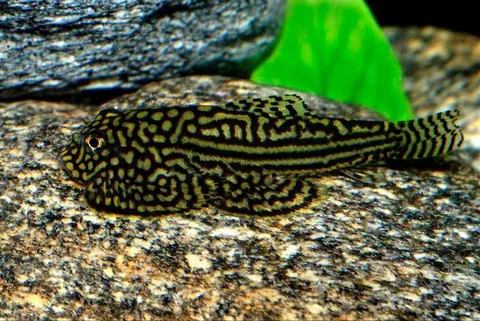
Sewellia lineolata
Sewellia lineolata, scientifically known as Sewellia lineolata, belongs to the family Balitoridae, or river loaches. This species of gastromyzon is quite popular due to its unique body pattern and relative ease of…
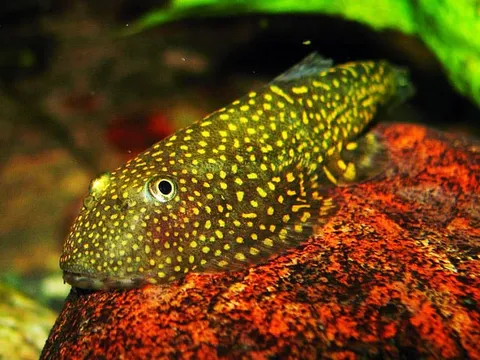
Gastromyzon stellatus
Endemic to the island of Borneo, Gastromyzon stellatus is known from the Sarawak, Sadong and Lupar river drainages in the south of the Malaysian state of Sarawak, in the north-west of the island. This species belongs to…
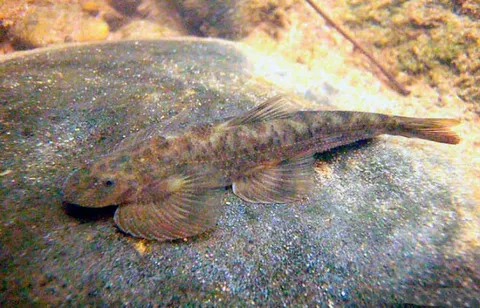
Hemimyzon nanensis
Hemimyzon nanensis, known as the Nan River Gastromyzon, belongs to the family Balitoridae. This fish is native to Southeast Asia, specifically Thailand, which is part of the Indochina region. It was first discovered in…
Gastromyzon zebrinus
The Zebra Gastromyzon, also known by its scientific name Gastromyzon zebrinus, belongs to the family Balitoridae. This species does not attract the attention of all aquarists, which is due to its unusual appearance,…