Temperature23 – 26 °C
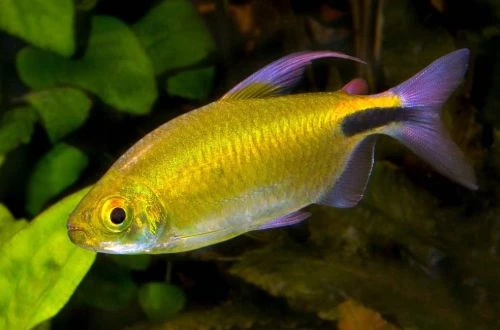
The Bryconalestes longipinnis, also known as the Congo Diamond Tetra or Bryconalestes longipinnis (scientific name), belongs to the family Alestidae, which includes African Tetras. These fish are a beautiful addition to almost any freshwater aquarium, look magnificent in a school, easily coexist with many other species, and are quite undemanding to care for. Their widespread distribution is only hindered by some difficulties in home breeding, although professional breeders are already successfully overcoming them.
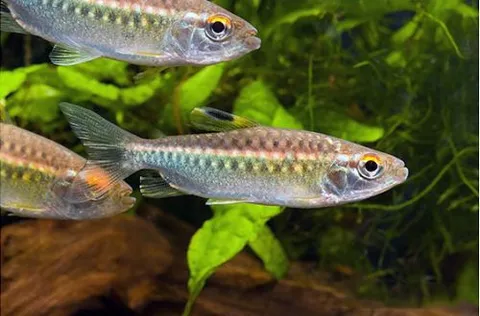
Adults grow to approximately 12 cm in length. Males are usually larger, their bodies are more brightly colored, and the dorsal fin is noticeably elongated and has a beautiful turquoise hue; the other fins and tail are colored similarly. Body coloration can vary from golden to greenish depending on the lighting.
The natural habitat of this species is West and Central Africa: its range extends from Gambia to Gabon and the Democratic Republic of Congo. The fish inhabit large rivers, streams, and tributaries flowing under the canopy of tropical forests, and are sometimes found in brackish sections of river estuaries that flow into the sea.
This species is active, peaceful, and schooling, so it is recommended to acquire a group of at least 6 individuals. The Congo Diamond Tetra coexists well with many fish of similar size and temperament. However, for small or slow-moving species, it can be a source of excessive discomfort. Ideal tank mates are considered to be fish from the same natural range, such as the Congo Tetra or African Red-Eyed Tetra.
The most important condition for successful keeping is the presence of extensive open spaces for swimming. Therefore, the aquarium should not be overloaded with excessive decor; a small piece of driftwood and a few groups of plants are sufficient. Tall plants are best placed along the walls, and low-growing ones in the center. It has been observed that fish display the brightest coloration under dim lighting and against a dark substrate. In natural waters where this species lives, the bottom is often covered with fallen leaves and various plants, which release tannins upon decomposition, giving the water a slight brown tint. Similar conditions can be created in a home aquarium; sometimes it is enough to use a filter with an alder cone filler to make the fish feel comfortable. The Congo Diamond Tetra is very sensitive to increased nitrate levels, so their concentration must be regularly monitored. As a preventive measure, about 20% of the water volume should be replaced weekly with fresh water. Another important aspect is the oxygen level in the water; make sure that diffusers provide enough fine bubbles for effective gas exchange.
Often, these fish in stores are wild-caught, so dry commercial foods may not immediately suit them. It is recommended to ask the seller what food they use for Congo Diamond Tetras to continue feeding the fish similar products. It is worth noting that these fish prefer protein-rich food, so they will gladly feast on chopped earthworms or shrimp meat.
Significant difficulties are often reported in breeding the Congo Diamond Tetra at home, but it is quite achievable. This species is an egg-layer, and the fish tend to eat their offspring, so it is recommended to spawn them in a separate tank. To stimulate spawning, the water temperature should be set between 23–26°C, ensuring soft water (dGH 2–5) and a slightly acidic reaction (pH 6.0–6.5), and a large amount of fresh or frozen protein food should be included in their diet. When the females become noticeably rounded, they, along with several of the largest and brightest males, are moved to a pre-prepared spawning aquarium. The conditions in it should be identical: the same water parameters, dim lighting, and weak filtration (a simple sponge filter is sufficient). The bottom of the aquarium should be densely planted with fine-leaved plants or mosses; such a plant carpet perfectly protects the eggs from being eaten by the fish. At the end of spawning, which is determined by noticeably thinner females, the adult fish are returned to the main aquarium. Several hundred orange eggs can be found among the thickets. From this moment, it is necessary to install as many diffusers as possible and connect them to an air pump, ensuring effective aeration and oxygen saturation of the water. Fry will appear in 4–6 days, and after another two days, they will begin to swim freely. Aeration should be reduced so that the bubble flow does not disturb the fry. In the early stages of life, fry are fed special microscopic food from a pet store or live microorganisms, such as paramecia.
Organic pollutants (nitrates, nitrites, etc.) and insufficient dissolved oxygen levels are particularly dangerous for the health of the fish. Adherence to these two conditions and the creation of a balanced aquarium ecosystem help minimize the risk of diseases, as most health problems are caused by improper keeping.
When selecting individuals, attention should be paid to their activity and the integrity of their fins. Healthy fish should show curiosity, stay in a school, and have no signs of damage or white spots on their bodies. Avoid specimens with clamped fins, irregular breathing, or sluggish behavior, as this may indicate stress or the presence of infections. Since the species is very active, it is important to ensure that the fish are kept in spacious conditions in the store, and not in overcrowded tanks where the risk of disease development is significantly higher. Inspect the scales for the absence of ulcers and ensure that the fish's eyes remain clear and bright.
The essentials: size, tank volume, water parameters and care
An adult reaches 12.5–13 cm in length. Plan the tank around the maximum size: the fish quickly outgrows a cramped setup.
The recommended volume is 150 L. A smaller tank speeds up nitrate build-up and raises stress levels.
Temperature 23–26 °C, pH 6–7.5, hardness 5–19 dGH. Stability matters more than exact values: sudden swings are harder on the fish than a small deviation from the ideal.
Around 6 years when kept properly. Lifespan depends directly on tank volume, water quality and a varied diet.
Temperament: peaceful, active/mobile. Keep this in mind when choosing tank mates.
Recommended setup: medium group (6–8 individuals). Ignoring this is a common cause of stress and disease.
Diet type: high protein (predominantly meat). Feed small portions that are finished within a couple of minutes — overfeeding does more harm than underfeeding.
The scientific name of the species is Bryconalestes longipinnis, family African Tetras (Alestidae). It also appears in the literature as: Alestes chaperi, Alestes longipinnis, Brachyalestes longipinnis.
The water suits 197 of 208 plants in the catalogue — the easiest ones are shown first.
Afzelius's AnubiasAnacharisAnubiasBrazilian PennywortDwarf CloverDwarf CloverDwarf HygrophilaDwarf SagittariaDwarf ValGuppy GrassHornwortJava FernJava MossMoneywortMud SwordNair's LagenandraNarrow Leaf AnacharisNarrow-leaf CloverStringy MossSüsswassertangTaiwan MossTape GrassTemple PlantUssuri Watermilfoil
Matched by family, categories and overlapping keeping conditions
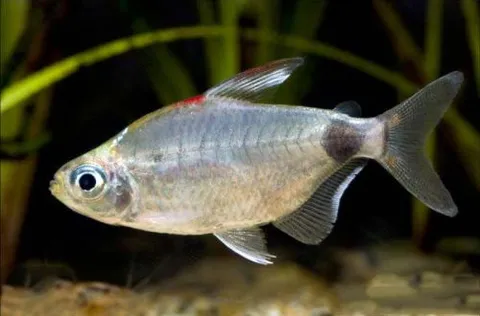
Bathyaethiops breuseghemi
Breuseghem's Tetra, scientifically known as Bathyaethiops breuseghemi, is a member of the family Alestidae, or African Tetras. Its homeland is the African continent, where it is found in the middle Congo River basin, in…
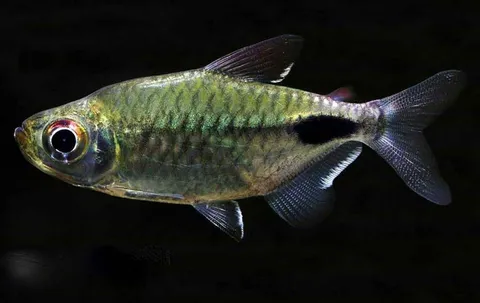
Brachypetersius altus
The Alestes Tetra (Brachypetersius altus), a member of the Alestidae family (African Tetras), is native to the waters of West Africa. It can be found in the middle Congo River basin, as well as in numerous tributaries…
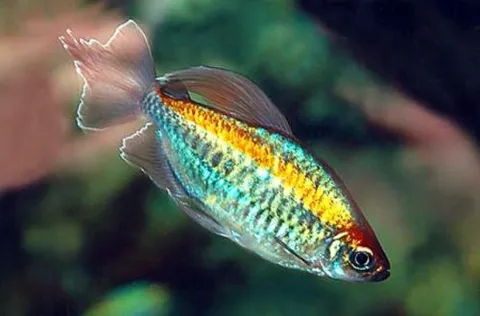
Phenacogrammus interruptus
Phenacogrammus interruptus, more commonly known as the Congo Tetra, belongs to the family Alestidae. This species is considered one of the most attractive among African characins, captivating observers with its…
Arnoldichthys spilopterus
The African Red-Eyed Tetra, scientifically known as Arnoldichthys spilopterus, belongs to the family Alestidae (African Tetras). This hardy and undemanding fish, both in terms of care and breeding, is distinguished by…