Temperature25 – 28 °C
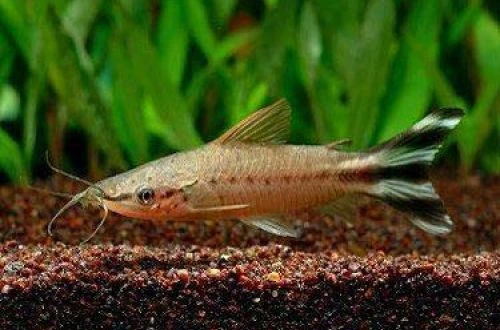
Dianema urostriatum, more commonly known as the Striped-tailed Dianema or Flagtail Catfish, belongs to the family Callichthyidae (Armored or Callichthyid Catfishes). Its origin is associated with the vast Amazon River basin in South America, where the main population inhabits the middle reaches, amidst tropical forests. This fish can be found ubiquitously in small streams and rivers, where it occupies both the water column and the bottom layer.
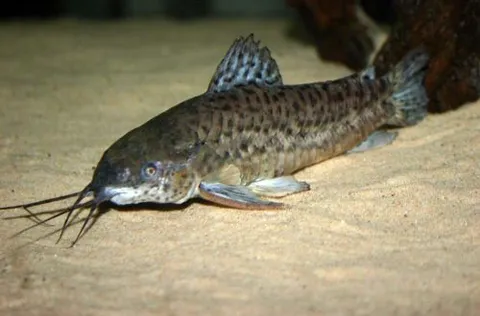
Adult specimens of this fish reach a length of about 10 cm. Its appearance differs slightly from typical catfishes, which are usually characterized by a somewhat flattened body and a massive head with a wide mouth. The morphological features of the Flagtail Catfish are explained by its lifestyle: it spends significant time swimming rather than on the bottom, which has left its mark. Therefore, its body is robust, fins are well-developed, and the head has a pointed shape. One of the most recognizable features of the species is its tail, adorned with a striped pattern of alternating black and white horizontal bands. The body coloration of the fish is gray with dark speckles.
The species inhabits South America, predominantly in the Amazon River basin and its tributary, the Rio Negro. In nature, it occupies slow-flowing tributaries and streams with shaded areas, where the bottom is covered with soft sand or silt. The biotope is characterized by dense riparian and floating vegetation, creating diffused lighting.
This fish is distinguished by its mobility and friendly disposition. It prefers to be in a group, optimally 3–4 individuals. Towards other aquarium inhabitants, the Flagtail Catfish is peaceful. It can certainly be kept together with many non-aggressive and non-territorial fish species. For example, good compatibility is observed with related Corydoras, but it should be noted that they do not get along well with some cichlids, such as Geophagus.
For these swimming fish, the optimal aquarium volume starts from 140 L, which corresponds to a side length of 80 cm. When setting up the tank, it is important to provide both open areas for swimming and secluded spots for hiding. Dense plant thickets, snags, pieces of bark, coconut shells, and large leaves of some trees are suitable for this purpose. Dim lighting is recommended; this can be achieved with floating plants that will create natural shading. Successful and long-term keeping of these fish depends on maintaining stable water parameters within the permissible values of key hydrochemical indicators (pH and dGH). Regular aquarium maintenance, including partial water changes and removal of organic debris, will help prevent the accumulation of harmful waste products.
Usually, acclimatized individuals, as well as those bred and raised in aquarium conditions, easily adapt to offered dry food. Nevertheless, for their health, it will be very beneficial to supplement their diet with live or frozen foods, such as brine shrimp, daphnia, or bloodworms.
Spawning is paired and stimulated by imitating the rainy season through frequent water changes and a temperature drop of 2–4 °C. The male builds a bubble nest under broad plant leaves or artificial substrates. After laying up to 500 eggs, the male guards the clutch. The incubation period lasts up to 5 days. Fry are extremely sensitive to water quality and the presence of protein contamination in the first days of life.
Fish are susceptible to diseases typical for armored catfishes when keeping conditions are violated. High sensitivity to water quality and organic accumulation can lead to fin and skin damage by bacterial infections or mold fungi. Prevention requires regular filtration, aeration, and weekly water changes, as well as the use of soft substrate to prevent damage to their delicate barbels.
When purchasing, one should choose active individuals with clean scales and undamaged fins. It is important to check the integrity of the barbels, as their absence indicates improper keeping conditions in the store. A healthy fish should show interest in food and have no signs of emaciation or whitish film on its body. It is recommended to acquire a group of 3–5 individuals to ensure natural social behavior.
The essentials: size, tank volume, water parameters and care
An adult reaches 10 cm in length. Plan the tank around the maximum size: the fish quickly outgrows a cramped setup.
The recommended volume is 140 L. A smaller tank speeds up nitrate build-up and raises stress levels.
Temperature 25–28 °C, pH 6–8, hardness 5–19 dGH. Stability matters more than exact values: sudden swings are harder on the fish than a small deviation from the ideal.
Around 8 years when kept properly. Lifespan depends directly on tank volume, water quality and a varied diet.
Temperament: peaceful, active/mobile. Keep this in mind when choosing tank mates.
Recommended setup: small group (3–4 individuals). Ignoring this is a common cause of stress and disease.
Diet type: any (universal). Feed small portions that are finished within a couple of minutes — overfeeding does more harm than underfeeding.
The scientific name of the species is Dianema urostriatum, family Armored Catfish (Callichthyidae). It also appears in the literature as: Decapogon urostriatum.
The water suits 185 of 208 plants in the catalogue — the easiest ones are shown first.
Afzelius's AnubiasAnacharisAnubiasBrazilian PennywortDwarf CloverDwarf CloverDwarf HygrophilaDwarf SagittariaDwarf ValGuppy GrassHornwortJava FernJava MossMoneywortMud SwordNair's LagenandraNarrow Leaf AnacharisNarrow-leaf CloverSüsswassertangTaiwan MossTape GrassTemple PlantUssuri WatermilfoilWater Wisteria
Matched by family, categories and overlapping keeping conditions
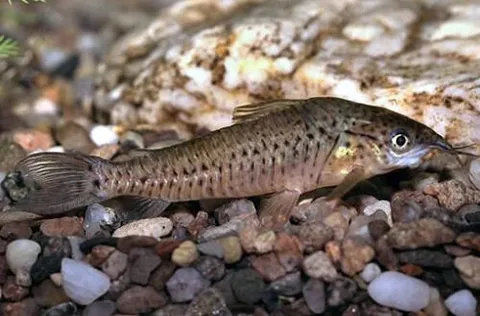
Dianema longibarbis
The Long-whiskered Dianema, also known as Bronze Dianema (scientific name Dianema longibarbis), belongs to the family Callichthyidae – armored or callichthyid catfishes. This species is perfectly suited for keeping in…
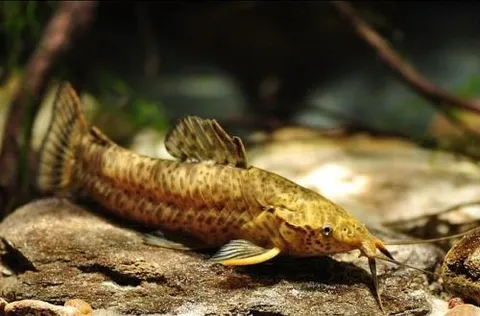
Megalechis picta
Megalechis picta is a representative of the Callichthyidae family, known for its unpretentiousness and hardiness. It can forgive some mistakes made by beginner aquarists, making it an excellent choice for a novice's…
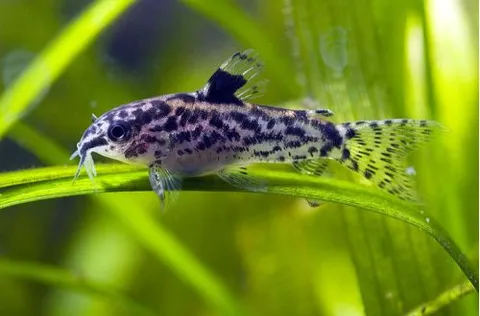
Aspidoras pauciradiatus
A member of the Callichthyidae family, the Aspidoras catfish, known as Aspidoras pauciradiatus, is an excellent choice for almost any community aquarium. It adapts to various diets and keeping conditions, demonstrating…
Megalechis thoracata
Megalechis thoracata, more commonly called Thoracatum (though the spelling Taracatum is also encountered), belongs to the family Callichthyidae – the armored or callichthyid catfishes. This medium-sized fish is known…