Temperature20 – 26 °C
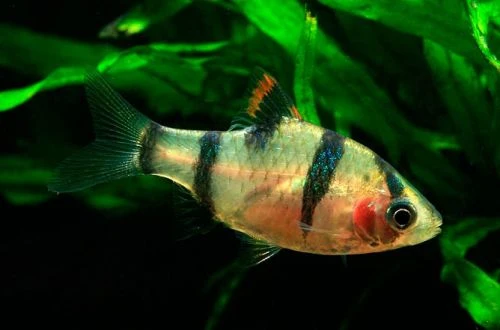
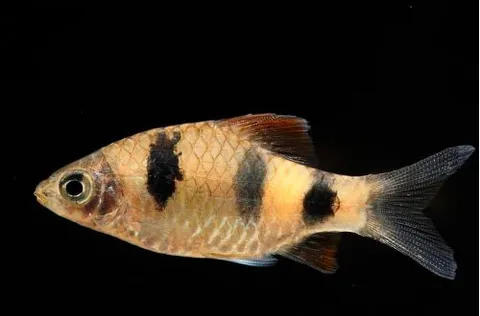
A representative of the Cyprinidae family, known scientifically as Puntigrus partipentazona, or the Four-banded Barb, is not frequently encountered in aquaristics. Often, these fish are sold alongside other barb species in wholesale batches, leading to them being mistakenly identified as, for example, Tiger Barbs. This is likely why their presence in home aquariums is significantly wider than generally assumed. This species is undemanding to keep and coexists well with other aquarium inhabitants of similar size.
Adults of this species, reaching approximately 4 cm in length, closely resemble the widely known Sumatran Barb in appearance. They possess a similar body shape and a recognizable pattern. Their coloration is silvery, quite light, with four distinct vertical stripes. The fins and tail remain translucent, and a small red spot can be seen on the dorsal fin. Sexual dimorphism in these fish is weakly expressed, and clear differences between males and females are practically imperceptible.
The natural habitat of this species includes freshwater bodies of Southeast Asia. Its range is quite extensive, covering rivers and lakes in Vietnam, Cambodia, Laos, Thailand, and peninsular Malaysia. It particularly favors areas with abundant aquatic vegetation, where there are also many algae and various phytoplanktonic organisms.
This active and peaceful fish coexists well with other species of comparable size. However, the excessive activity of the Four-banded Barb can sometimes disturb slower-moving tankmates. Additionally, they tend to nip at long fins, which can lead to damage. To keep them in good condition, it is recommended to keep these fish in groups of 8 to 10 individuals.
For a small group of these fish, the optimal aquarium volume starts from 80 liters. There is freedom of choice in aquarium decoration, as the Four-banded Barb can adapt even to conditions with minimal decor. Nevertheless, to create the most comfortable environment, close to natural, it is recommended to use dense thickets of aquatic plants, dark substrate, and driftwood. Lighting should be moderate and subdued. Aquarium care is straightforward and will not require significant effort. It includes weekly partial water changes with fresh water, regular removal of organic waste, monitoring equipment operation, and maintaining optimal pH, dGH, and oxidizability parameters.
Being an omnivorous species, this fish readily accepts various popular foods, provided they are of appropriate size. Its diet can include dry, frozen, and live foods. The daily diet can be entirely composed of high-quality dry foods, such as flakes or granules, provided they are enriched with all necessary vitamins, trace elements, and plant additives.
At the time of writing this article, there is no reliable data on the successful breeding of this species in home conditions. This may be explained by its relatively low prevalence among aquarists. It is assumed that the reproduction process in them occurs by analogy with other barb species.
In a balanced aquarium ecosystem, closely matching the requirements of this species, diseases are extremely rare. Illnesses often arise due to deteriorating habitat quality, contact with already sick fish, or physical injuries.
When choosing a Four-banded Barb in a store, pay attention to the activity of the individuals: healthy fish should be active, constantly moving, and showing interest in their surroundings. Avoid specimens with sluggish behavior that stay away from the school or at the water surface, as this may indicate stress or hidden diseases. Carefully inspect the appearance of the fish: scales should be tightly attached, without signs of damage, ulcers, or white film. Fins should be spread out, without signs of erosion or frayed edges. Make sure the fish do not have visible parasites or signs of emaciation, such as a sunken belly. It is recommended to purchase a group of 8–10 individuals at once, as barbs experience severe stress when alone or in too small a school, which negatively affects their immunity and behavior.
The essentials: size, tank volume, water parameters and care
An adult reaches 4 cm in length. Plan the tank around the maximum size: the fish quickly outgrows a cramped setup.
The recommended volume is 80 L. A smaller tank speeds up nitrate build-up and raises stress levels.
Temperature 20–26 °C, pH 5–7, hardness 2–10 dGH. Stability matters more than exact values: sudden swings are harder on the fish than a small deviation from the ideal.
Around 5 years when kept properly. Lifespan depends directly on tank volume, water quality and a varied diet.
Temperament: peaceful (regular). Keep this in mind when choosing tank mates.
Recommended setup: group (8–10 individuals). Ignoring this is a common cause of stress and disease.
Diet type: any (universal). Feed small portions that are finished within a couple of minutes — overfeeding does more harm than underfeeding.
The scientific name of the species is Puntigrus partipentazona, family Cyprinids (Cyprinidae). It also appears in the literature as: Barbus partipentazona, Barbus tetrazona, Puntius partipentazona.
The water suits 198 of 208 plants in the catalogue — the easiest ones are shown first.
Afzelius's AnubiasAnacharisAnubiasBrazilian PennywortDwarf CloverDwarf CloverDwarf HygrophilaDwarf SagittariaDwarf ValGuppy GrassHornwortJava FernJava MossMoneywortMud SwordNair's LagenandraNarrow Leaf AnacharisNarrow-leaf CloverStringy MossSüsswassertangTaiwan MossTape GrassTemple PlantUssuri Watermilfoil
Matched by family, categories and overlapping keeping conditions
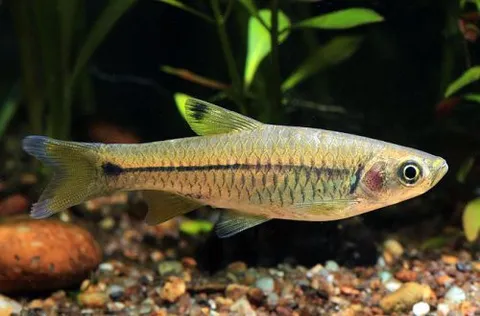
Rasbora dorsinotata
Rasbora dorsinotata, also known by its scientific name Rasbora dorsinotata, belongs to the Cyprinidae family. It is quite rare in aquariums, which is most often explained by its somewhat less striking coloration…
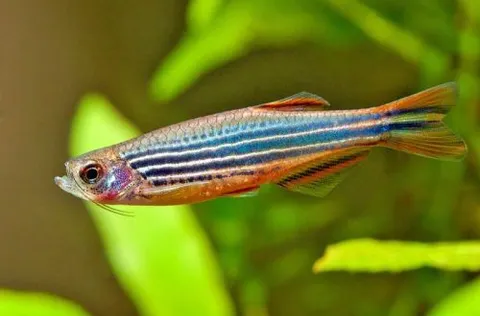
Danio kyathit
The Orange Danio, also known as the Orange-finned Danio (scientific name Danio kyathit), belongs to the Cyprinidae family. This active and beautiful fish can adorn any freshwater aquarium. Its appeal is enhanced by its…
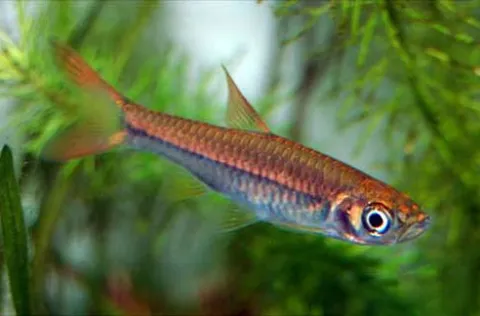
Rasbora tornieri
The Rasbora tornieri, known scientifically as Rasbora tornieri, belongs to the extensive Cyprinidae family. It is named after Gustav Tornier, a German zoologist and paleontologist. This species is low-maintenance and…
Pethia setnai
Pethia setnai, known as the Setnai Barb, belongs to the family Cyprinidae. This species of barb was named after the Indian ichthyologist Setna, who was involved in its classification. This fish is easy to keep and…