Temperature23 – 27 °C
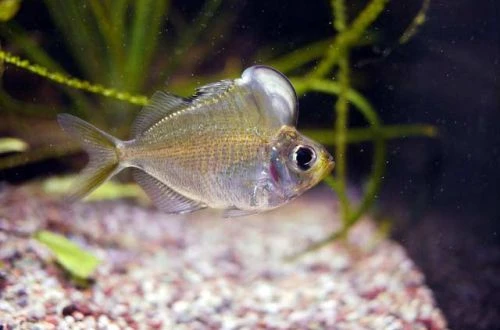
Parambassis pulcinella, also known as the Humphead Glassfish, belongs to the family Ambassidae, or Asian Glassfish. This fish is native to Southeast Asia and is found in the river systems of Thailand and Myanmar. Its natural habitat consists of fast-flowing river sections where the water is clear and rich in oxygen. The bottom in such areas is typically composed of smooth boulders and stones.
Adults of this species can grow to approximately 8 cm in length. A distinctive feature of the Humphead Glassfish is its translucent body and a prominent hump, which is particularly pronounced in males. The body coloration is not vibrant, but under certain lighting, beautiful bluish iridescence can be observed. Unfortunately, the Humphead Glassfish, like its relatives the Indian Glassfish and the Lala Glassfish, is often subjected to artificial coloring. In Asia, these fish are frequently supplied after dyes have been injected under their skin to give them an unusual appearance. Although such manipulations are prohibited in European and American countries, this practice, regrettably, still exists in some Asian regions.
The species is endemic to the foothill rivers of Myanmar (Ataran River basin). In nature, it inhabits areas with fast currents, clean, and oxygen-rich water. It prefers rocky substrates with an abundance of boulders and pebbles, often found near rapids and waterfalls.
This fish is distinguished by its peaceful and active nature. It gets along well with its own kind as well as with other non-aggressive species. Due to its mobility, it can bring liveliness, and sometimes some disturbance, to more tranquil tank mates. Good partners for it would be barbs, rainbowfish, and some species of loaches.
For a group of 4–5 fish, an aquarium of at least 80 liters is recommended. The aquascape has no strict limitations, but it is important to provide enough open swimming space. The choice of decorative elements, their quantity, and arrangement depend on the aquarist's preferences. To ensure the long-term well-being of the fish, it is necessary to maintain clean, flowing water within the required temperature and hydrochemical parameters, and to offer a balanced diet. A powerful filtration system, weekly partial water changes with fresh water, and regular cleaning of organic waste play a key role in maintaining a healthy aquarium environment.
The basis of the diet can be popular dry foods, which should be supplemented with live or frozen foods, such as bloodworms and brine shrimp.
Information on breeding in captivity is unavailable. By analogy with other members of the family, it is presumably an egg-laying fish that does not exhibit parental care. To date, spawning has not been achieved in aquarium conditions.
Fish are sensitive to water quality, especially to low levels of dissolved oxygen and high nitrate concentrations. If keeping conditions are violated, they are susceptible to bacterial infections, fin rot, and invasion by skin parasites (e.g., Ichthyophthirius).
When choosing, avoid individuals showing signs of emaciation, fin damage, or unnatural behavior. It is strongly not recommended to purchase fish with artificially injected dyes, as the coloring procedure is traumatic, causes severe stress, and significantly shortens their lifespan.
The essentials: size, tank volume, water parameters and care
An adult reaches 8 cm in length. Plan the tank around the maximum size: the fish quickly outgrows a cramped setup.
The recommended volume is 80 L. A smaller tank speeds up nitrate build-up and raises stress levels.
Temperature 23–27 °C, pH 7–7.5, hardness 8–15 dGH. Stability matters more than exact values: sudden swings are harder on the fish than a small deviation from the ideal.
Around 5 years when kept properly. Lifespan depends directly on tank volume, water quality and a varied diet.
Temperament: peaceful (regular). Keep this in mind when choosing tank mates.
Recommended setup: small group (3–4 individuals). Ignoring this is a common cause of stress and disease.
Diet type: any (universal). Feed small portions that are finished within a couple of minutes — overfeeding does more harm than underfeeding.
The scientific name of the species is Parambassis pulcinella, family Asian Glassfish (Ambassidae).
The water suits 114 of 208 plants in the catalogue — the easiest ones are shown first.
African Onion PlantAfzelius's AnubiasAmazon FrogbitAmazon SwordAnacharisAnubiasArrowhead CryptDwarf CloverDwarf CloverDwarf HygrophilaDwarf SagittariaDwarf ValGuppy GrassHornwortJava MossMoneywortMud SwordNair's LagenandraNarrow Leaf AnacharisNarrow-leaf CloverStringy MossTaiwan MossTape GrassUssuri Watermilfoil
Matched by family, categories and overlapping keeping conditions
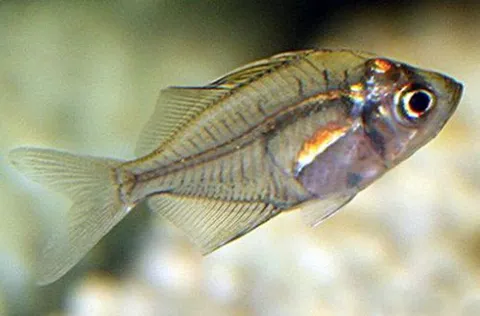
Parambassis ranga
The Indian Glassfish, scientifically known as Parambassis ranga, belongs to the family Ambassidae. It is quite well-known among aquarists, though not widely distributed. Its popularity is partly due to the fact that in…
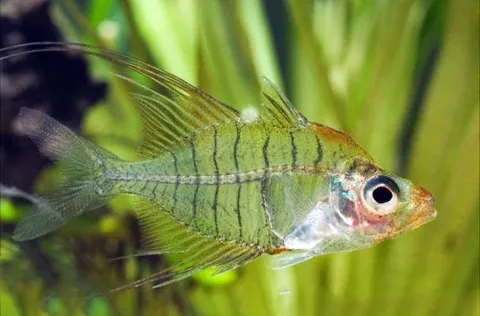
Gymnochanda filamentosa
The fish known as the "Glass Angel" or Filamentous Glass Perch (scientific name Gymnochanda filamentosa) belongs to the family Ambassidae, or Asian Glassfish. Its name accurately conveys the key feature of this fish –…
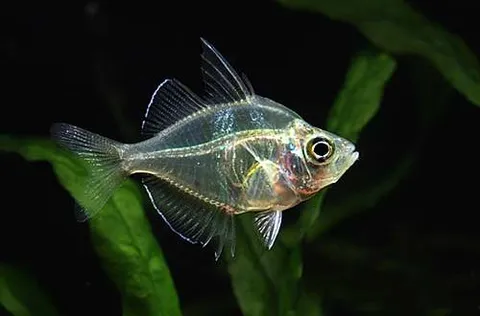
Parambassis lala
The Lala Glassfish, known scientifically as Parambassis lala, belongs to the Ambassidae family, or Glassfish. This species originates from Asia; it can be found in the territories of modern India, Bangladesh, and…
Melanotaenia praecox
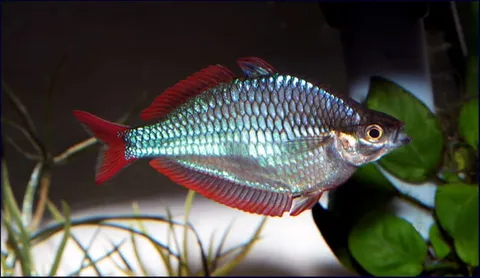
Melanotaenia praecox, also known as the Neon Rainbowfish or Dwarf Rainbowfish, is a member of the family Melanotaeniidae. A relatively small schooling fish, it attracts attention with its beautiful neon shimmer in its…