Temperature22 – 26 °C
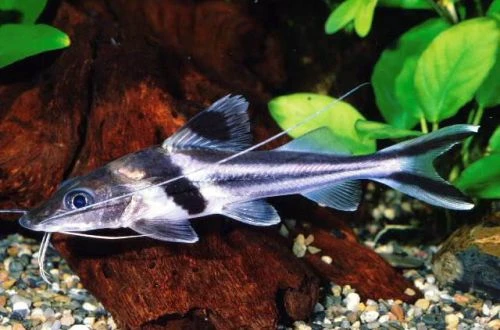
The Ornate Pimelodus, also known as the Ornate Catfish (scientific name Pimelodus ornatus), belongs to the family Pimelodidae. This species is one of the most picturesque representatives of catfish, distinguished by its peaceful nature and ease of care, provided that the aquarium is properly equipped and fitted with a powerful filtration system. However, due to its maximum size and the need for a significant tank volume (aquarium, filters), this catfish may require substantial financial investment.
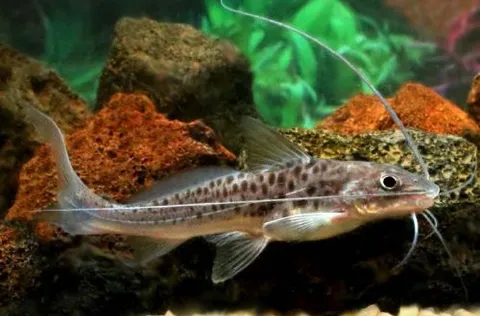
Adults of this species can reach a length of up to 28 cm. Their distinctive feature is a pattern of alternating light silvery and dark stripes, which continue onto the caudal fin. Their fins are transparent, and a large black spot is noticeable on the dorsal fin. Around the mouth are three pairs of barbels, one of which is very long, comparable in length to the fish's body. The barbels serve the catfish for orientation in space and for finding food.
This species is widely distributed throughout the entire Amazon River basin; it can be found in almost all countries of South America. These fish inhabit small bodies of water, including small rivers, tributaries of large rivers, and temporary lakes formed in coastal areas during the rainy season.
This species has a peaceful and friendly disposition towards its conspecifics and other fish of similar size and temperament. However, for small fish, it poses a direct threat: due to its indiscriminate eating habits, they can become an accidental victim of the Ornate Pimelodus. It is recommended to keep them in small groups.
For keeping one adult specimen, an aquarium of at least 540 liters will be required. The same volume will also be suitable for a small group of young Pimelodus. When setting up the aquarium, ensure ample swimming space, create subdued lighting, and provide several appropriately sized shelters. Plants are not an essential decorative element, but if you plan to include them, choose undemanding species such as Anubias, ferns, and mosses. It is important to note that lighting directly affects the behavior of these catfish: under moderate, dim light, they actively move around the aquarium, whereas under bright lighting, they prefer to spend most of their time in shelters, only emerging at night. The performance of the filtration system is of particular importance. The fish produce a lot of waste and require high water quality, so, in addition to filtration, it is necessary to clean the substrate weekly and perform partial water changes (15–20% of the total volume) with fresh water.
This is a carnivorous species; in its natural habitat, its diet consists of small benthic invertebrates, and occasionally small fish. In aquarium conditions, catfish can be fed live, fresh, or frozen foods such as tubifex, bloodworms, earthworms, as well as chopped mollusks and freshwater shrimp. Popular dry sinking foods are also acceptable: flakes, granules, or pellets. It is important to avoid overfeeding, as the Ornate Pimelodus can eat until its belly is excessively distended, which can lead to digestive problems. Meaty foods are recommended to be offered once every few days, and dry food in small portions daily.
In their natural habitat, these catfish spawn during the rainy season, and the breeding period is preceded by an upstream migration, which is extremely difficult to replicate in a home aquarium. For commercial sale, this species is primarily bred on specialized fish farms, and much less frequently, especially for the European and Asian markets, it is caught from the wild.
The main reason for health problems in these fish is an unsuitable environment. At the first signs of illness, it is essential to immediately check water parameters and ensure there are no high concentrations of dangerous substances (such as ammonia, nitrites, nitrates, etc.). Once the parameters are normalized, treatment can begin. The Ornate Pimelodus has no scales, and its skin is very delicate, making it extremely sensitive to many common medications. Before using any medication, carefully read the instructions, and if in doubt, it is recommended to halve the dose.
When choosing an Ornate Pimelodus, carefully inspect its skin: there should be no white film, ulcers, or signs of damage on the body, as this species is prone to skin diseases. A healthy specimen will have intact fins, without signs of splitting, and its behavior in the store will be active but cautious, with a clear interest in the substrate. Avoid purchasing fish with sunken bellies or unnaturally bloated abdomens, which may indicate problems with internal organs or parasites. — avoid individuals that constantly lie on their side or make chaotic movements — check the integrity of the barbels, as damage to them hinders orientation and food search — keep in mind that the fish has sharp pectoral spines, so use thick bags for transport and be careful when transferring to avoid injury.
The essentials: size, tank volume, water parameters and care
An adult reaches 28 cm in length. Plan the tank around the maximum size: the fish quickly outgrows a cramped setup.
The recommended volume is 540 L. A smaller tank speeds up nitrate build-up and raises stress levels.
Temperature 22–26 °C, pH 6–7.2, hardness 2–18 dGH. Stability matters more than exact values: sudden swings are harder on the fish than a small deviation from the ideal.
Around 8 years when kept properly. Lifespan depends directly on tank volume, water quality and a varied diet.
Temperament: semi-peaceful (dangerous to smaller ones). Not a predatory species, but small fish that fit in its mouth will eventually be eaten.
Recommended setup: small group (3–4 individuals). Ignoring this is a common cause of stress and disease.
Diet type: any (universal). Feed small portions that are finished within a couple of minutes — overfeeding does more harm than underfeeding.
The scientific name of the species is Pimelodus ornatus, family Pimelodidae (Long-whiskered Catfishes). It also appears in the literature as: Megalonema rhabdostigma.
The water suits 197 of 208 plants in the catalogue — the easiest ones are shown first.
Afzelius's AnubiasAnacharisAnubiasBrazilian PennywortDwarf CloverDwarf CloverDwarf HygrophilaDwarf SagittariaDwarf ValGuppy GrassHornwortJava FernJava MossMoneywortMud SwordNair's LagenandraNarrow Leaf AnacharisNarrow-leaf CloverStringy MossSüsswassertangTaiwan MossTape GrassTemple PlantUssuri Watermilfoil
Matched by family, categories and overlapping keeping conditions
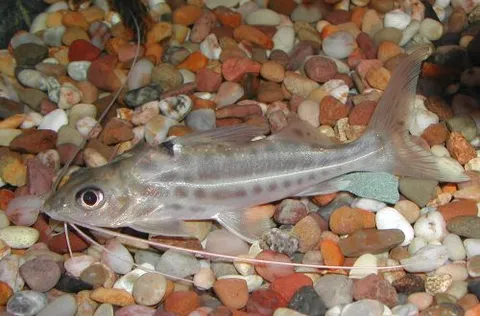
Pimelodus blochii
Pimelodus blochii, known as the four-banded pimelodus, belongs to the family Pimelodidae. This catfish species has many names in different countries; it has been given especially many names in Brazil, where it is most…
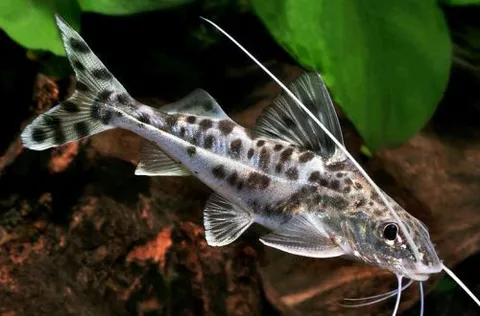
Pimelodus pictus
Pimelodus pictus, known as the Ornate Pimelodus, Angel Pimelodus, or Pictus Catfish, belongs to the family Pimelodidae. This catfish attracts attention with its unusual and beautiful coloration. It is often positioned…
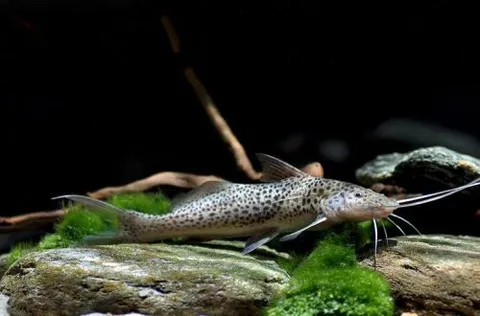
Aguarunichthys torosus
The Muscular Catfish, also known by its scientific name Aguarunichthys torosus, belongs to the family Pimelodidae, or Long-whiskered Catfishes. Its second name is given in honor of the indigenous tribe living in the…
Pimelodus maculatus
Pimelodus maculatus, or the spotted pimelodus, belongs to the family Pimelodidae. This catfish species is native to the waters of South America; specifically, its natural range is limited to the Paraná and São Francisco…