Temperature19 – 27 °C
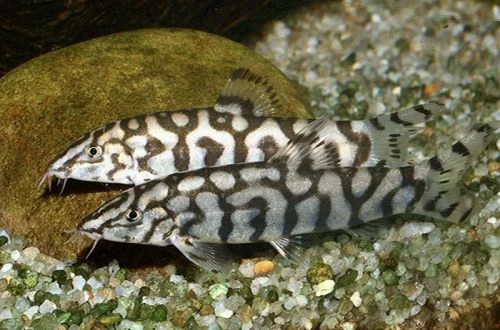
The Almora Loach, scientifically known as Botia almorhae, belongs to the family Botiidae, commonly referred to as the Pakistani Loach. It's important to note that these names often encompass not only closely related species, such as the Marble Loach, but also various hybrids. These fish have established themselves as hardy and undemanding aquarium inhabitants. With careful selection of tankmates, they can be successfully kept in community tanks.
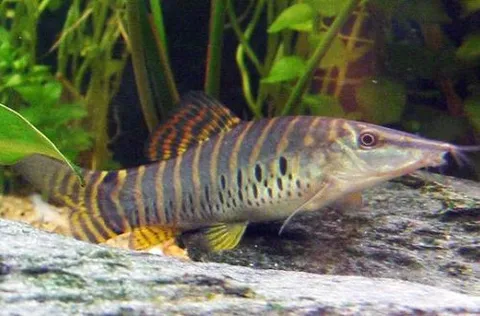
Adults grow to 14–16 cm in length. Distinguishing males from females is quite difficult, as sexual dimorphism is weakly expressed. The body pattern consists of irregular dark spots on a lighter background. Young fish have a yellowish-brown coloration, which fades with age, becoming almost silvery.
The trade name “Pakistani” is a misnomer: the species does not occur in Pakistan. Its range is restricted to parts of the Ganges drainage in northern India and possibly Nepal. In particular, they can be found in the Indus River basin. Related species inhabit the basin of another major waterway, the Ganges, with their distribution extending into parts of Nepal. They prefer to stay in the main river channels and their large tributaries, where the substrate consists of stones and there are many natural shelters.
It is preferable to keep these fish in sufficiently large groups. Almora Loaches kept individually sometimes display aggression towards other aquarium inhabitants. The ideal solution would be to acquire at least 5 individuals, forming a balanced community. These fish coexist well with species of comparable size. However, their cohabitation with small fish, as well as with species like ornamental bettas, guppies, or cichlids, especially those with long, flowing fins and tails, should be avoided.
For a group of 5 Almora Loaches, an aquarium of at least 240 L will be required. Natural elements are preferred for decoration: a sandy substrate combined with gravel and several large stones. The presence of shelters is important – these can be snags overgrown with aquatic mosses and ferns. In general, this fish is undemanding, so the choice of decor is at the discretion of the aquarist. Optimal conditions include moderate current, subdued lighting, and impeccable water quality. Since these fish inhabit flowing waters, they are extremely sensitive to the accumulation of organic waste. Therefore, it is crucial to ensure an effective filtration system and weekly water changes of 20–30% of the volume.
In nature, their diet consists of small benthic insects, their larvae, crustaceans, and zooplankton. When kept in an aquarium, they should be offered sinking foods, always supplementing their diet with plant components, such as spirulina in dry flakes or pellets. Frozen bloodworms, brine shrimp, finely chopped earthworms, or mollusks are also suitable. As a supplement, pieces of vegetables such as spinach or zucchini can be used.
Breeding the Pakistani Loach in home aquariums is practically unheard of. In their natural habitat, the fish do not care for their offspring, laying eggs on the substrate. On an industrial scale or in specialized farms, hormonal injections are used to stimulate spawning, as the natural breeding conditions, associated with seasonal changes and migrations, are extremely difficult to reproduce in captivity. Sexually mature females often develop roe, but without special intervention, spawning does not occur.
Health problems usually arise only as a result of injuries or keeping in unsuitable conditions, which leads to a weakening of the immune system and, as a rule, provokes the development of various diseases. At the first signs of illness, the primary task is to check the water parameters for excesses or dangerous concentrations of toxic substances (nitrates, nitrites, ammonia, etc.). After bringing all indicators back to normal, treatment can begin.
When purchasing, choose active fish with clean bodies, free from visible damage, ulcers, or white film. Healthy individuals have a clear, contrasting pattern and show interest in searching for food at the bottom. Avoid specimens with sunken bellies, which may indicate emaciation or internal parasites, as well as fish that appear lethargic or constantly stay near the water surface, which is often a sign of poor keeping conditions in the store. If possible, observe the group's behavior in the aquarium: brief skirmishes between individuals are normal, but excessive aggression or signs of severe stress in individual fish are undesirable.
The essentials: size, tank volume, water parameters and care
An adult reaches 14–16 cm in length. Plan the tank around the maximum size: the fish quickly outgrows a cramped setup.
The recommended volume is 240 L. A smaller tank speeds up nitrate build-up and raises stress levels.
Temperature 19–27 °C, pH 5.5–7.5, hardness 2–12 dGH. Stability matters more than exact values: sudden swings are harder on the fish than a small deviation from the ideal.
Around 8 years when kept properly. Lifespan depends directly on tank volume, water quality and a varied diet.
Temperament: semi-peaceful (including aggression during spawning / intraspecific conflicts). Keep this in mind when choosing tank mates.
Recommended setup: small group (5–6 individuals). Ignoring this is a common cause of stress and disease.
Diet type: sinking (any). Feed small portions that are finished within a couple of minutes — overfeeding does more harm than underfeeding.
The scientific name of the species is Botia almorhae, family Botiidae. It also appears in the literature as: Botia blythi, Botia grandis, Schistura maculata.
The water suits 198 of 208 plants in the catalogue — the easiest ones are shown first.
Afzelius's AnubiasAnacharisAnubiasBrazilian PennywortDwarf CloverDwarf CloverDwarf HygrophilaDwarf SagittariaDwarf ValGuppy GrassHornwortJava FernJava MossMoneywortMud SwordNair's LagenandraNarrow Leaf AnacharisNarrow-leaf CloverStringy MossSüsswassertangTaiwan MossTape GrassTemple PlantUssuri Watermilfoil
Matched by family, categories and overlapping keeping conditions
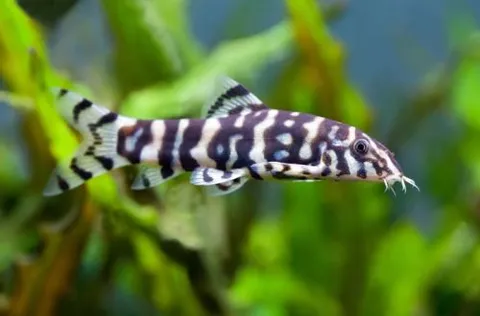
Botia lohachata
The Marble Loach, also known as Botia lohachata (scientific name Botia lohachata), belongs to the family Botiidae. This species is native to Asia, where it is found in river systems flowing through Pakistan, India,…
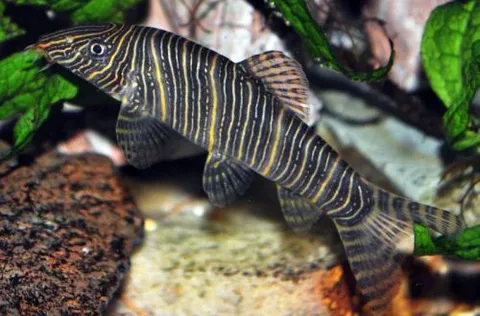
Botia striata
The Striata Loach, also known as the Zebra Loach or Striped Loach (scientific name Botia striata), belongs to the family Botiidae. This species is undemanding and relatively easy to keep if provided with suitable…
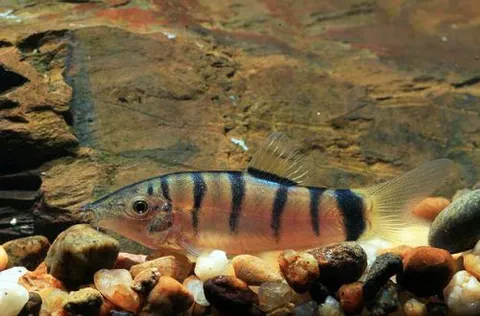
Yasuhikotakia morleti
The Skunk Botia, or Skunk Loach, is also known as the Skunk Botia. Its scientific name is Yasuhikotakia morleti, and it belongs to the family Botiidae. This fish is considered relatively peaceful provided that tank…
Syncrossus helodes
The Banded Loach, also known as the Tiger Loach, belongs to the family Botiidae and bears the scientific name Syncrossus helodes. This large, active fish prefers to spend its time at the bottom of the aquarium. Under…