Temperature20 – 28 °C
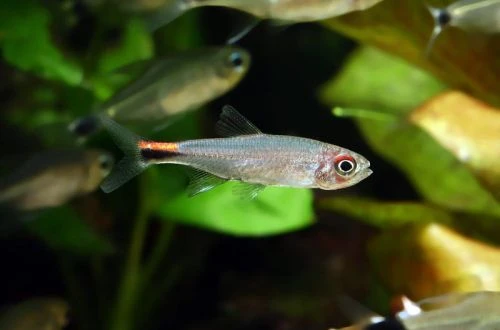
The Pepper Tetra, or Axelrodia stigmatias, belongs to the Acestrorhamphidae family. The fish was named after an American entrepreneur who made a significant contribution to the popularization of aquaristics. The colloquial name "Pepper" likely refers to a specific variety of Peruvian chili pepper, drawing a parallel with the energetic and small size of this aquatic inhabitant.
Adults of this species reach a maximum length of 2 cm. Gender differences are subtle, making it difficult to distinguish males from females. A distinctive feature is a relatively large head compared to the rest of the body. The fish have a silvery coloration with noticeable pink iridescence. Characteristic red and black markings are present on the caudal peduncle, serving as a bright species-specific trait.
The natural habitat of these fish is the waters of South America, specifically the western Amazon basin — from the Peruvian Ucayali River basin to the confluence of the Rio Negro and Solimões. They prefer to live not in the main river channels, but in small streams and rivulets. These are typically streams hidden under the canopy of the tropical forest, whose bottom is covered with fallen leaves and cluttered with snags. The water here usually acquires a brownish tint due to the high content of dissolved tannins.
These peaceful fish are active. Although Axelrodia stigmatias is not a true schooling species, as males can exhibit territoriality, it is still recommended to keep a group of 8–10 individuals. With fewer fish, they may become excessively timid. Due to their small size, they can easily become prey for larger tank mates.
For comfortable keeping of a small group of 8–10 individuals, an aquarium of 40–50 L is recommended. The tank decoration should ideally mimic their natural habitat. Sandy substrate, driftwood, and several shade-loving plants serve as excellent decorative elements. It is important to provide subdued lighting. Dried leaves from certain trees, scattered on the bottom, will not only be a decorative element but also a source of tannins, which are released during decomposition, similar to natural processes. These substances have antimicrobial and antifungal properties and contribute to the characteristic brown coloration of the water. The stability of water parameters (temperature and hydrochemical indicators) is critical for the successful keeping of the Pepper Tetra. It is necessary to carefully monitor for the absence of organic waste accumulation and dangerous concentrations of nitrogen cycle products, such as nitrites, nitrates, and ammonia.
In natural conditions, the diet of Axelrodia stigmatias consists of various microorganisms — zooplankton and phytoplankton. In a home aquarium, the fish easily adapt to most standard aquarium foods. The daily menu can consist of dry foods, such as granules and flakes, as well as live or frozen treats, for example, daphnia, bloodworms, or brine shrimp.
Under favorable conditions, the fish can successfully spawn. Females usually lay eggs among dense thickets of aquarium plants. Parental instincts are absent in this species, and they tend to eat their own eggs and fry. If breeding is planned, it is recommended to transfer the eggs to a separate aquarium to preserve the offspring.
Specific diseases that affect only this particular fish species have not been identified. When kept in suitable conditions, including high water quality, a balanced diet, and peaceful tank mates, health issues usually do not arise. The most common cause of illness is a deterioration of living conditions, which weakens the immune system and makes the fish susceptible to infections that are always present in their environment. Upon noticing initial signs of sickness (such as lethargy, emaciation, refusal to eat, or clamped fins), it is crucial to immediately check the basic water parameters. Often, restoring acceptable living conditions will lead to self-recovery, but if the fish is too weak or has suffered visible damage, medicinal treatment may be required.
When choosing Pepper Tetra, it is important to assess the overall condition of the individuals in the aquarium. Healthy fish should be active, without visible fin damage, ulcers, or white film on the body. Avoid purchasing fish that stay at the surface, look emaciated, or show signs of apathy, as they are extremely sensitive to stress during transport and water parameter changes. — choose individuals with bright, clear coloration and a pronounced dark spot on the caudal peduncle — ensure that the fish in the store are kept in a school, as solitary keeping greatly weakens the species' immune system — check for the absence of signs of infectious diseases in other fish in the same aquarium, as this species is susceptible to diseases with improper care.
The essentials: size, tank volume, water parameters and care
An adult reaches 1.5–2.5 cm in length. Plan the tank around the maximum size: the fish quickly outgrows a cramped setup.
The recommended volume is 54 L. A smaller tank speeds up nitrate build-up and raises stress levels.
Temperature 20–28 °C, pH 4–6.5, hardness 1–5 dGH. Stability matters more than exact values: sudden swings are harder on the fish than a small deviation from the ideal.
Around 3 years when kept properly. Lifespan depends directly on tank volume, water quality and a varied diet.
Temperament: peaceful (regular). Keep this in mind when choosing tank mates.
Recommended setup: group (8–10 individuals). Ignoring this is a common cause of stress and disease.
Diet type: any (universal). Feed small portions that are finished within a couple of minutes — overfeeding does more harm than underfeeding.
The scientific name of the species is Axelrodia stigmatias, family Acestrorhamphidae. It also appears in the literature as: Axelrodia fowleri, Hyphessobrycon stigmatias.
The water suits 197 of 208 plants in the catalogue — the easiest ones are shown first.
Afzelius's AnubiasAnacharisAnubiasBrazilian PennywortDwarf CloverDwarf CloverDwarf HygrophilaDwarf SagittariaDwarf ValGuppy GrassHornwortJava FernJava MossMoneywortMud SwordNair's LagenandraNarrow Leaf AnacharisNarrow-leaf CloverStringy MossSüsswassertangTaiwan MossTape GrassTemple PlantUssuri Watermilfoil
Matched by family, categories and overlapping keeping conditions
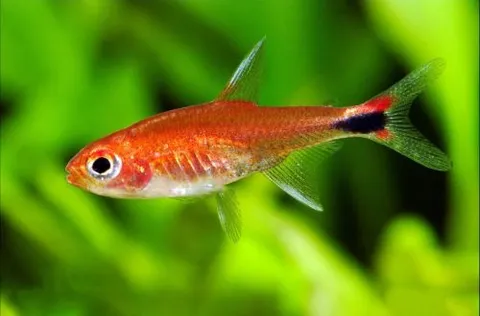
Axelrodia riesei
Axelrodia riesei, also known as the Ruby Tetra or Axelrod's Tetra, is a fish from the Characin family. Its Latin name has an interesting origin, being a combination of the names of two scientists — Herbert R. Axelrod…
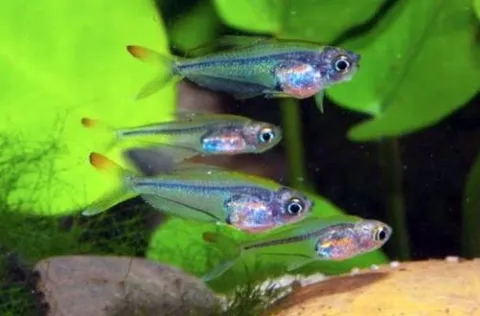
Trochilocharax ornatus
The Hummingbird Tetra, scientifically known as Trochilocharax ornatus, is a member of the Acestrorhamphidae family. This species undoubtedly lives up to its name, as it is among the most miniature aquarium fish.…
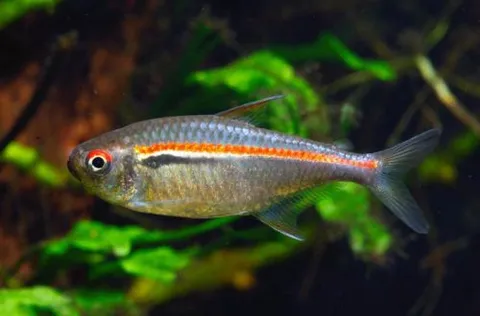
Hyphessobrycon amapaensis
The Amapa Tetra, also known as the Red-striped Tetra, scientifically named Hyphessobrycon amapaensis, belongs to the family Acestrorhamphidae. Its name refers to the Brazilian state of Amapá, where it was first…
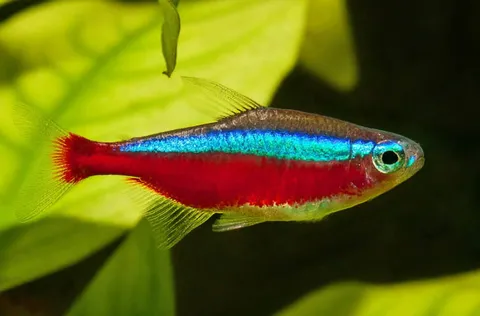
Paracheirodon axelrodi
The Cardinal Tetra, or Red Neon (scientific name Paracheirodon axelrodi), belongs to the Acestrorhamphidae family. This fish is one of the most beloved and widely available among aquarists. It captivates with its…