Temperature22 – 27 °C
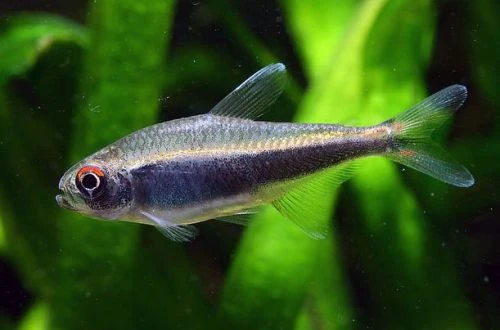
The Peruvian Tetra, or Peruvian Neon (scientific name Hyphessobrycon peruvianus), belongs to the Acestrorhamphidae family. This species has gained widespread popularity in aquaristics due to its moderate requirements, ease of keeping and breeding, and peaceful nature, which allows it to coexist perfectly with many other species. All these qualities make it a frequent inhabitant of home freshwater aquariums.
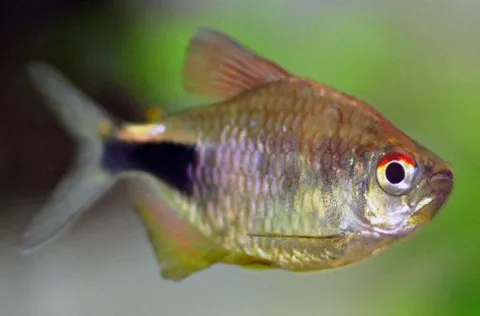
Adult Peruvian Tetras can reach up to 4 centimeters in length. Their body has a silvery coloration with a distinct bluish tint. A wide black stripe runs from the head to the base of the tail, below the horizontal midline of the body. The dorsal and anal fins are pointed, and the caudal fin is forked. Distinguishing between male and female by external characteristics is quite difficult, as sexual dimorphism is weakly expressed.
The natural habitat of this species is in the upper tributaries of the Amazon River in modern-day Peru, South America. The fish prefer small, shallow bodies of water that are tributaries of larger rivers. Their range is characterized by dense riparian vegetation, whose branches often hang over the water, and the bottom is strewn with snags and fallen leaves. Due to the abundance of organic matter, the water in these areas acquires a light brown hue.
This peaceful and friendly species is highly active, which can cause discomfort for slower tank mates. Nevertheless, Peruvian Tetras get along well with other fish of similar size and temperament. It is recommended to keep them in a school consisting of at least 8–10 individuals.
A school of Peruvian Tetras, consisting of several individuals, will feel comfortable in an aquarium of 60 L or more. It is advisable to use a sandy substrate in the design of such a tank, place shelters in the form of snags, and provide areas with dense vegetation. These fish prefer diffused or subdued light, so shade-loving plants such as Anubias, Cryptocoryine, or various mosses are suitable for planting. Optimal water parameters include soft pH values and low carbonate hardness. To give the water the light brown tint characteristic of their natural environment and enrich it with tannins, you can use a filter with alder cone filler or add a bag of alder cones to the water. It is important to remember that aquarium peat should only be purchased from specialized pet stores; using peat from natural sources is unacceptable. In the care process, the key is to maintain water purity and prevent the accumulation of organic waste, such as food residues and excrement. Regular weekly partial water changes (15–20% of the total volume) with fresh water are mandatory, and installing an efficient filtration system will significantly facilitate care.
All types of food can be included in the diet of these fish: dry, frozen, and live. To maintain bright coloration and ensure complete nutrition, it is recommended to combine a variety of products in their daily menu, for example, flakes and granules, supplementing them with bloodworms or daphnia.
Peruvian Tetras are egg-laying fish: females lay eggs in open water, which are then fertilized by males. Parental instincts are absent in this species, so after spawning, the fish may eat their future offspring. Their breeding is not particularly difficult; fry can even appear in a community tank, but in such a case, their survival rate will be very low. If you plan targeted breeding of Peruvian Tetras, you will need to prepare a separate spawning tank of about 20 L. The spawning tank is filled with water from the main aquarium, and for equipment, it is sufficient to use a heater and a simple sponge air-lift filter. Special lighting is not required, as ambient room light will be sufficient. The design of the spawning aquarium can be minimalistic; its complete absence is even acceptable. To protect the eggs from being eaten, the bottom can be covered with a layer of glass marbles or a fine-mesh net. The breeding period can begin at any time of the year, but it can be stimulated by setting a neutral pH value at a temperature of about 27°C, as well as enriching the daily diet with live foods. Once you notice that the females have become noticeably rounded, move them along with several strong males to the spawning tank. After spawning, which can sometimes last several days, the adult fish are returned to the main aquarium. The hatched fry should be fed specialized food for aquarium fish juveniles.
The stability of the aquarium system and adequate keeping conditions serve as the best protection against the occurrence of diseases. Therefore, if you notice changes in behavior, color, or the appearance of unusual spots on a fish, you should first check the water parameters, and only then proceed with possible treatment measures.
When purchasing, choose active fish with clean fins and no visible damage, ulcers, or white film on the body. It is important to ensure that the individuals have a bright coloration characteristic of the species, and their behavior in the community tank does not show signs of sluggishness or apathy. Avoid purchasing fish from aquariums where dead specimens or individuals with unnaturally distended bellies are observed. — Examine the fish's eyes: they should be clear, without cloudiness. — Assess breathing: healthy tetras should not breathe heavily at the water surface. — Check reaction to external stimuli: healthy fish show caution and react quickly to movement near the glass.
The essentials: size, tank volume, water parameters and care
An adult reaches 4 cm in length. Plan the tank around the maximum size: the fish quickly outgrows a cramped setup.
The recommended volume is 60 L. A smaller tank speeds up nitrate build-up and raises stress levels.
Temperature 22–27 °C, pH 5–7, hardness 2–10 dGH. Stability matters more than exact values: sudden swings are harder on the fish than a small deviation from the ideal.
Around 4 years when kept properly. Lifespan depends directly on tank volume, water quality and a varied diet.
Temperament: peaceful (regular). Keep this in mind when choosing tank mates.
Recommended setup: group (8–10 individuals). Ignoring this is a common cause of stress and disease.
Diet type: any (universal). Feed small portions that are finished within a couple of minutes — overfeeding does more harm than underfeeding.
The scientific name of the species is Hyphessobrycon peruvianus, family Acestrorhamphidae.
The water suits 198 of 208 plants in the catalogue — the easiest ones are shown first.
Afzelius's AnubiasAnacharisAnubiasBrazilian PennywortDwarf CloverDwarf CloverDwarf HygrophilaDwarf SagittariaDwarf ValGuppy GrassHornwortJava FernJava MossMoneywortMud SwordNair's LagenandraNarrow Leaf AnacharisNarrow-leaf CloverStringy MossSüsswassertangTaiwan MossTape GrassTemple PlantUssuri Watermilfoil
Matched by family, categories and overlapping keeping conditions
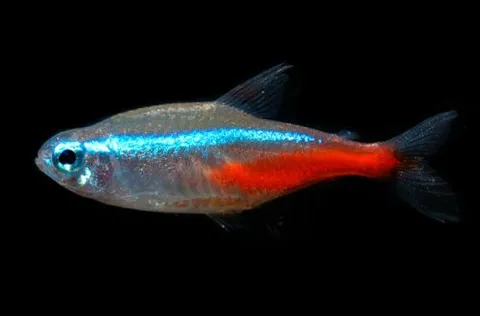
Paracheirodon innesi
Paracheirodon innesi, better known as the Neon Tetra or Blue Neon, belongs to the Acestrorhamphidae family. This aquarium fish rightly holds a place among the most beloved and popular species. As early as the 1930s, it…
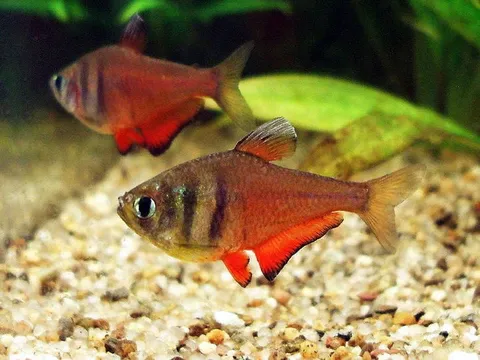
Hyphessobrycon flammeus
Hyphessobrycon flammeus, also known as the Flame Tetra or Red Tetra, belongs to the family Acestrorhamphidae. These fish are distinguished by their beautiful fiery coloration. However, when purchased from pet stores,…
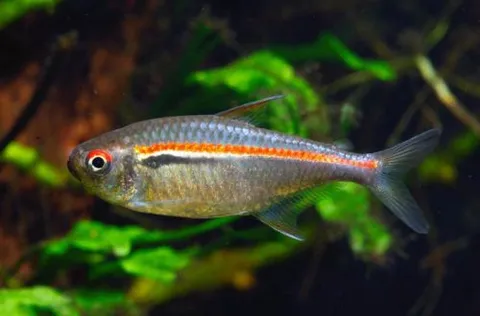
Hyphessobrycon amapaensis
The Amapa Tetra, also known as the Red-striped Tetra, scientifically named Hyphessobrycon amapaensis, belongs to the family Acestrorhamphidae. Its name refers to the Brazilian state of Amapá, where it was first…
Holopristis pulchra
The Pulcher fish, also known by its scientific name Holopristis pulchra, belongs to the Acestrorhamphidae family. Despite its rather narrow natural habitat, it has gained popularity among aquarists worldwide due to its…