Temperature24 – 29 °C
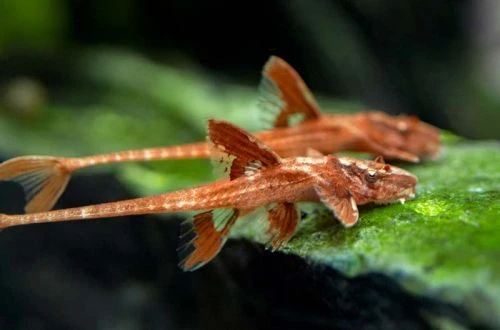
The Red Whiptail Catfish belongs to the genus Rineloricaria and is part of the armored catfish family (Loricariidae). Its exact species identification is currently unknown. There are several hypotheses regarding its origin. According to one, this species is a selective form or hybrid derived from the Peruvian Whiptail Catfish (Rineloricaria lanceolata). Another version suggests that the Red Whiptail Catfish may be one of the unidentified species listed under classifications L010a and L10a.
Adults of these catfish can reach approximately 11 cm in length. Their elongated and slender body is covered with external plates, resembling chainmail composed of individual segments. The head is triangular, and the mouth is adapted for sucking. Large fins end in spines on each ray. Body coloration varies from brick-red to reddish-brown. It is worth noting that such a bright coloration is not found in catfish in their natural habitat, which indirectly indicates its selective origin. Sexual dimorphism is weakly expressed: males can be distinguished from females by the presence of tiny spine-like growths on their heads, known as odontodes.
These catfish, or their ancestral forms if they are hybrids, originate from the tropical latitudes of South America, specifically from the vast Amazon River basin. They prefer shallow areas of streams and rivers, where they inhabit sandy bottoms strewn with fallen leaves, branches, and snags.
Distinguished by their peaceful nature, these catfish coexist well with their own kind and with most other fish species of comparable size. Good tank mates can include various species such as Corydoras catfish, Goldfish, almost all Livebearers, small Tetras, Danios, Barbs, and many other popular aquarium fish.
For a group of 2–3 Red Whiptail Catfish, the optimal aquarium volume starts from 60–70 liters. The aquarium setup can be arbitrary, as the catfish adapts well to various conditions. However, it looks most harmonious in a recreated natural environment with a sandy substrate mixed with stones, and an abundance of hiding places made from snags. It should be noted that the Red Whiptail Catfish likes to dig in the substrate in search of food, which can accidentally damage aquarium plants. It is recommended to choose plant species with strong root systems or plant them in separate pots that are then buried in the substrate. This catfish can live in a wide range of hydrochemical parameters, so special water preparation is not required. In most cases, it is sufficient to simply let the water stand before pouring it into the aquarium. When kept with other fish, it successfully adapts to their pH and dGH needs. Standard aquarium maintenance includes weekly partial water changes with fresh water, which is convenient to combine with the removal of organic waste and equipment prophylaxis.
The daily diet of these catfish must include high-quality dry, frozen, or live sinking foods, necessarily enriched with plant components. For example, flakes or granules can be used in combination with bloodworms, tubifex, and other invertebrates. Vegetable additives can be part of dry foods or served separately. Blanched (scalded with boiling water) pieces of cucumber, zucchini, spinach, lettuce leaves, or cabbage will be an excellent choice. The catfish is unpretentious in its diet and will readily eat leftover food from other fish, or algal growth from the aquarium walls and decor elements.
Breeding these fish is not difficult but requires several conditions to be met. It is important to have a group of six or more individuals, consisting of males and females, as they are quite selective in choosing a mate. If there is only one pair in the aquarium, the chance of successful reproduction decreases. To stimulate spawning, it is recommended to slightly lower the water temperature (three to four degrees below normal) and enrich the diet with foods high in plant components. When the breeding season arrives, the male looks for a suitable shelter for egg-laying — be it a cave or an artificial grotto. Breeders often use PVC tubes about five centimeters in diameter. Having occupied the chosen spot, the male thoroughly cleans the inner surface. After the female accepts his courtship, she lays several dozen eggs. The fertilized clutch is then guarded by the male, who stays nearby and drives away other fish that may approach the nest. Egg development takes four to five days. The fry spend another two to three days in the shelter before they start swimming independently. From this moment, the male's care ceases, and he may pose a danger to his offspring. To protect the fry from being eaten by other aquarium inhabitants, including the parents, it is recommended to transfer them to a separate tank.
In a healthy aquarium ecosystem, with proper feeding and the absence of aggressive tank mates, cases of disease in these catfish are extremely rare. Symptoms of ailments usually indicate problems with keeping conditions, such as injuries, poor water quality, or bad food. Eliminating the root causes often allows the fish's body to cope with the disease on its own. Otherwise, medicinal treatment may be required.
When purchasing a Red Whiptail Catfish, first pay attention to the condition of its skin: there should be no white coating, sores, bruises, or damage to the bony plates on the body. A healthy fish should have clean, unfused fins and clear eyes without cloudiness. Avoid individuals with a severely sunken abdomen, which may indicate emaciation or internal parasitic infections, as well as fish that appear apathetic or have difficulty breathing. Since this species is bottom-dwelling and often hides, ask the seller to feed the fish in your presence. Healthy specimens show interest in food and actively explore the bottom. Given that whiptail catfish can be timid, brief passivity in the store is acceptable, but a complete lack of reaction to food or attempts to hide in a corner near the water surface often indicates stress or poor health. Purchase fish that are kept in clean water without signs of heavy organic contamination.
The essentials: size, tank volume, water parameters and care
An adult reaches 11 cm in length. Plan the tank around the maximum size: the fish quickly outgrows a cramped setup.
The recommended volume is 60 L. A smaller tank speeds up nitrate build-up and raises stress levels.
Temperature 24–29 °C, pH 6–7.5, hardness 2–15 dGH. Stability matters more than exact values: sudden swings are harder on the fish than a small deviation from the ideal.
Around 8 years when kept properly. Lifespan depends directly on tank volume, water quality and a varied diet.
Temperament: peaceful (regular). Keep this in mind when choosing tank mates.
Recommended setup: both solitary and in group (flexible). Ignoring this is a common cause of stress and disease.
Diet type: high protein (predominantly meat). Feed small portions that are finished within a couple of minutes — overfeeding does more harm than underfeeding.
The scientific name of the species is Rineloricaria sp., family Armored Catfishes (Loricariidae).
This fish damages plants, especially when its diet is short of vegetable food.
African Onion PlantAfrican Water FernAfzelius's AnubiasAmazon FrogbitAmazon SwordAnacharisAnubiasArrowhead CryptAsian WatermossBalansa Water TrumpetBanana PlantBarth's SwordBeckett's Water TrumpetBladderwort CarpetBlue BuceBog MossBoivin's AponogetonBolivian Chain SwordBrazilian PennywortBroad-leaf Water SpriteBrookweedBrown's LimnophilaBuceCardinal PlantCaribbean MintCarolina Micro SwordChristmas MossCognac AmmanniaCongo AnubiasCreeping JennyCreeping RushCreeping SpotflowerCreeping StaurogyneCrinkled AponogetonCupheaCutleaf WatermilfoilCylindricfruit LudwigiaDark SwordDense MayacaDitch Stonecrop
This fish digs through the substrate and pulls rooted plants out.
African Onion PlantAfzelius's AnubiasAmazon SwordAnacharisArrowhead CryptBalansa Water TrumpetBanana PlantBarth's SwordBeckett's Water TrumpetBladderwort CarpetBog MossBoivin's AponogetonBolivian Chain SwordBrazilian PennywortBroad-leaf Water SpriteBrookweedBrown's LimnophilaCardinal PlantCaribbean MintCarolina Micro SwordCognac AmmanniaCongo AnubiasCreeping JennyCreeping RushCreeping SpotflowerCreeping StaurogyneCrinkled AponogetonCupheaCutleaf WatermilfoilCylindricfruit LudwigiaDark SwordDense MayacaDitch StonecropDwarf AmbuliaDwarf Baby TearsDwarf CloverDwarf CloverDwarf HairgrassDwarf HygrophilaDwarf Microcarpaea
Matched by family, categories and overlapping keeping conditions
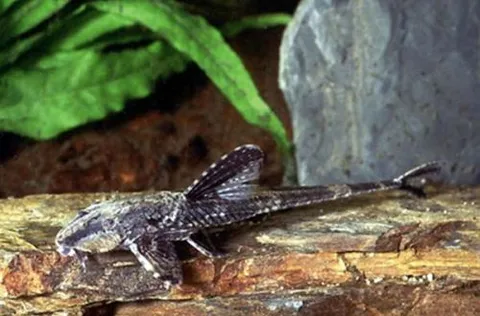
Rineloricaria lanceolata
Rineloricaria lanceolata, also known as the Peruvian Whiptail Catfish, belongs to the Armored Catfish family (Loricariidae). This species is valued among aquarists for its moderate size, unpretentious nature, and…
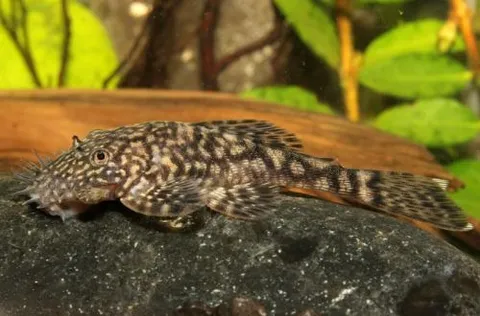
Ancistrus claro
Ancistrus claro, scientifically named Ancistrus claro, belongs to the family Loricariidae, also known as Armored Catfish. Its name originates from the Claro River, a small tributary of the Cuiabá River in the Brazilian…
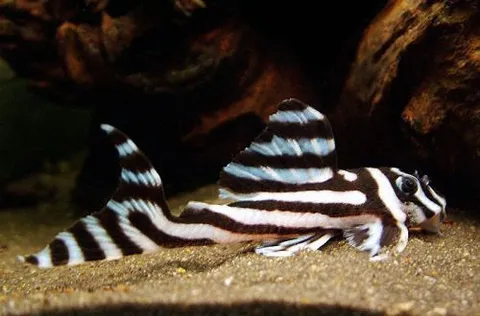
Hypancistrus zebra
The Zebra Hypancistrus, scientifically known as Hypancistrus zebra or simply Zebra Pleco, belongs to the Loricariidae family. This species appeared in the aquarium hobby relatively recently. From the 1990s, there was an…
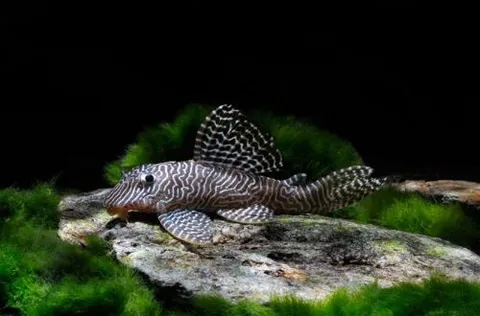
Hypancistrus sp. L260
The Queen Arabesque Pleco, or Painted Pleco, scientifically known as Hypancistrus sp. L260, belongs to the Loricariidae family, which includes armored catfish. The lack of a universally recognized scientific…