Temperature25 – 28 °C
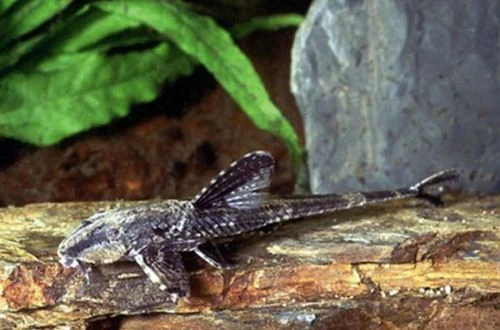
Rineloricaria lanceolata, also known as the Peruvian Whiptail Catfish, belongs to the Armored Catfish family (Loricariidae). This species is valued among aquarists for its moderate size, unpretentious nature, and friendly disposition, making it one of the most sought-after bottom-dwelling fish.
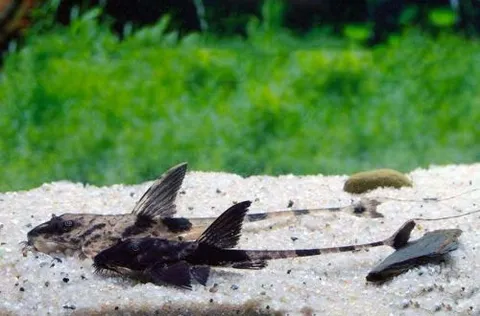
Adults reach a length of 9 to 11 cm. The catfish's body is elongated, with a particularly slender caudal peduncle ending in a small, pointed fin. This shape is why it's called the Whiptail Catfish in English-speaking countries. Body coloration and pattern can vary significantly depending on geographical origin, ranging from brown and gray to reddish-brick hues. The latter likely result from hybridization and are known as Red Whiptail Catfish. Sexual dimorphism is weakly expressed; males can be distinguished by the presence of small bristles, called odontodes, located on the head and the first rays of the pectoral fins.
This fish is native to the upper Amazon River basin, in the territories of Peru and the western states of Brazil in South America. It prefers to inhabit shallow streams and rivers where the bottom consists of sandy substrates, often strewn with fallen leaves, branches, and other plant-derived organic matter.
This species is peaceful and coexists well with both its own kind and other small fish. Its hard body plates provide reliable protection, allowing the Peruvian Whiptail Catfish to successfully coexist even with somewhat boisterous, but small, aquarium neighbors in some cases.
For a group of 2–3 fish, an aquarium of 60 to 80 liters is recommended. Sand, gravel, or any other fine-grained substrate is optimal for the bottom. Natural or artificial snags, as well as other decorative elements, will create the necessary shelters. When choosing aquatic plants, preference should be given to species with a strong root system, or they should be planted in separate pots and then buried in the substrate to avoid damage by the catfish. Its ability to adapt to a wide range of temperatures and hydrochemical water parameters simplifies water preparation, reducing it to ordinary settling. If there are no other fish species in the aquarium, regulating pH and dGH values is not necessary. Aquarium maintenance is standard and involves weekly partial water changes, removal of organic waste (food remains, excrement), cleaning of tank walls and decorations, and prophylactic equipment inspection.
This species readily accepts most popular sinking foods, both dry and frozen or live. For example, the daily diet can consist of flakes and pellets, supplemented with bloodworms, brine shrimp, or tubifex. It is important that the food contains vegetable additives or that they are provided separately. Blanched lettuce or spinach leaves, as well as pieces of vegetables like cucumber or zucchini, are well-suited.
The breeding process for these fish does not present particular difficulties, however, forming a suitable pair is the only nuance. Catfish are quite selective in choosing a partner. Therefore, to ensure successful spawning, it is recommended to acquire an already formed pair that has previously had offspring, or a group of at least six individuals of mixed sexes, which significantly increases the chance of at least one breeding-ready pair forming. To stimulate the spawning process, it is necessary to gradually, over one to two days, lower the water temperature by 3–4 degrees, and then maintain the achieved parameters. Vegetable additives must be included in the diet of the future parents. As soon as the fish are ready to spawn, the male goes in search of a suitable place for the future clutch. He usually chooses secluded corners, such as caves or grottoes; aquarists often resort to using ordinary PVC pipes about 5 cm in diameter. After thoroughly cleaning the chosen area, the male invites the female. After a short courtship period, the female lays several dozen eggs. The male remains to guard the clutch, protecting it. The incubation period usually takes 4–5 days, and after another 2–3 days, the fry begin to swim actively. It is at this moment that the parental instincts of the adults weaken, and there is a risk of them eating their own offspring. Therefore, it is advisable to transfer the fry to a separate aquarium.
In a healthy aquarium ecosystem, with proper feeding and the absence of aggressive neighbors, cases of disease in these catfish are extremely rare. Symptoms of ailments usually indicate problems with maintenance, such as injuries, poor water quality, or bad food. Eliminating the root causes often allows the fish's body to cope with the disease on its own. Otherwise, medication may be required.
When choosing Rineloricaria lanceolata, carefully inspect the condition of the skin and fins. A healthy individual should have a clean body, without whitish film, ulcers, or damage, and the fins should be spread, without signs of frayed edges. It is important to pay attention to the fish's activity: in the store, it may be shy and hide, but when moved or fed, it should show a natural reaction. Avoid buying individuals with a severely sunken abdomen, which may indicate emaciation or internal diseases. Before purchasing, it is recommended to observe the behavior of the group in the aquarium: healthy catfish should be firmly settled on the substrate or glass, and not swim chaotically in the water column.
The essentials: size, tank volume, water parameters and care
An adult reaches 9–11 cm in length. Plan the tank around the maximum size: the fish quickly outgrows a cramped setup.
The recommended volume is 80 L. A smaller tank speeds up nitrate build-up and raises stress levels.
Temperature 25–28 °C, pH 6–8, hardness 2–15 dGH. Stability matters more than exact values: sudden swings are harder on the fish than a small deviation from the ideal.
Around 10 years when kept properly. Lifespan depends directly on tank volume, water quality and a varied diet.
Temperament: peaceful (regular). Keep this in mind when choosing tank mates.
Recommended setup: both solitary and in group (flexible). Ignoring this is a common cause of stress and disease.
Diet type: high protein (predominantly meat). Feed small portions that are finished within a couple of minutes — overfeeding does more harm than underfeeding.
The scientific name of the species is Rineloricaria lanceolata, family Armored Catfishes (Loricariidae). It also appears in the literature as: Hemiloricaria lanceolata, Loricaria lanceolata.
The water suits 185 of 208 plants in the catalogue — the easiest ones are shown first.
Afzelius's AnubiasAnacharisAnubiasBrazilian PennywortDwarf CloverDwarf CloverDwarf HygrophilaDwarf SagittariaDwarf ValGuppy GrassHornwortJava FernJava MossMoneywortMud SwordNair's LagenandraNarrow Leaf AnacharisNarrow-leaf CloverSüsswassertangTaiwan MossTape GrassTemple PlantUssuri WatermilfoilWater Wisteria
Matched by family, categories and overlapping keeping conditions
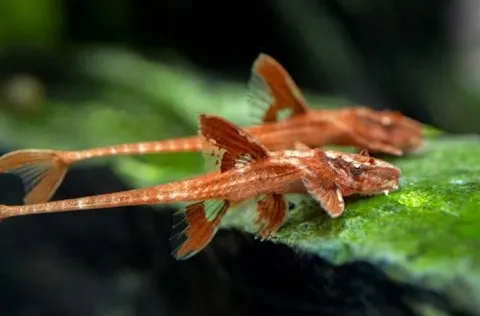
Rineloricaria sp.
The Red Whiptail Catfish belongs to the genus Rineloricaria and is part of the armored catfish family (Loricariidae). Its exact species identification is currently unknown. There are several hypotheses regarding its…
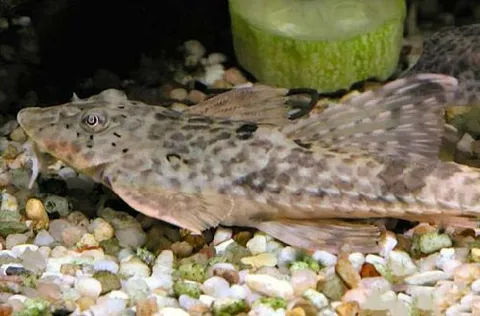
Rineloricaria fallax
The Loricaria catfish, known by its scientific name Rineloricaria fallax, belongs to the Armored Catfish family (Loricariidae). It is a peaceful and undemanding fish, capable of becoming an excellent addition to a…
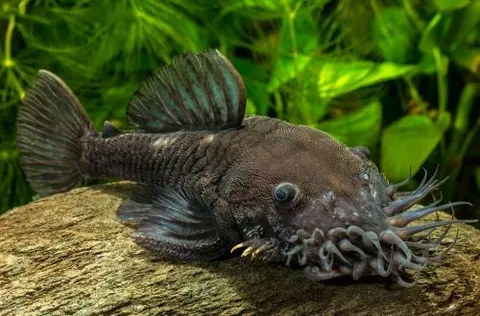
Ancistrus ranunculus
Ancistrus ranunculus, or the Jellyfish Bristlenose Pleco, belongs to the Loricariidae family — the armored catfish. Its scientific name is Ancistrus ranunculus. The unusual appearance of this catfish can evoke mixed…
Loricaria simillima
The Marbled Whiptail, also known as Loricaria simillima (scientific name Loricaria simillima), is a member of the family Loricariidae, or Armored Catfishes. The native habitat of this fish is South America, where it is…