Temperature24 – 28 °C
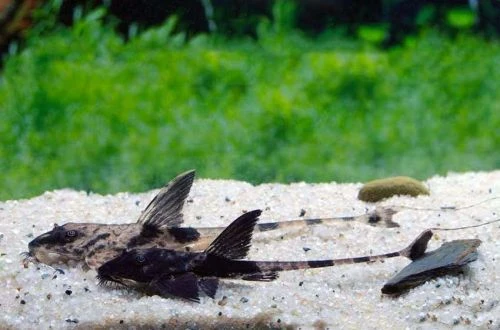
The Marbled Whiptail, also known as Loricaria simillima (scientific name Loricaria simillima), is a member of the family Loricariidae, or Armored Catfishes. The native habitat of this fish is South America, where it is widespread in the vast river systems of the Amazon, Orinoco, and La Plata, covering Venezuela, Ecuador, Peru, Brazil, Paraguay, and Argentina.
Although the maximum recorded size of adult individuals of this species is just over 26 cm, most catfish reach a length of up to 18 cm. The fish have a stocky, robust body structure, transitioning into an elongated, slender caudal peduncle. A distinctive feature is their large triangular fins. The coloration and pattern on the body can vary depending on the region of origin and habitat characteristics. It has been observed, for example, that individuals living in stagnant and murky waters tend to have a darker hue, while fish from fast-flowing rivers with clear water and sandy substrates often have lighter coloration.
The Marbled Whiptail is widely distributed in the Amazon, Orinoco, and La Plata river basins, covering the territories of Venezuela, Ecuador, Peru, Brazil, Paraguay, and Argentina. In nature, the species inhabits rivers and tributaries with varying current characteristics and water composition, from soft acidic to moderately hard alkaline. It prefers areas with sandy bottoms, where it can hide among snags and stones.
This catfish is characterized by a peaceful, one might even say timid, nature. It is unable to effectively compete with other species for food or territory. Ideal tank mates for it would be small fish that prefer to stay in the water column or near the surface. Other catfish, such as Corydoras, would be suitable as bottom dwellers.
Given the low mobility of Loricaria simillima, a pair of these catfish will require an aquarium of 70–80 liters. The aquarium decor can be anything, the main thing is to provide a sufficient number of shelters. It is believed that this species prefers a soft sandy substrate, on which natural decorative elements are placed: snags, stones, boulders, as well as various artificial decorations. When kept long-term, it is critically important to maintain stable hydrochemical water parameters. The fish is able to adapt to a wide range of pH and dGH values, which allows it to comfortably coexist with other species that have their own specific needs.
Being an omnivorous species, Loricaria simillima readily accepts a variety of popular foods in a home aquarium. These can be flakes, granules, tablets, as well as live, fresh, or frozen foods such as bloodworms, daphnia, and artemia.
Breeding is possible in aquarium conditions, but it occurs irregularly. To increase the chances of success, it is recommended to keep a small group of fish, allowing them to form a pair independently. During spawning, the male takes care of the offspring, carrying the clutch of eggs on his lower lip. The fry are extremely sensitive to water quality and require regular feeding, as they tolerate starvation poorly.
The Marbled Whiptail, like other members of the armored catfish family, has sensitive skin, devoid of scales, which makes it vulnerable to aggressive chemical preparations and sharp changes in water parameters. The most common health problems arise from non-compliance with sanitary standards in the aquarium, which provokes the development of bacterial infections and fungal skin lesions. Key risk factors and preventive measures include: — maintaining high water quality with low nitrate and ammonia content, as the accumulation of organic matter quickly leads to fin erosion and skin damage; — excluding the use of copper-containing medications, to which the species shows high sensitivity; — providing clean sandy substrate without sharp particles that can cause mechanical injuries, which can subsequently become foci of infection. When keeping, it is important to monitor the diet: nutrient deficiencies and monotonous feeding weaken the fish's immunity, making it susceptible to parasitic diseases. If signs of illness appear, such as a film on the body, changes in behavior, or refusal to feed, it is necessary to test the water parameters and ensure regular partial water changes with fresh, dechlorinated water.
When selecting individuals, attention should be paid to the condition of the skin and fins: they should be intact, without visible damage, ulcers, or white film. A healthy fish shows activity in searching for food at the bottom and should not look emaciated. Avoid purchasing specimens with sunken bellies, as this often indicates digestive problems or prolonged stress during transportation.
The essentials: size, tank volume, water parameters and care
An adult reaches 18 cm in length. Plan the tank around the maximum size: the fish quickly outgrows a cramped setup.
The recommended volume is 70 L. A smaller tank speeds up nitrate build-up and raises stress levels.
Temperature 24–28 °C, pH 5.6–7.8, hardness 1–20 dGH. Stability matters more than exact values: sudden swings are harder on the fish than a small deviation from the ideal.
Around 8 years when kept properly. Lifespan depends directly on tank volume, water quality and a varied diet.
Temperament: peaceful (regular). Keep this in mind when choosing tank mates.
Recommended setup: mixed (solitary / pair / group). Ignoring this is a common cause of stress and disease.
Diet type: sinking (any). Feed small portions that are finished within a couple of minutes — overfeeding does more harm than underfeeding.
The scientific name of the species is Loricaria simillima, family Armored Catfishes (Loricariidae).
The water suits 197 of 208 plants in the catalogue — the easiest ones are shown first.
Afzelius's AnubiasAnacharisAnubiasBrazilian PennywortDwarf CloverDwarf CloverDwarf HygrophilaDwarf SagittariaDwarf ValGuppy GrassHornwortJava FernJava MossMoneywortMud SwordNair's LagenandraNarrow Leaf AnacharisNarrow-leaf CloverStringy MossSüsswassertangTaiwan MossTape GrassTemple PlantUssuri Watermilfoil
Matched by family, categories and overlapping keeping conditions
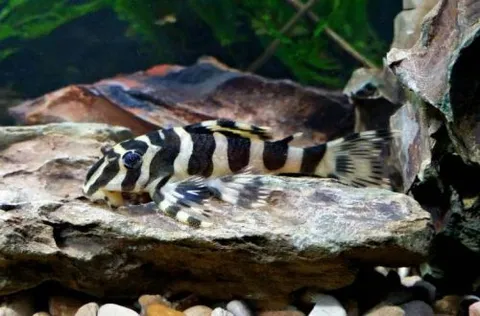
Peckoltia compta
Peckoltia compta, a representative of the armored catfish family (Loricariidae), is one of the most popular pleco species. Its popularity is due to its bright, contrasting coloration, modest size, peaceful nature, and…
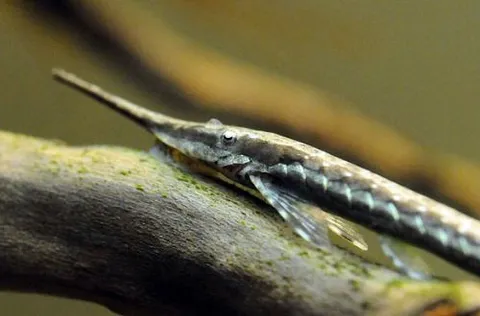
Farlowella acus
Farlowella (Farlowella acus) is a unique species of catfish belonging to the family Loricariidae, known as armored or suckermouth catfish. These fish are distinguished by their extremely original appearance, resembling…
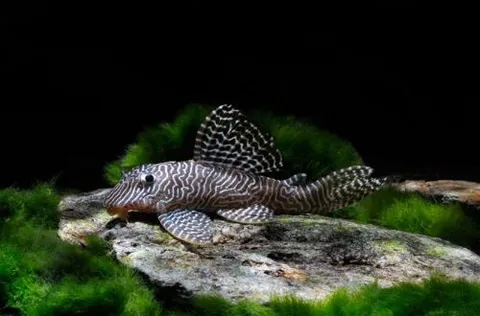
Hypancistrus sp. L260
The Queen Arabesque Pleco, or Painted Pleco, scientifically known as Hypancistrus sp. L260, belongs to the Loricariidae family, which includes armored catfish. The lack of a universally recognized scientific…
Ancistrus ranunculus
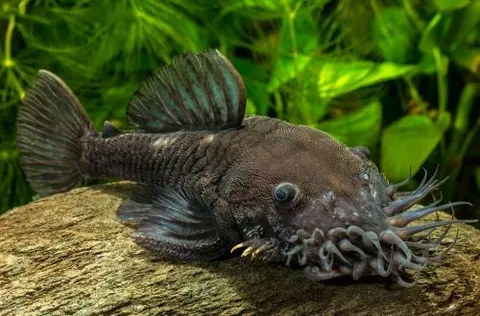
Ancistrus ranunculus, or the Jellyfish Bristlenose Pleco, belongs to the Loricariidae family — the armored catfish. Its scientific name is Ancistrus ranunculus. The unusual appearance of this catfish can evoke mixed…