Temperature22 – 26 °C
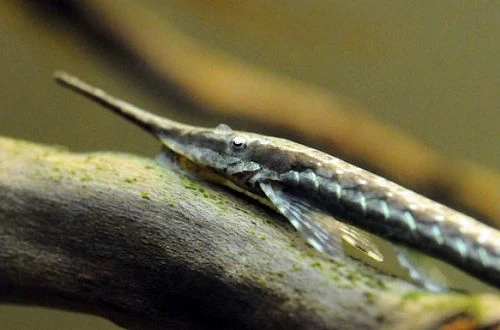
Farlowella (Farlowella acus) is a unique species of catfish belonging to the family Loricariidae, known as armored or suckermouth catfish. These fish are distinguished by their extremely original appearance, resembling an aquatic plant stem or a tree root. Such effective camouflage allows them to hide perfectly in their natural habitat. In a home aquarium, Farlowella adapts well to life in any group of fish, with the exception of aggressive species.
The body of the Farlowella is narrow and elongated, with an extended head and a long snout. The mouth of this catfish is located on the underside of the head, reminiscent of sturgeon. Males can be distinguished by their wider heads, and during the breeding season, they develop characteristic “bristles” or odontodes. The dermal bony plates provide the catfish with complete protection. The coloration varies from greenish-olive to yellowish-brown, and a noticeable dark stripe runs along the entire body.
The species is known from a very small area in Venezuela — Lake Valencia and the Torito River basin — where it prefers slow-flowing stretches. The fish sold as Farlowella acus is usually the closely related Farlowella vittata from Colombia and the Orinoco basin: the true F. acus is rare and threatened by industrial pollution from Valencia and Maracay. Their natural habitat is the flooded understory of tropical forests, where they find refuge among numerous driftwood, trunks, and tree roots.
Farlowella is a peaceful and calm species that spends most of its time near the bottom, among plant roots, searching for food or hiding in driftwood. In a spacious aquarium, these catfish can easily go unnoticed. They can live individually or in groups of related individuals. As tank mates, one should choose equally peaceful fish, because despite their “armor” of bony plates, Farlowella cannot withstand aggressive species.
Proper aquarium setup plays a crucial role. Sand or fine gravel are ideal as a substrate. It is advisable to plant many large-leaved plants with a strong root system. The presence of driftwood and various wooden elements is essential, as they not only serve as shelters but also create an excellent base for algae growth, providing an additional food source. You can build a composition around a central element—one large plant or a piece of driftwood—and use other decorations as complements. The catfish is not demanding, preferring clean and soft water; the pH value is not critical for it. More detailed information on pH and dH parameters, as well as methods for their correction, is available in the “Water Hydrochemical Composition” section. Minimal aquarium equipment includes a filter, heater, aerator, and lighting system. Weekly maintenance usually involves changing 15–20% of the water and cleaning the substrate from organic pollutants, such as excrement and uneaten food residues. It is important to note that using a powerful filtration system can extend the intervals between maintenance to 2–3 weeks.
In nature, the diet of Farlowella consists mainly of plant components, supplemented by small crustaceans and worms. In a home aquarium, these catfish are best offered specialized foods where the content of plant additives exceeds 50% of the total mass. It is extremely important to carefully study the composition of the purchased food. It should also be sinking, as these fish feed primarily at the bottom. It is recommended to feed them twice a day. In an aquarium designed to meet their needs, algae naturally forming on surfaces can serve as an additional food source.
In balanced aquarium conditions, catfish are capable of breeding at any time of the year, but the highest probability of spawning is observed from November to March, which aligns with their natural cycle. During the breeding season, the male chooses a place for the future nest, for example, on the aquarium wall. He carefully cleans it and invites the female, who attaches 60–80 eggs directly to the glass. Fry appear after 6–10 days, the term depends on the water temperature. The young independently find food in the form of microorganisms and various organic particles, which are an integral part of any healthy aquarium ecosystem.
This species is not characterized by any specific ailments. Health problems usually arise only in neglected aquariums or when using poor-quality food. In addition, infection is possible through contact with an already sick fish.
When purchasing, choose active individuals with clean skin without visible damage, ulcers, or white plaque. It is important to assess the fish's plumpness: a sunken belly or an unnaturally pointed back can indicate emaciation, which is a critical risk for this species, as Farlowella tolerate prolonged starvation extremely poorly. Avoid specimens that appear apathetic or constantly lie on their side. Pay attention to the conditions in the retail aquarium: the presence of driftwood and quality plant-based foods in the seller's diet is a good sign. Since fish are prone to stress during transportation and changes in water parameters, clarify the environmental parameters in which the catfish were kept with the seller in advance to ensure smooth adaptation when settling into a new aquarium.
The essentials: size, tank volume, water parameters and care
An adult reaches 18 cm in length. Plan the tank around the maximum size: the fish quickly outgrows a cramped setup.
The recommended volume is 140 L. A smaller tank speeds up nitrate build-up and raises stress levels.
Temperature 22–26 °C, pH 6–8, hardness 1–10 dGH. Stability matters more than exact values: sudden swings are harder on the fish than a small deviation from the ideal.
Around 10 years when kept properly. Lifespan depends directly on tank volume, water quality and a varied diet.
Temperament: peaceful (regular). Keep this in mind when choosing tank mates.
Recommended setup: small group (5–6 individuals). Ignoring this is a common cause of stress and disease.
Diet type: sinking (any). Feed small portions that are finished within a couple of minutes — overfeeding does more harm than underfeeding.
The scientific name of the species is Farlowella acus, family Armored Catfishes (Loricariidae). It also appears in the literature as: Acestra acus, Farlowella scolopacina, Loricaria scolopacina.
The water suits 197 of 208 plants in the catalogue — the easiest ones are shown first.
Afzelius's AnubiasAnacharisAnubiasBrazilian PennywortDwarf CloverDwarf CloverDwarf HygrophilaDwarf SagittariaDwarf ValGuppy GrassHornwortJava FernJava MossMoneywortMud SwordNair's LagenandraNarrow Leaf AnacharisNarrow-leaf CloverStringy MossSüsswassertangTaiwan MossTape GrassTemple PlantUssuri Watermilfoil
Matched by family, categories and overlapping keeping conditions
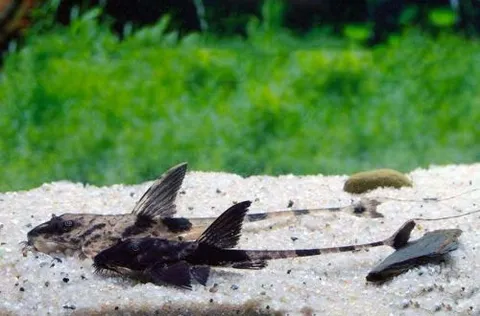
Loricaria simillima
The Marbled Whiptail, also known as Loricaria simillima (scientific name Loricaria simillima), is a member of the family Loricariidae, or Armored Catfishes. The native habitat of this fish is South America, where it is…
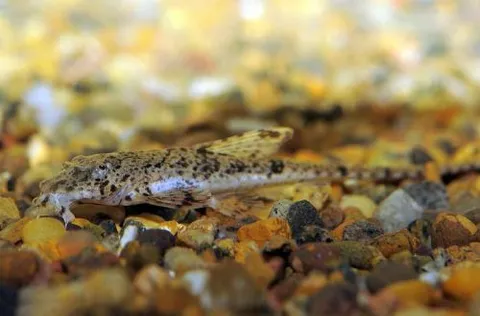
Rineloricaria microlepidogaster
The fish known as the Golden Loricarid or Six-banded Loricarid, scientifically named Rineloricaria microlepidogaster, is a member of the Armored Catfish family (Loricariidae). This catfish originates from South America.…
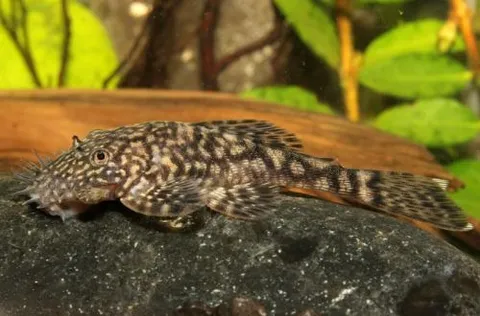
Ancistrus claro
Ancistrus claro, scientifically named Ancistrus claro, belongs to the family Loricariidae, also known as Armored Catfish. Its name originates from the Claro River, a small tributary of the Cuiabá River in the Brazilian…
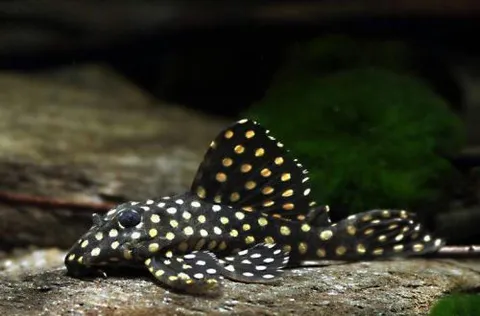
Hypancistrus inspector
Hypancistrus inspector, known scientifically as Hypancistrus inspector, belongs to the armored catfish family (Loricariidae). Its name comes from the Latin word "Inspectores," which translates to "observer," and this is…