Temperature22 – 26 °C
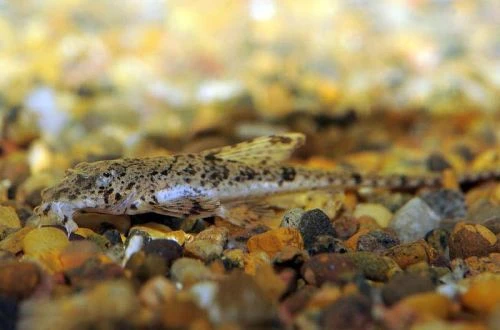
The fish known as the Golden Loricarid or Six-banded Loricarid, scientifically named Rineloricaria microlepidogaster, is a member of the Armored Catfish family (Loricariidae). This catfish originates from South America. Its natural range covers the Paraná and Uruguay river basins, located in northern Argentina and the southern states of Brazil.
The maximum recorded length for adult specimens is 19 cm. This fish is characterized by an elongated and slightly flattened body, transitioning into a very thin caudal peduncle, which terminates in a pointed tail at the top. The head has a pointed, wedge-shaped form. The mouth is located ventrally and is perfectly adapted for scraping algal growth from rocks and snags. Its coloration helps the fish camouflage itself on the rocky riverbed: its gray-yellow body is covered with dark, irregularly shaped spots. Some of these spots merge to form bands encircling the body.
The species inhabits South America, specifically the Laguna dos Patos basin and the Paraná River in Brazil and Argentina. In nature, it occupies watercourses with slow or fast currents, preferring areas with rocky, sandy, or silty bottoms. The fish are found in both clear and turbid waters and can adapt to conditions with anthropogenic pollution.
This fish exhibits a peaceful, non-aggressive nature and coexists well with other non-territorial and calm species that prefer the middle and upper water layers.
The species is considered relatively undemanding. In their natural habitat, these fish can be found in a wide variety of water bodies—from quiet rivers with turbid water to swift streams with strong currents, as well as in water bodies with a certain level of pollution. When setting up a home aquarium, it is recommended to use a rocky substrate, natural snags of various sizes, and areas with aquatic plants. Providing subdued lighting is desirable. The Six-banded Loricarid can adapt to a wide range of hydrochemical parameters, which significantly simplifies the water preparation process during regular aquarium maintenance. It is sufficient to use dechlorinated clean water and ensure that organic waste does not accumulate. This can be achieved through weekly substrate cleaning and ensuring the uninterrupted operation of the filtration system.
The diet must be based on plant-based foods. Algae granules, tablets, and wafers are an excellent choice. Additionally, regular sinking foods can be used as a source of protein supplements.
Breeding occurs in shelters, which the fish use as tubes or crevices. The male cares for the offspring, guarding the clutch of eggs until the larvae hatch. High-quality nutrition and maintaining stable water parameters often stimulate spawning. The hatched fry require microscopic organisms and specialized foods in the aquarium for successful growth.
The species has moderate resilience but is sensitive to high levels of nitrogenous compounds in the water. Under poor keeping conditions, bacterial infections and skin lesions may develop. Prevention includes regular water changes, effective filtration, and maintaining substrate cleanliness, as the accumulation of organic matter provokes health deterioration.
When selecting specimens, attention should be paid to the fish's activity during twilight hours and the condition of its skin, which should be free of ulcers, film, or damage. A healthy loricarid should have a well-fed body without a sunken abdomen. It is recommended to avoid specimens with signs of emaciation or apathetic behavior, and to check for all fins and the integrity of the caudal filament.
The essentials: size, tank volume, water parameters and care
An adult reaches 19 cm in length. Plan the tank around the maximum size: the fish quickly outgrows a cramped setup.
The recommended volume is 150 L. A smaller tank speeds up nitrate build-up and raises stress levels.
Temperature 22–26 °C, pH 5.8–7.8, hardness 5–20 dGH. Stability matters more than exact values: sudden swings are harder on the fish than a small deviation from the ideal.
Around 10 years when kept properly. Lifespan depends directly on tank volume, water quality and a varied diet.
Temperament: peaceful (regular). Keep this in mind when choosing tank mates.
Recommended setup: both solitary and in group (flexible). Ignoring this is a common cause of stress and disease.
Diet type: plant-based (algae, vegetables). Feed small portions that are finished within a couple of minutes — overfeeding does more harm than underfeeding.
The scientific name of the species is Rineloricaria microlepidogaster, family Armored Catfishes (Loricariidae). It also appears in the literature as: Loricaria microlepidogaster.
The water suits 197 of 208 plants in the catalogue — the easiest ones are shown first.
Afzelius's AnubiasAnacharisAnubiasBrazilian PennywortDwarf CloverDwarf CloverDwarf HygrophilaDwarf SagittariaDwarf ValGuppy GrassHornwortJava FernJava MossMoneywortMud SwordNair's LagenandraNarrow Leaf AnacharisNarrow-leaf CloverStringy MossSüsswassertangTaiwan MossTape GrassTemple PlantUssuri Watermilfoil
Matched by family, categories and overlapping keeping conditions
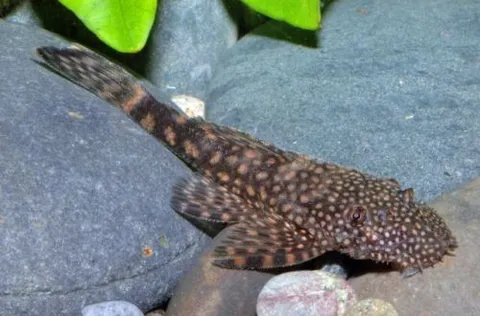
Ancistrus cirrhosus
The Dark Ancistrus, also known as the Bristlenose Pleco (Ancistrus cirrhosus), possesses a rather unusual appearance that might remind one of something shaggy. This fish can remain motionless for long periods, which,…
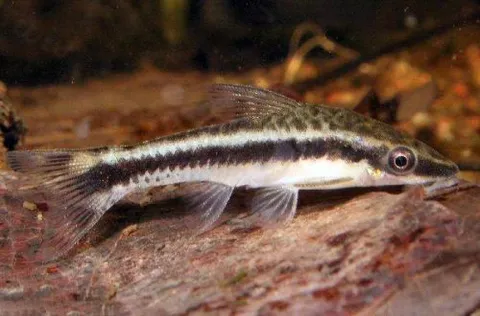
Otocinclus vittatus
Otocinclus vittatus, the scientific name for the dwarf oto, belongs to the armored catfish family (Loricariidae). This species is often used in aquariums to control algae growth. Despite its unassuming coloration, the…
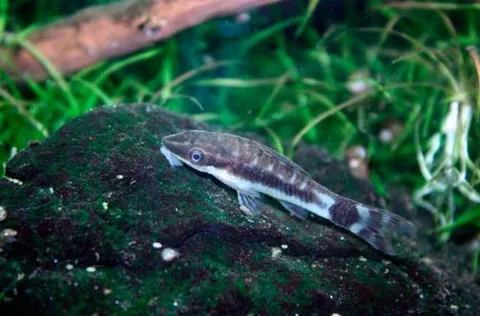
Otocinclus hoppei
Hoppe's Otocinclus, Otocinclus hoppei — its scientific name — is a member of the armored catfish family (Loricariidae). This fish is native to South America, where it inhabits the Madeira and Ucayali river basins, part…
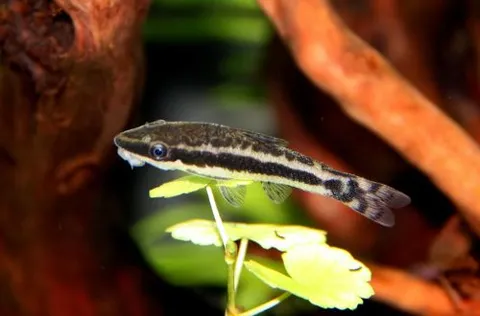
Otocinclus affinis
Otocinclus affinis, known scientifically as Otocinclus affinis, belongs to the Loricariidae family, which includes armored catfish. This fish is peaceful and calm, but its inconspicuous coloration prevents it from…