Temperature23 – 29 °C
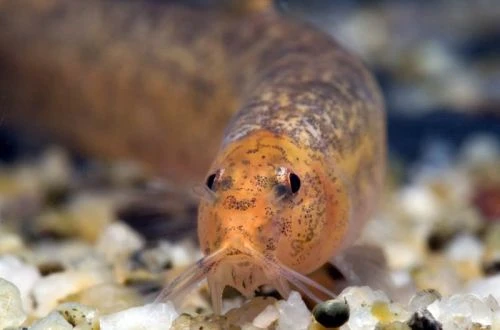
The Sausage Loach, or Lepidocephalichthys tomaculum, belongs to the family Cobitidae. Its amusing common name is even reflected in its Latin designation: the word tomaculum directly translates to “sausage.” Scientists noted that the elongated, cylindrical body shape of this fish evokes associations with the corresponding food product.
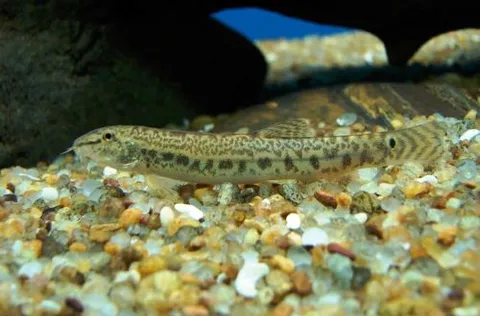
Adults reach approximately 4 cm in length. The fish's body is elongated and cylindrical, giving it an eel-like appearance. The head is small, and three pairs of barbels are located around the mouth, which are used to search for food in the silt or sand layer. The coloration is typically orange or sandy with brown markings distributed over the entire body. The fins and tail are short, rounded, and semi-transparent. In its natural environment, the Sausage Loach often finds itself in semi-dried up water bodies; through evolution, this species has developed a unique additional breathing method: the fish gulps atmospheric air and extracts oxygen from it in a special section of its intestine.
The species originates from Southeast Asia, where it inhabits numerous river systems in peninsular Malaysia. Preferred habitats are regions with slow currents, as well as stagnant backwaters and swamps. A typical biotope is characterized by a bottom covered with a layer of fallen leaves, interspersed with numerous snags and tree roots. The water level is subject to seasonal fluctuations. During the rainy season, coastal areas of tropical forests are flooded, where aquatic inhabitants actively flock in search of food. During the dry season, the water level often drops significantly, turning water bodies into shallow puddles, abundantly blooming with algae.
The Sausage Loach is distinguished by its peaceful and calm disposition, getting along well with its own kind and with other non-aggressive and non-territorial fish species. Good tankmates for it will be fish that prefer to live in the water column or near its surface.
For keeping a group of 4 fish, the optimal aquarium volume starts from 40 liters. Given the feeding habits of the Sausage Loach, the choice of substrate plays a key role in the setup. It is necessary to use sand or fine gravel without sharp edges to avoid damaging the gills, through which sifting occurs. It is also advisable to provide several shelters at the bottom, such as natural snags, dense plant thickets, or decorative elements. The fish prefers subdued lighting, which can be created with floating plants. Water quality and hydrochemical composition are another important factor for long-term keeping. For this, regular aquarium maintenance is carried out: weekly partial water changes with fresh water, removal of organic waste, and preventive maintenance of filtration equipment. Although this species can tolerate significant fluctuations in pH and dGH, sudden changes that may occur during partial water replacement should be avoided. Overall, this fish is undemanding to keep, and care procedures are similar to those required for most other freshwater species.
The primary feeding method involves sifting the substrate with its mouth to find small invertebrates. In a home aquarium, it is recommended to feed the fish sinking foods, such as flakes and granules with high protein content. Fresh and frozen foods should also be included in the diet: Artemia, bloodworms, Daphnia, and similar.
The species has not been bred in aquaria; in the wild it is presumably a seasonal spawner triggered by the rains. Mature males are told apart by their enlarged pectoral fins, whose innermost rays fuse and thicken into a lamina circularis. Adult females are usually deeper-bodied.
The best prevention against diseases is keeping the fish in suitable conditions, providing them with a balanced diet, and avoiding stress caused, for example, by attacks from tank mates. The appearance of signs of illness can be a signal of problems in care. Often, bringing the habitat back to normal contributes to self-recovery, but if the fish's body is severely weakened, medicinal treatment may be required.
When purchasing, preference should be given to active individuals with clean skin without visible damage, sores, or film. It is important to note that these fish are bottom dwellers, so their behavior in the store may be secretive — they often burrow into the substrate, leaving only their eyes exposed. Avoid specimens with severely sunken bellies or signs of emaciation, as adaptation to artificial foods can be difficult for recently imported individuals. It is recommended to acquire a group of four or more fish, as they become excessively shy and stressed when alone.
The essentials: size, tank volume, water parameters and care
An adult reaches 4 cm in length. Plan the tank around the maximum size: the fish quickly outgrows a cramped setup.
The recommended volume is 40 L. A smaller tank speeds up nitrate build-up and raises stress levels.
Temperature 23–29 °C, pH 3.5–7, hardness 1–10 dGH. Stability matters more than exact values: sudden swings are harder on the fish than a small deviation from the ideal.
Around 5 years when kept properly. Lifespan depends directly on tank volume, water quality and a varied diet.
Temperament: peaceful (regular). Keep this in mind when choosing tank mates.
Recommended setup: small group (3–4 individuals). Ignoring this is a common cause of stress and disease.
Diet type: sinking (meat / protein). Feed small portions that are finished within a couple of minutes — overfeeding does more harm than underfeeding.
The scientific name of the species is Lepidocephalichthys tomaculum, family Cobitidae (Loaches).
The water suits 198 of 208 plants in the catalogue — the easiest ones are shown first.
Afzelius's AnubiasAnacharisAnubiasBrazilian PennywortDwarf CloverDwarf CloverDwarf HygrophilaDwarf SagittariaDwarf ValGuppy GrassHornwortJava FernJava MossMoneywortMud SwordNair's LagenandraNarrow Leaf AnacharisNarrow-leaf CloverStringy MossSüsswassertangTaiwan MossTape GrassTemple PlantUssuri Watermilfoil
Matched by family, categories and overlapping keeping conditions
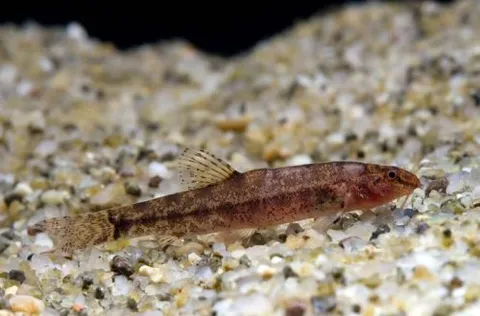
Lepidocephalichthys furcatus
The Forktail Loach, scientifically known as Lepidocephalichthys furcatus, belongs to the family Cobitidae (Loaches). Although not distinguished by bright coloration, these fish possess other valuable qualities: they are…
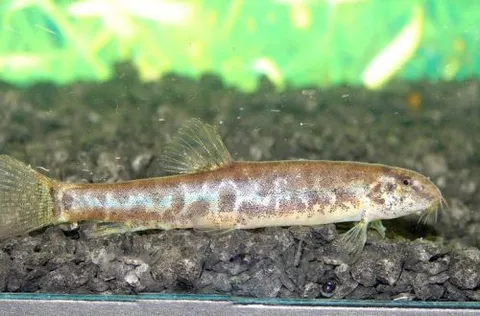
Lepidocephalichthys sp. «LE1»
The scientific name Lepidocephalichthys sp. «LE1» is assigned to the Vietnamese Marble Loach, a representative of the family Cobitidae, or true loaches. This fish is sometimes encountered by aquarists, but its exact…
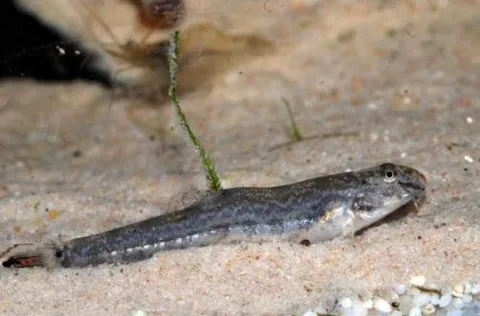
Lepidocephalichthys annandalei
The scientific name Lepidocephalichthys annandalei refers to a fish known as the Peacock Eel or Annandale's Loach, belonging to the family Cobitidae (Loaches). It owes its name to Dr. N. Annandale, who was the director…
Lepidocephalichthys thermalis
The Sand Loach, scientifically known as Lepidocephalichthys thermalis, is a member of the family Cobitidae, or true loaches. This species is native to South Asia, found in the southern regions of India and on the island…