Temperature23 – 28 °C
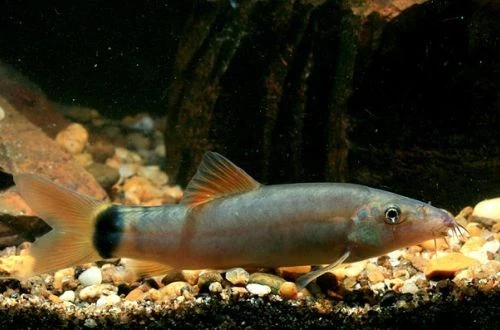
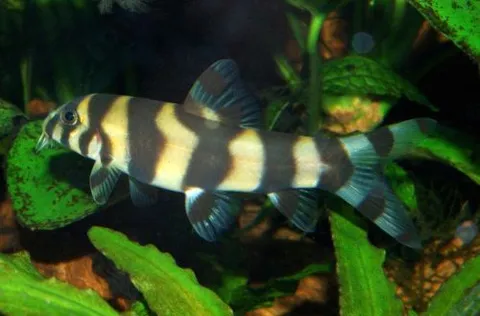
The Silver Loach, or Leconte's Loach (scientific name Yasuhikotakia lecontei), is a member of the Botiidae family. This name was given in honor of Dr. and entomologist John L. LeConte from Philadelphia, USA. Provided with suitable tank mates, this fish exhibits a relatively peaceful temperament. However, its keeping requires certain experience from the aquarist, as strict adherence to water quality and feeding requirements is necessary.
Sometimes the Silver Loach is confused with the Blue Botia, another related species. Despite external similarities, Leconte's Loach can be distinguished by its more graceful and slender body shape, as well as its coloration, which is most often brownish with a golden or green sheen. The dark markings at the base of its tail are rounded. Adult specimens of this fish reach a length of 12–15 cm. Sexual dimorphism is weakly expressed; males and females have virtually no noticeable differences.
This species originates from Southeast Asia, where it inhabits one of the region's largest rivers, the Mekong, whose basin extends through Thailand, Laos, Cambodia, and Vietnam. Leconte's Loach prefers the main river channels, leading a predominantly nocturnal lifestyle and staying in the benthic zone. During daylight hours, it usually hides among rocks, roots, or other submerged driftwood.
Unlike its close relatives — the Sun Loach and the Morlet's Loach — this species has a milder disposition. Suitable tank mates include cyprinids inhabiting the same range, such as danios, rasboras, barbs, as well as other fish that prefer the upper and middle water layers. Bottom dwellers should be excluded if possible. Leconte's Loach feels better in a community of its own kind; a minimum group of 5–6 individuals is considered, but a preferred number starts from 10 or more.
For keeping a group of 5 Leconte's Loaches, an aquarium of at least 250 liters will be required. The decor must include numerous hiding places where the fish can conceal themselves during the day. These can be natural elements such as driftwood and dense plant thickets, or decorative items. If aesthetics are not a priority, even ordinary ceramic pots turned on their side will suffice. It is important to remember that these fish like to squeeze into narrow crevices, so make sure they do not get stuck in one-way traps or between the glass and the heater. Plants should be chosen with stiff leaves so that the Silver Loach does not damage them; an alternative solution is to use artificial vegetation. Since loaches live in flowing water, they are very sensitive to the accumulation of organic waste, which is especially relevant in a closed aquarium ecosystem without proper care. The use of an effective filtration system and weekly water changes of 30–50% become paramount.
The Silver Loach is an omnivorous species. In its natural environment, its diet consists of benthic invertebrates such as worms, insect larvae, and freshwater shrimp, as well as plant matter: soft aquatic plants, young shoots, and fruits that have fallen into the water. In a home aquarium, similar sinking foods should be offered, as floating products will be ignored. The diet can be based on specialized loach foods from various manufacturers, as well as natural products such as live or frozen earthworms, bloodworms, brine shrimp, supplemented with pieces of vegetables and fruits.
In home aquariums, successful cases of natural reproduction of this species have not been recorded. Mention is sometimes made of the breeding of Silver Loach in artificial environments using hormonal injections, but such a method hardly falls within the realm of amateur aquaristics.
Health problems in these fish arise only in the presence of injuries or keeping in unsuitable conditions, which leads to a weakening of the immune system and the subsequent occurrence of various diseases. At the first signs of illness, it is necessary first to check the water parameters for exceeding permissible values or the presence of toxic substances (such as nitrites, nitrates, ammonia). If deviations are found, all indicators should be normalized, and then treatment should begin.
When choosing a Silver Loach, pay attention to the fish's activity and appearance. Healthy individuals should show curiosity, swim in the water column or explore the bottom, rather than constantly hiding in the corners of the aquarium. Avoid specimens with signs of emaciation, sunken bellies, or damaged fins. It is important to ensure there are no white spots, ulcers, or film on the scales, as these fish are sensitive to water quality and can carry diseases if poorly maintained in retail outlets. Keep in mind that young individuals are often confused with closely related species, so carefully examine their coloration. The Silver Loach has a more elongated body, and the dark spot on the caudal peduncle is usually rounded and does not form a continuous ring around the base of the tail. When purchasing, it is best to choose a group of several individuals, as this species has a pronounced social structure and can experience stress when alone. Also, check the integrity of their barbels, which are important sensory organs and can be damaged during transport or keeping in unsuitable substrate.
The essentials: size, tank volume, water parameters and care
An adult reaches 12–15 cm in length. Plan the tank around the maximum size: the fish quickly outgrows a cramped setup.
The recommended volume is 250 L. A smaller tank speeds up nitrate build-up and raises stress levels.
Temperature 23–28 °C, pH 6–8, hardness 2–12 dGH. Stability matters more than exact values: sudden swings are harder on the fish than a small deviation from the ideal.
Around 8 years when kept properly. Lifespan depends directly on tank volume, water quality and a varied diet.
Temperament: peaceful (regular). Keep this in mind when choosing tank mates.
Recommended setup: small group (5–6 individuals). Ignoring this is a common cause of stress and disease.
Diet type: sinking (any). Feed small portions that are finished within a couple of minutes — overfeeding does more harm than underfeeding.
The scientific name of the species is Yasuhikotakia lecontei, family Botiidae. It also appears in the literature as: Botia lecontei, Botia pulchripinnis, Yasuhikotakia pulchripinnis.
The water suits 197 of 208 plants in the catalogue — the easiest ones are shown first.
Afzelius's AnubiasAnacharisAnubiasBrazilian PennywortDwarf CloverDwarf CloverDwarf HygrophilaDwarf SagittariaDwarf ValGuppy GrassHornwortJava FernJava MossMoneywortMud SwordNair's LagenandraNarrow Leaf AnacharisNarrow-leaf CloverStringy MossSüsswassertangTaiwan MossTape GrassTemple PlantUssuri Watermilfoil
Matched by family, categories and overlapping keeping conditions
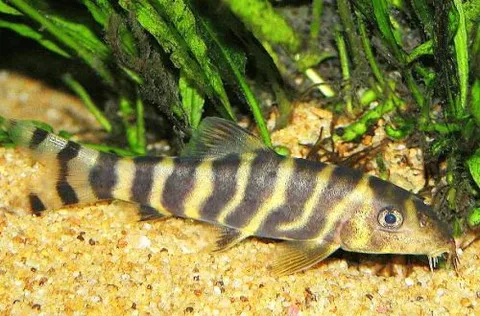
Botia dario
Botia dario, also known as the Bengal Loach (scientific name Botia dario), belongs to the family Botiidae (Loaches). This fish is undemanding and easy to keep, coexisting well with many popular aquarium inhabitants. It…
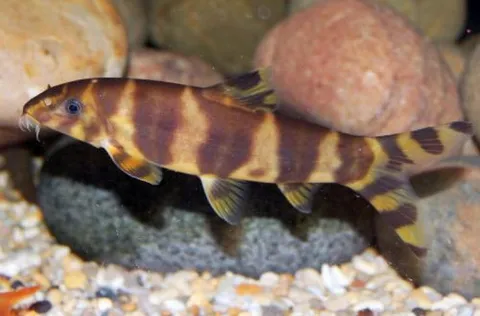
Botia udomritthiruji
The scientific name Botia udomritthiruji belongs to the Emperor Botia, which is part of the Botiidae family (Loaches). This species adapts well to aquarium conditions and does not cause much trouble. The fish is…
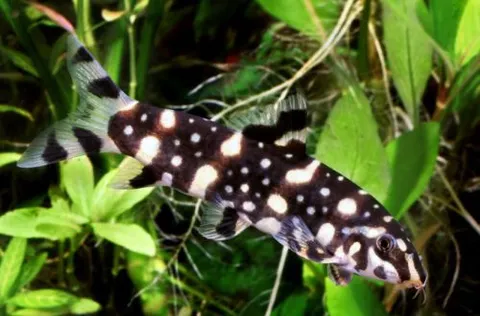
Botia kubotai
Kubotai Loach, also known as the Chessboard Botia (scientific name Botia kubotai), belongs to the family Botiidae, or true loaches. Before the species received a formal scientific description, it was already actively…
Botia histrionica
The Burmese Border Loach, also known as Botia histrionica (scientific name Botia histrionica), belongs to the family Botiidae, or True Loaches. It is a peaceful and friendly fish with a unique body pattern. It coexists…