Temperature20 – 28 °C
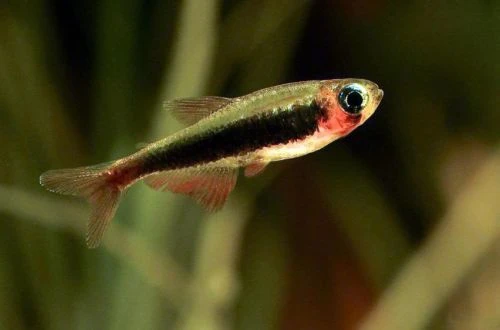
The Tucano Tetra, known as Tucanoichthys tucano, belongs to the Acestrorhamphidae family and is named after the Tucano tribe inhabiting the jungles of Colombia and Brazil. Specimens of this fish species were first discovered in this region. This species remains relatively uncommon among hobby aquarists, although its keeping is no more difficult than that of other Tetras.
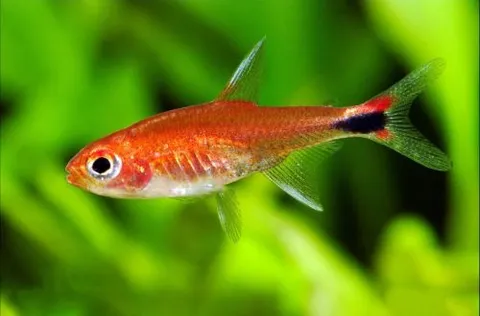
Adults do not exceed 2 cm in length. Their coloration is mainly gray, with reddish bellies and fins. A wide black stripe runs along the body, from head to tail. Sexual dimorphism is weakly expressed; males and females are practically indistinguishable.
The species is known only from the rio Uaupés system within the upper rio Negro basin, in the Brazilian state of Amazonas. It prefers small streams and rivers flowing through humid tropical forests. A typical biotope is a body of water about 2 meters wide, with a thick layer of fallen leaves and branches accumulating on the bottom. There are no aquatic plants here, and the water has a rich brown tint due to the abundance of organic matter.
Tucanoichthys tucano is peaceful and thrives best in the company of its own kind, as well as other species of comparable size. It is advisable to keep a group of 8–10 individuals. Males may exhibit territorial behavior during spawning, but due to their size, they pose no threat to tank mates. Large and aggressive fish are completely excluded from cohabitation.
For a school of 8–10 fish, the minimum aquarium volume is 40 liters. The aquascape can be chosen at your discretion, but the Tucano Tetra will look most natural and harmonious in an environment that mimics its natural habitat: among snags, with subdued lighting, and on a sandy substrate. Aquatic plants are not mandatory and can be added at the aquarist's discretion. Leaves of certain tree species play an important role in decoration; placed on the bottom, they release tannins during decomposition, similar to natural processes. These substances give the water a brown tint and have antifungal and antimicrobial effects, which positively impacts the well-being of the ecosystem. Long-term and successful keeping is possible in water with low carbonate hardness and an acidic pH. It is important to maintain a stable hydrochemical composition of the water and prevent the accumulation of nitrogen cycle products to dangerous concentrations. Achieving the desired stability is ensured by the efficient operation of the filtration system and other equipment, as well as regular aquarium maintenance: partial water changes, removal of organic waste such as food remnants and excrement.
The diet of Tucanoichthys tucano includes various foods of appropriate size. Their daily menu can consist of dry flakes or granules, supplemented with live or frozen Artemia, Daphnia, and finely chopped bloodworms.
The breeding strategy of this species differs from that of other characins, as the Tucano Tetra is a caring parent. During the breeding season, males establish temporary territories around a suitable hard surface, such as a leaf, snag, or branch. Females ready to spawn accept the males' courtship and lay several dozen eggs in their territory, after which they depart. The male remains to guard the clutch until the fry emerge. Over time, parental instincts weaken, so it is recommended to move the fry to a separate aquarium for their protection. In the first days of life, the fry have a bluish coloration and differ from adult individuals.
Specific diseases that affect only this particular fish species have not been identified. When kept in suitable conditions, including high water quality, a balanced diet, and peaceful tank mates, health issues usually do not arise. The most common cause of illness is a deterioration of living conditions, which weakens the immune system and makes the fish susceptible to infections that are always present in their environment. Upon noticing initial signs of sickness (such as lethargy, emaciation, refusal to eat, or clamped fins), it is crucial to immediately check the basic water parameters. Often, restoring acceptable living conditions will lead to self-recovery, but if the fish is too weak or has suffered visible damage, medicinal treatment may be required.
When choosing Tucano Tetras, it is important to ensure there are no external signs of disease: fin damage, ulcers, or white spots on the body. Healthy fish should be active, stay in a school, and show interest in their surroundings. Avoid individuals that appear emaciated, have sunken bellies, or exhibit apathy, hanging alone near the surface or in the corners of the aquarium. Given that the species is often wild-caught, it is recommended to ask the seller about the fish's adaptation period in the store and whether quarantine was performed. It is better to choose individuals with bright coloration, appropriate for the species, as dull color can indicate chronic stress or poor keeping conditions.
The essentials: size, tank volume, water parameters and care
An adult reaches 2 cm in length. Plan the tank around the maximum size: the fish quickly outgrows a cramped setup.
The recommended volume is 40 L. A smaller tank speeds up nitrate build-up and raises stress levels.
Temperature 20–28 °C, pH 4–6.5, hardness 1–8 dGH. Stability matters more than exact values: sudden swings are harder on the fish than a small deviation from the ideal.
Around 3 years when kept properly. Lifespan depends directly on tank volume, water quality and a varied diet.
Temperament: peaceful (regular). Keep this in mind when choosing tank mates.
Recommended setup: group (8–10 individuals). Ignoring this is a common cause of stress and disease.
Diet type: small / appropriate size / pieces. Feed small portions that are finished within a couple of minutes — overfeeding does more harm than underfeeding.
The scientific name of the species is Tucanoichthys tucano, family Acestrorhamphidae.
The water suits 197 of 208 plants in the catalogue — the easiest ones are shown first.
Afzelius's AnubiasAnacharisAnubiasBrazilian PennywortDwarf CloverDwarf CloverDwarf HygrophilaDwarf SagittariaDwarf ValGuppy GrassHornwortJava FernJava MossMoneywortMud SwordNair's LagenandraNarrow Leaf AnacharisNarrow-leaf CloverStringy MossSüsswassertangTaiwan MossTape GrassTemple PlantUssuri Watermilfoil
Matched by family, categories and overlapping keeping conditions
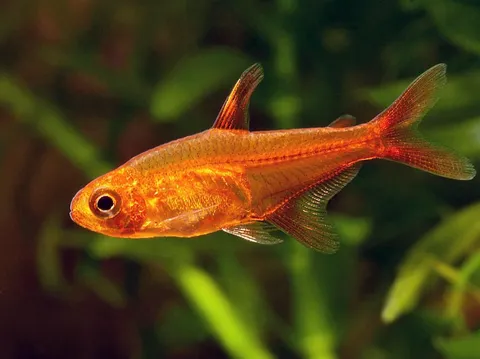
Hyphessobrycon amandae
Amanda's Tetra, also known as the Dwarf Red Tetra, has the scientific name Hyphessobrycon amandae and belongs to the family Acestrorhamphidae. This fish species was named in honor of researcher Amanda Géry, who…
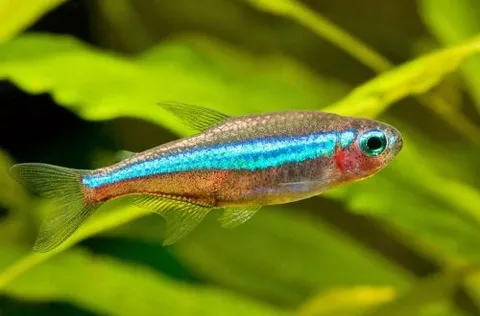
Paracheirodon simulans
The False Blue Neon Tetra, scientifically known as Paracheirodon simulans, is a member of the Acestrorhamphidae family. It is significantly less common in the aquarium trade than other Neon species, yet it is no less…
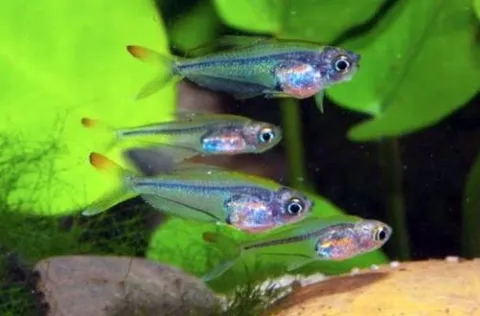
Trochilocharax ornatus
The Hummingbird Tetra, scientifically known as Trochilocharax ornatus, is a member of the Acestrorhamphidae family. This species undoubtedly lives up to its name, as it is among the most miniature aquarium fish.…
Axelrodia riesei
Axelrodia riesei, also known as the Ruby Tetra or Axelrod's Tetra, is a fish from the Characin family. Its Latin name has an interesting origin, being a combination of the names of two scientists — Herbert R. Axelrod…