Temperature25 – 28 °C
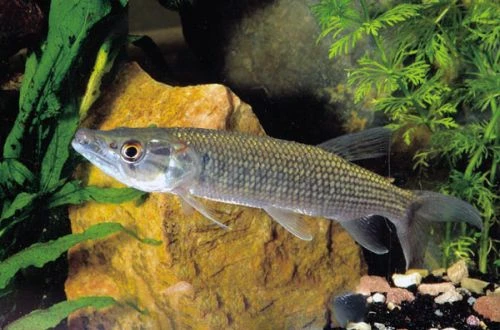
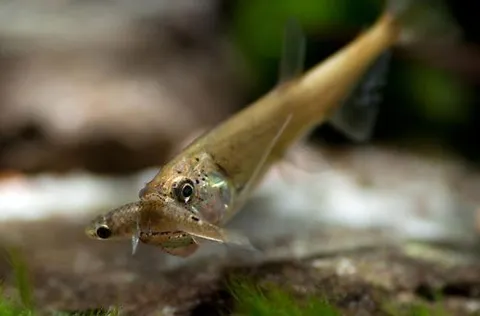
Hepsetus odoe, known as the African Pike, belongs to the family Hepsetidae. This species is a true predator: it ambushes its prey, attacking instantly as soon as an unwary fish comes close enough, after which the victim ends up in a mouth filled with sharp teeth. Such spectacles can be observed daily, provided there is a significant investment in setting up a large-scale aquarium. These fish are most often found in commercial aquaristics among professionals and are rarely kept by amateurs.
Outwardly, this fish bears a significant resemblance to the Central European pike, differing only in its higher and more massive body, and a less elongated mouth. Adult individuals can reach impressive sizes — up to 70 cm in length, however, in home aquarium conditions, they grow significantly less intensively.
As the name suggests, the homeland of this species is the African continent. The fish is widespread throughout Africa, inhabiting almost all water bodies, be it lagoons, rivers, lakes, or swamps. It prefers places with slow currents, staying in coastal areas rich in dense vegetation and numerous shelters.
This species is not suitable for keeping in a community tank. African pikes are kept either alone or in small groups. Co-habitation with large catfish or bichirs of similar size is permissible. Any fish smaller in size will be perceived as potential food.
Even if the pike does not reach its maximum size in aquarium conditions, the minimum tank volume for one individual should be no less than 680 liters. In decorating the aquarium, it is recommended to use snags, smooth stones, and large aquarium plants. These elements form a kind of coastal area with various shelters, while most of the space remains free. It is important to provide a tight lid or cover glass to prevent the fish from accidentally jumping out, especially during hunting. When planning such an aquarium, specialists usually handle its connection and placement of the necessary equipment, so there is no need to describe in detail the features of filtration systems and other technical aspects in this article. Optimal keeping conditions are characterized by a weak current, moderate lighting, water temperature in the range of 25–28°C, slightly acidic pH with low to medium hardness.
This is a true predator that hunts its prey by ambushing. Given that most African pikes enter aquariums from the wild, their diet should include live fish. Livebearers, such as guppies, which are characterized by frequent and abundant reproduction, are often used as feed. Over time, the pike can be accustomed to consuming meat products: these can be pieces of shrimp, earthworms, mussels, as well as fresh or frozen fish.
In home aquariums, this species generally does not reproduce. Young African pike individuals are usually imported either from the wild or from specialized fish farms. In natural waters, individuals become sexually mature upon reaching a length of about 15 cm. During the spawning period, the male builds a nest among dense vegetation, which he then jealously guards. The female, using special glands, attaches the eggs to the base of the nest. After the fry hatch, the parents leave their offspring. The fry remain in the nest for the first few days, and then begin an independent life. The special sticky substance remaining after spawning continues to be used by the fry to attach to plants, which provides them with shelter from predators and allows them to conserve energy.
The African pike has a strong immune system, however, if keeping conditions are violated, especially with poor filtration and accumulation of organic waste, it becomes susceptible to bacterial infections. The main signs of diseases are the appearance of ulcers on the body, fin erosion, reddening of the skin, and clouding of the mucous membrane. For prevention, it is necessary to maintain high water quality, ensure powerful biological and mechanical filtration, and regularly perform water changes. The fish is extremely sensitive to the cleanliness of its habitat, so any deviations from the parameters can provoke stress and subsequent development of pathologies.
When choosing an African pike, attention should be paid to the activity of the individual and the cleanliness of its skin. A healthy fish should be active, without visible damage, ulcers, spots, or signs of emaciation. It is important to ensure that the individual does not show signs of labored breathing or apathy. Since this species is a predator, fish are often kept alone or with similarly sized tank mates in stores; aggression towards other individuals in a community tank is natural behavior. It is recommended to clarify with the seller what type of food the fish is accustomed to, as transitioning wild-caught individuals to a non-live diet may take time.
The essentials: size, tank volume, water parameters and care
An adult reaches 70 cm in length. Plan the tank around the maximum size: the fish quickly outgrows a cramped setup.
The recommended volume is 680 L. A smaller tank speeds up nitrate build-up and raises stress levels.
Temperature 25–28 °C, pH 6–7.5, hardness 8–18 dGH. Stability matters more than exact values: sudden swings are harder on the fish than a small deviation from the ideal.
Around 5 years when kept properly. Lifespan depends directly on tank volume, water quality and a varied diet.
Temperament: predator (dangerous to small, incompatible). This is a predatory species — any fish small enough to fit in its mouth will eventually be eaten.
Recommended setup: both solitary and in group (flexible). Ignoring this is a common cause of stress and disease.
Diet type: for carnivores (live fish, insects, etc.). Feed small portions that are finished within a couple of minutes — overfeeding does more harm than underfeeding.
The scientific name of the species is Hepsetus odoe, family Hepsetidae. It also appears in the literature as: Hepsetus akawo, Hepsetus fulvus, Hydrocyonoides odoe.
The water suits 185 of 208 plants in the catalogue — the easiest ones are shown first.
Afzelius's AnubiasAnacharisAnubiasBrazilian PennywortDwarf CloverDwarf CloverDwarf HygrophilaDwarf SagittariaDwarf ValGuppy GrassHornwortJava FernJava MossMoneywortMud SwordNair's LagenandraNarrow Leaf AnacharisNarrow-leaf CloverSüsswassertangTaiwan MossTape GrassTemple PlantUssuri WatermilfoilWater Wisteria
Matched by family, categories and overlapping keeping conditions
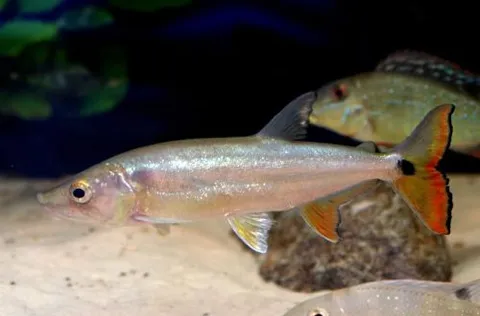
Acestrorhynchus altus
The Redtail Barracuda, scientifically known as Acestrorhynchus altus, belongs to the family Acestrorhynchidae. Its appearance, combining a streamlined, dynamic physique with jaws full of teeth, clearly indicates its…
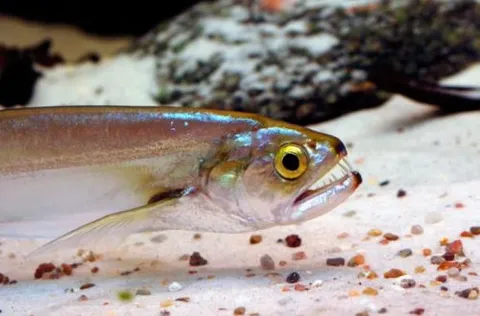
Rhaphiodon vulpinus
The fish known as the Biara, or Chaparrin, with the scientific name Rhaphiodon vulpinus, belongs to the family Cynodontidae. This large predator is not suitable for beginner aquarists. It requires a very spacious…
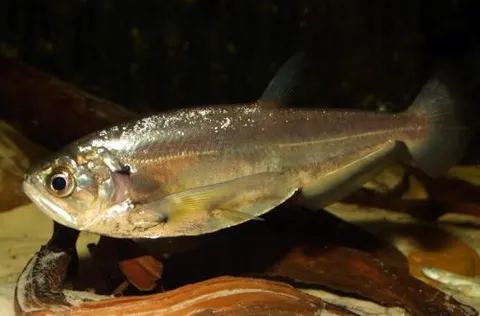
Hydrolycus scomberoides
The scientific name Hydrolycus scomberoides, belonging to the family Cynodontidae, is given to the Vampire Tetra, a true predator from South American rivers. This species is not recommended for beginner aquarists due to…
Hydrolycus armatus
The Vampire Fish, or Payara (scientific name Hydrolycus armatus), belongs to the family Cynodontidae. This species is one of the largest predators inhabiting the river systems of South America. It is not suitable for…