Temperature24 – 28 °C
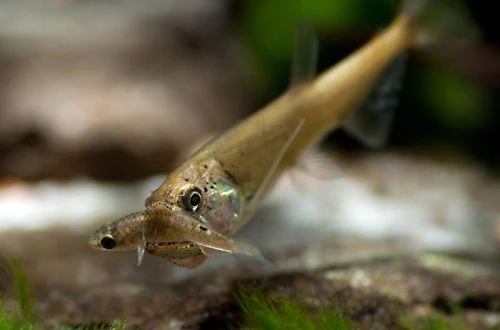
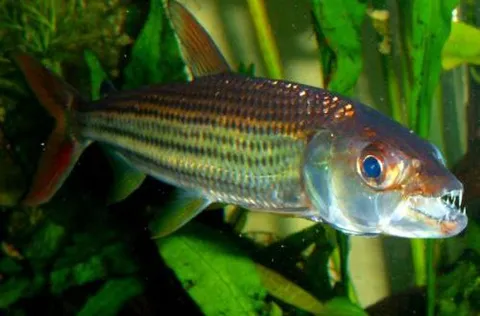
The Vampire Fish, or Payara (scientific name Hydrolycus armatus), belongs to the family Cynodontidae. This species is one of the largest predators inhabiting the river systems of South America. It is not suitable for keeping in typical home conditions, requiring very large aquariums, available only in large private collections or public institutions.
In natural conditions, adult specimens can reach over 1 meter in length, although in captivity their size is usually slightly smaller. Nevertheless, they remain impressive fish, capable of weighing over 10 kg. The Payara's body is elongated and streamlined, tapering towards the caudal fin, which allows it to make swift attacks on prey. The head is large, and the mouth is studded with numerous sharp teeth. A distinctive feature of adult specimens is two powerful fangs on the lower jaw. These fangs are so large that special openings are provided for them in the upper jaw. The fish's coloration is silvery, sometimes with dark spots, giving it a characteristic appearance.
This fish can be found in most large rivers of South America, including the Orinoco and Amazon basins. It prefers areas with clear, fast-flowing, and turbulent water, often inhabiting depths at the base of rapids and in the lower parts of waterfalls, where the current is particularly strong.
It is most natural for Payara to live in small groups, but it is perfectly acceptable to keep it alone. It is compatible only with fish species of comparable size; any fish small enough to fit into its mouth will be immediately eaten.
Keeping such a large fish requires an aquarium of about 2000 liters. It should be noted that such a tank, considering the weight of the water, the glass itself, and decorations, creates a load of over 2 tons. The aquarium's decor should simulate a riverbed with an intense current. Maintaining high water quality in such a volume requires the use of specialized and expensive equipment, as well as significant material and financial costs for regular maintenance. Thus, keeping Payara is only accessible to wealthy aquarists.
In its natural environment, Payara preys on small fish, but the basis of its diet is another well-known predator — the piranha. Young specimens can consume large earthworms and river shrimp. They must not be fed mammalian or avian meat: the lipids it contains cannot be properly metabolised by the fish and lead to excess fat deposits and even organ degeneration.
The species is not bred in aquaria. Adults reach a size that only a handful of private facilities with the necessary volumes can accommodate, so breeding does not arise as a practical question. Information on spawning in the wild is scarce as well.
The main causes of most diseases in these fish usually lie in unsuitable keeping conditions. Ensuring ideal water parameters, sufficient space, and preventing organic pollution is a rather complex but extremely important task. It is noteworthy that even under the most favorable conditions in an aquarium, the lifespan of these fish rarely exceeds two years.
When choosing a Vampire Fish, extreme caution should be exercised, as this species is highly sensitive to transportation and keeping conditions. Healthy specimens should be active, without signs of apathy or timidity. It is important to carefully inspect the fish for external damage, especially in the snout and fin areas, which are often injured during transport. Avoid specimens with reddened or inflamed skin areas, which may indicate ammonia burns or bacterial infections. It is strongly not recommended to purchase fish that refuse food in the store or show signs of emaciation, such as a sunken belly. In a healthy fish, the eyes should be clear, without cloudiness, and breathing should be even, without excessively frequent gill cover movements. Given the difficulty of species adaptation, it is best to prefer specimens that have already undergone a quarantine period and have started accepting offered food in aquarium conditions.
The essentials: size, tank volume, water parameters and care
An adult reaches 60–100 cm in length. Plan the tank around the maximum size: the fish quickly outgrows a cramped setup.
The recommended volume is 2000 L. A smaller tank speeds up nitrate build-up and raises stress levels.
Temperature 24–28 °C, pH 6–8, hardness 5–15 dGH. Stability matters more than exact values: sudden swings are harder on the fish than a small deviation from the ideal.
Around 10 years when kept properly. Lifespan depends directly on tank volume, water quality and a varied diet.
Temperament: predator (dangerous to small, incompatible). This is a predatory species — any fish small enough to fit in its mouth will eventually be eaten.
Recommended setup: solitary. Ignoring this is a common cause of stress and disease.
Diet type: for carnivores (live fish, insects, etc.). Feed small portions that are finished within a couple of minutes — overfeeding does more harm than underfeeding.
The scientific name of the species is Hydrolycus armatus, family Cynodontidae. It also appears in the literature as: Hydrocyon armatus.
The water suits 196 of 208 plants in the catalogue — the easiest ones are shown first.
Afzelius's AnubiasAnacharisAnubiasBrazilian PennywortDwarf CloverDwarf CloverDwarf HygrophilaDwarf SagittariaDwarf ValGuppy GrassHornwortJava FernJava MossMoneywortMud SwordNair's LagenandraNarrow Leaf AnacharisNarrow-leaf CloverStringy MossSüsswassertangTaiwan MossTape GrassTemple PlantUssuri Watermilfoil
Matched by family, categories and overlapping keeping conditions
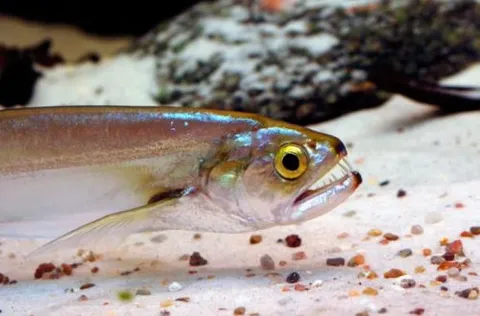
Rhaphiodon vulpinus
The fish known as the Biara, or Chaparrin, with the scientific name Rhaphiodon vulpinus, belongs to the family Cynodontidae. This large predator is not suitable for beginner aquarists. It requires a very spacious…
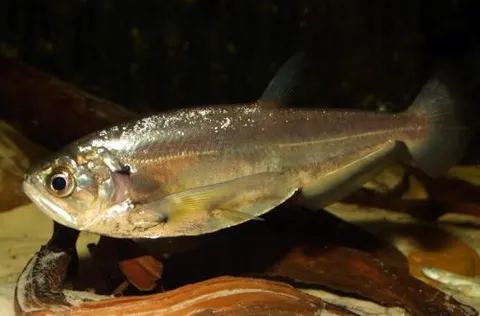
Hydrolycus scomberoides
The scientific name Hydrolycus scomberoides, belonging to the family Cynodontidae, is given to the Vampire Tetra, a true predator from South American rivers. This species is not recommended for beginner aquarists due to…
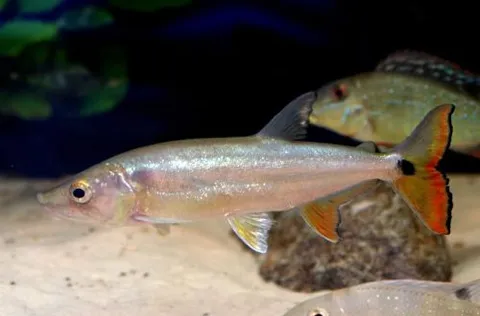
Acestrorhynchus altus
The Redtail Barracuda, scientifically known as Acestrorhynchus altus, belongs to the family Acestrorhynchidae. Its appearance, combining a streamlined, dynamic physique with jaws full of teeth, clearly indicates its…
Hydrocynus vittatus
A member of the Alestidae family, scientifically named Hydrocynus vittatus, this is an African tiger fish. At first glance, it's clear that this is a true predator with a rather aggressive disposition. Its impressive…