Temperature22 – 28 °C
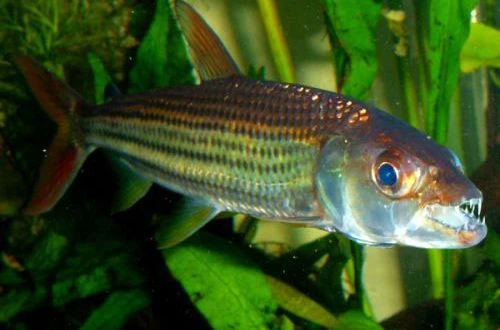
A member of the Alestidae family, scientifically named Hydrocynus vittatus, this is an African tiger fish. At first glance, it's clear that this is a true predator with a rather aggressive disposition. Its impressive size and corresponding appetite make this fish suitable not so much for very experienced aquarists, but rather for those who are prepared for significant financial investment, as feeding such a pet can be quite costly.
In their natural habitat, wild individuals of this species can exceed 1 meter in length, but in aquarium conditions, their growth rarely exceeds 75 cm. These fish have an elongated body, tapering towards the head, and are equipped with a forked caudal fin. Their large head stands out with an enormous mouth, where sharp, conical teeth with pointed tips are clearly visible, perfectly adapted for securely grasping and efficiently crushing prey. The fish's body has a silvery coloration, adorned with large scales with a golden sheen, and the fins are distinguished by bright yellow or red pigmentation.
It's common to hear the tiger fish referred to as "African," as it inhabits almost all major rivers and lakes on this continent. Being fierce and very voracious predators, these fish typically hunt any prey smaller than themselves. At the same time, they can diversify their diet by consuming plant matter. Although the tiger fish had been known to local inhabitants for hundreds of years, serving as an important food source for riverside villages, it was first scientifically described only in the 19th century.
These fish do not exhibit aggression towards each other, and when young, they usually stay in schools. Selecting tank mates is significantly difficult, as there are very few species that can peacefully coexist with the tiger fish. Therefore, it's best to abandon the idea of communal keeping. These fish feel quite comfortable alone or in a small group.
These large fish produce a significant amount of waste, which requires prompt and regular removal. Given this, a powerful filtration system must be provided; installing an external canister filter is recommended. This type of filter has high performance and is located outside the aquarium, which eliminates the possibility of the fish damaging the equipment. An important element of care is the mandatory 30–50% water change every two weeks, which can be conveniently combined with siphoning the substrate. When decorating the aquarium, two key points should be considered: an abundance of shelters/ambush spots and sufficient free swimming space. This can be achieved by placing tree roots, artificial grottoes, and caves on the bottom. Plants should be large, with strong root systems, and planted in groups along the side walls.
The basis of their diet should be live feeder fish, preferably small ones. For adult tiger fish, a feeder fish of about 15 cm is ideal, which is sufficient for one feeding if divided into two parts. Feeding should be done several times a day. The fish can also consume pieces of meat, including frozen, but this is only a supplement to the main diet. Fry, however, can be fed dry commercial granulated food until they reach a larger size.
No successful breeding cases of this species have been recorded in home aquariums. This is due to the need to recreate many specific conditions for reproduction, such as simulating the rainy season, as well as the possibility of migration to shallow rivers or backwaters where eggs are usually laid. Tiger fish are bred in specialized hatcheries, from where they are then sent for sale to retail networks.
The fish is hardy and undemanding. If the aquarium is maintained in proper condition, health problems generally do not arise. The main causes of reduced immunity are insufficient free space in the aquarium and poor-quality nutrition. Since the fish's diet largely consists of live food, there is a risk of infection through diseased prey fish. More detailed information on symptoms and treatment methods can be found in the "Fish Diseases" section.
When purchasing, it should be noted that this is an extremely demanding species, not intended for keeping in ordinary aquariums due to its enormous size and aggressive behavior. A healthy individual should be active, have clean, tightly adhering scales without visible damage, ulcers, or spots. The eyes should be clear, without cloudiness or signs of inflammation. Avoid acquiring fish that stay at the surface, breathe heavily, or show signs of apathy. — Inspect the fins for erosion or ragged edges, which may indicate poor water quality or infections. — Ensure the fish shows a natural reaction to movement outside the aquarium, as lethargy in young individuals often indicates poor health or stress. — Check for dead or sick tank mates in the aquarium with the fish, as this increases the risk of infection for the acquired specimen. It is strongly not recommended to purchase this fish without prior preparation of a system with a volume of at least 2000 liters and an understanding of the complexity of caring for a large predator.
The essentials: size, tank volume, water parameters and care
An adult reaches 75 cm in length. Plan the tank around the maximum size: the fish quickly outgrows a cramped setup.
The recommended volume is 2000 L. A smaller tank speeds up nitrate build-up and raises stress levels.
Temperature 22–28 °C, pH 6.5–8, hardness 5–25 dGH. Stability matters more than exact values: sudden swings are harder on the fish than a small deviation from the ideal.
Around 15 years when kept properly. Lifespan depends directly on tank volume, water quality and a varied diet.
Temperament: predator (dangerous to small, incompatible). This is a predatory species — any fish small enough to fit in its mouth will eventually be eaten.
Recommended setup: solitary. Ignoring this is a common cause of stress and disease.
Diet type: for carnivores (live fish, insects, etc.). Feed small portions that are finished within a couple of minutes — overfeeding does more harm than underfeeding.
The scientific name of the species is Hydrocynus vittatus, family African Tetras (Alestidae).
The water suits 197 of 208 plants in the catalogue — the easiest ones are shown first.
Afzelius's AnubiasAnacharisAnubiasBrazilian PennywortDwarf CloverDwarf CloverDwarf HygrophilaDwarf SagittariaDwarf ValGuppy GrassHornwortJava FernJava MossMoneywortMud SwordNair's LagenandraNarrow Leaf AnacharisNarrow-leaf CloverStringy MossSüsswassertangTaiwan MossTape GrassTemple PlantUssuri Watermilfoil
Matched by family, categories and overlapping keeping conditions
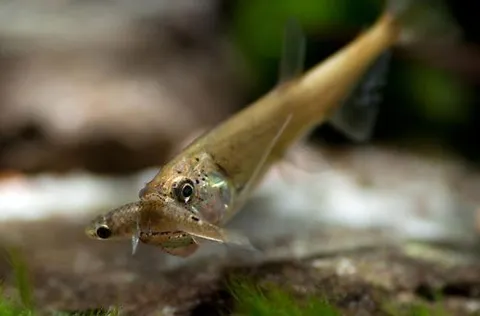
Hydrolycus armatus
The Vampire Fish, or Payara (scientific name Hydrolycus armatus), belongs to the family Cynodontidae. This species is one of the largest predators inhabiting the river systems of South America. It is not suitable for…
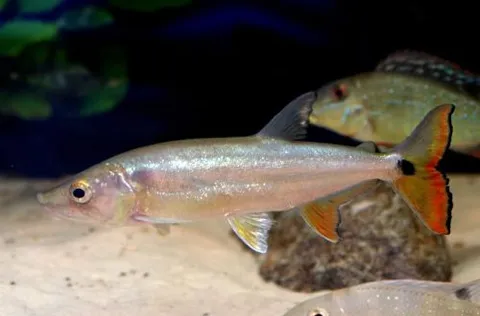
Acestrorhynchus altus
The Redtail Barracuda, scientifically known as Acestrorhynchus altus, belongs to the family Acestrorhynchidae. Its appearance, combining a streamlined, dynamic physique with jaws full of teeth, clearly indicates its…
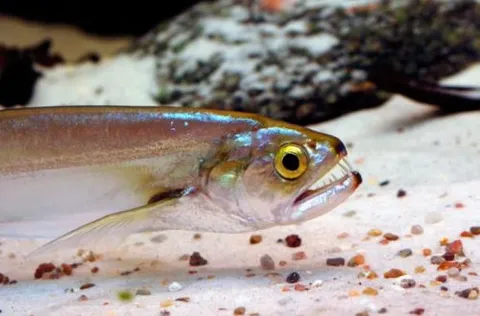
Rhaphiodon vulpinus
The fish known as the Biara, or Chaparrin, with the scientific name Rhaphiodon vulpinus, belongs to the family Cynodontidae. This large predator is not suitable for beginner aquarists. It requires a very spacious…
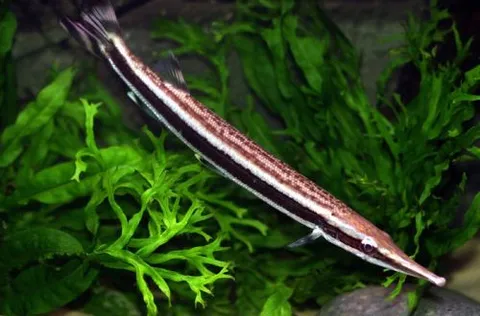
Boulengerella lateristriga
Boulengerella lateristriga, also known as the Striped Pike Characin or Pike Characin, belongs to the family Ctenoluciidae. This species is not difficult to keep, provided it is given a sufficiently spacious aquarium…