Temperature23 – 30 °C
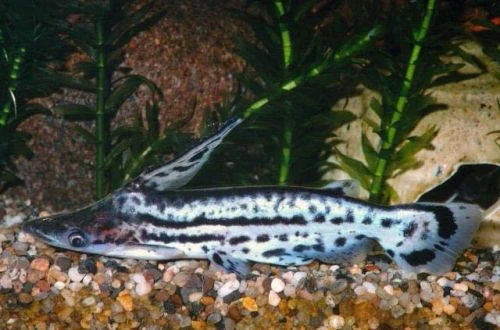
Ageneiosus magoi, also known as Ageneiosus, is a member of the Auchenipteridae family. This catfish originates from the South American continent, where its natural habitat is the Orinoco River basin, flowing through Venezuela.
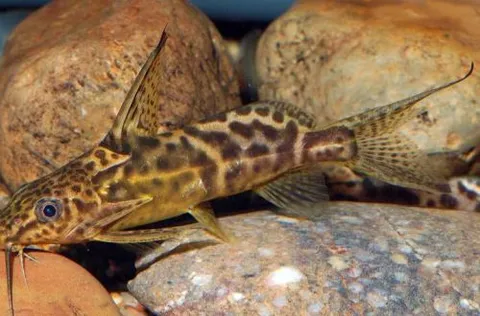
Adults of this fish can reach 18 cm in length. Their body is characterized by an elongated shape and a slight lateral compression. Males exhibit a distinctive elevation, or hump, crowning the curved dorsal fin, which is equipped with a sharp spine—this is a modified first ray. The coloration consists of a combination of black and white, with patterns varying significantly among populations from different geographical areas. Nevertheless, general features are maintained: several dark, sometimes interrupted, lines extend from the head to the tail. Wild-caught specimens often have yellow spots on their body and fins, which usually disappear over time in aquarium conditions.
The species is endemic to the Orinoco River basin in South America. In nature, it inhabits rivers with flowing water, preferring areas with a pronounced current. The catfish is adapted to tropical living conditions, where water temperature ranges from 23–30 °C, and the acidity level is close to neutral (pH 6.4–7.0).
This species is characterized by an active and mobile disposition. Unlike many other catfish, it does not tend to hide during the day but actively swims around the aquarium in search of food. The fish does not show aggression towards large tankmates; however, small aquarium inhabitants that can fit into its mouth may be at risk. Ageneiosus coexists well with its congeners, as well as with other species of similar size, such as Pimelodus, Plecostomus, and other Auchenipteridae, which prefer to inhabit the water column.
For keeping one adult Ageneiosus, an aquarium of at least 120 liters is required. Since this fish enjoys swimming against the current, it is important to provide sufficient open space in the aquascape and ensure moderate water movement. A strong internal current can be created, for example, by an efficient filtration system. Other decorative elements can be chosen at the discretion of the aquarist or according to the needs of other aquarium inhabitants. Successful and long-term keeping is possible in soft, slightly acidic, and clean, oxygen-rich water. Special attention should be paid to maintaining high water quality. It is crucial to ensure the uninterrupted operation of the filtration system and prevent the accumulation of organic pollutants.
Ageneiosus is an omnivorous species. Since its satiety instincts are poorly developed, there is a high risk of overfeeding. This catfish can eat almost anything that can fit into its mouth, including smaller aquarium inhabitants. Its diet can consist of popular sinking foods, as well as pieces of shrimp and mussels, earthworms, and other invertebrates.
No successful cases of Ageneiosus magoi breeding in aquarium conditions have been recorded to date. It is known that during the breeding season, sexually mature males undergo temporary morphological changes: the dorsal fin becomes larger and more curved, and the barbels thicken. These organs are used by males to grasp and hold the female during mating. At the end of the reproductive season, these features regress to their original state.
No diseases that affect only this species have been described. Under suitable conditions — clean water, a balanced diet and calm tank mates — health problems usually do not arise. The most common cause of illness is a decline in conditions: it weakens the immune system, and the fish becomes vulnerable to infections that are always present in an aquarium. At the first signs of trouble — lethargy, wasting, refusal of food or clamped fins — check the basic water parameters and the levels of ammonia, nitrite and nitrate first. Restoring acceptable conditions often lets the fish recover on its own. Catfish of this group have naked, scaleless skin and are therefore more sensitive to medication than most aquarium fish. Products based on malachite green and copper should be used with care and at about half the dose stated on the packaging.
When selecting specimens, attention should be paid to the integrity of the fins and the absence of visible skin damage, as fish are prone to injuries during transportation. A healthy fish should be active, visually plump, and show no signs of emaciation. It is recommended to inquire about the keeping conditions and diet from the seller, as adaptation to artificial foods may take time.
The essentials: size, tank volume, water parameters and care
An adult reaches 18 cm in length. Plan the tank around the maximum size: the fish quickly outgrows a cramped setup.
The recommended volume is 120 L. A smaller tank speeds up nitrate build-up and raises stress levels.
Temperature 23–30 °C, pH 6.4–7, hardness 10–15 dGH. Stability matters more than exact values: sudden swings are harder on the fish than a small deviation from the ideal.
Around 7 years when kept properly. Lifespan depends directly on tank volume, water quality and a varied diet.
Temperament: semi-peaceful (dangerous to smaller ones). Not a predatory species, but small fish that fit in its mouth will eventually be eaten.
Recommended setup: both solitary and in group (flexible). Ignoring this is a common cause of stress and disease.
Diet type: sinking (any). Feed small portions that are finished within a couple of minutes — overfeeding does more harm than underfeeding.
The scientific name of the species is Ageneiosus magoi, family Driftwood Catfishes (Auchenipteridae).
The water suits 197 of 208 plants in the catalogue — the easiest ones are shown first.
Afzelius's AnubiasAnacharisAnubiasBrazilian PennywortDwarf CloverDwarf CloverDwarf HygrophilaDwarf SagittariaDwarf ValGuppy GrassHornwortJava FernJava MossMoneywortMud SwordNair's LagenandraNarrow Leaf AnacharisNarrow-leaf CloverStringy MossSüsswassertangTaiwan MossTape GrassTemple PlantUssuri Watermilfoil
Matched by family, categories and overlapping keeping conditions
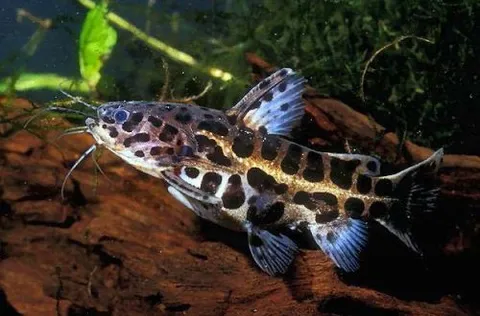
Liosomadoras oncinus
Liosomadoras oncinus is the scientific name for the Jaguar Catfish, a member of the Auchenipteridae family, or Wood Catfishes. These fish originate from South America, inhabiting the Branco River basin, which is a…
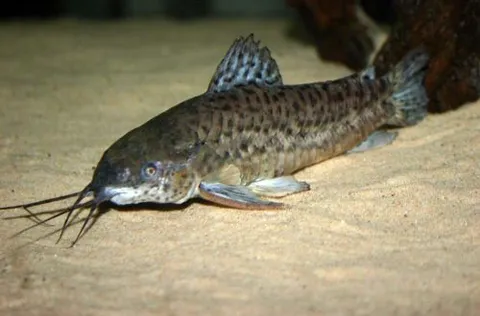
Megalechis thoracata
Megalechis thoracata, more commonly called Thoracatum (though the spelling Taracatum is also encountered), belongs to the family Callichthyidae – the armored or callichthyid catfishes. This medium-sized fish is known…
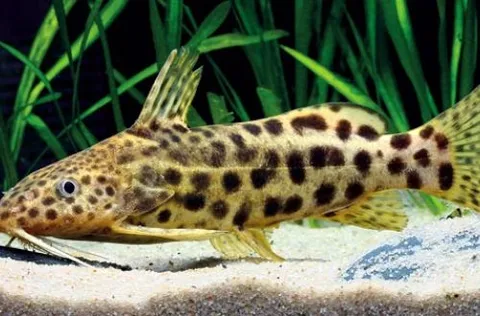
Synodontis waterloti
The catfish Synodontis waterloti, also known as the Waterlot Synodontis, belongs to the family Mochokidae. It is relatively peaceful and does well alongside other non-aggressive species, but it will swallow any fish…
Synodontis greshoffi
Synodontis greshoffi, also known as Synodontis Congo, belongs to the family Mochokidae. This catfish is undemanding, hardy and does not bully its tankmates, and its distinctive body pattern is eye-catching. It will,…