Temperature23 – 25 °C
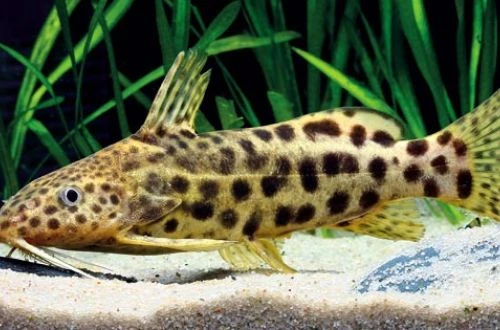
The catfish Synodontis waterloti, also known as the Waterlot Synodontis, belongs to the family Mochokidae. It is relatively peaceful and does well alongside other non-aggressive species, but it will swallow any fish small enough to fit in its mouth, so very small tankmates are not kept with it. Its care itself is not particularly difficult.
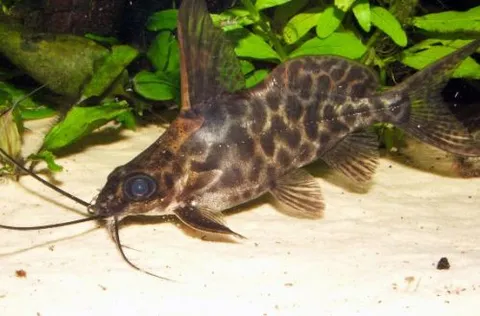
Adults can reach up to 18 cm in length. Distinguishing males from females by external characteristics is quite challenging, as sexual dimorphism is weakly expressed. Although females are perceived as slightly larger than males, determining sex based on this criterion in a mixed age group will not be easy. The body coloration is yellow with large brown spots. Notably, the pattern can vary depending on the fish's origin: instead of spots, irregularly shaped blotches are sometimes found.
The natural habitat of this species covers the equatorial and subequatorial regions of Africa, including countries such as Guinea, Liberia, Guinea-Bissau, Sierra Leone, and Ghana. Here, Synodontis inhabits numerous river systems, often under the canopy of humid rainforests. These biotopes are characterized by silty bottom deposits, as well as an abundance of aquatic vegetation and various plant debris, such as snags, fallen leaves, and fruits.
This species is considered territorial, capable of actively defending its bottom territory from other conspecifics. Nevertheless, their aggressiveness is quite weak, allowing a group of Synodontis to be kept together. Towards other fish, they are peaceful, provided the other fish are not too small; otherwise, smaller inhabitants may be accidentally eaten. This behavior should not be seen as hostility, but rather as indiscriminate feeding, characteristic of many catfishes.
For keeping a single catfish, an aquarium of at least 100 L is required. This is quite sufficient for the comfortable existence of this relatively small and not overly active fish. When decorating the aquarium, it is recommended to use a soft substrate, such as fine sand, as well as snags and twisted roots, which will serve as shelters. Dense aquatic vegetation will help create a more natural environment. Lighting should be subdued, and floating plants can provide additional shading. Water quality and hydrochemical composition play a key role in the care of Synodontis waterloti. To maintain optimal conditions, a productive filtration system is necessary, as well as regular aquarium maintenance, including partial water changes and removal of organic waste.
Synodontis waterloti is not particularly demanding when it comes to feeding and readily consumes a variety of popular foods. It is important to offer sinking foods, as these catfishes feed in the bottom layer. It is also desirable that their diet includes vegetable supplements. An approximate diet may consist of dry foods such as flakes and pellets, combined with live or frozen products, as well as pieces of vegetables and fruits.
The species is not bred in home aquaria. Commercial production of Synodontis fry relies on hormonal induction of the breeders — they do not spawn on their own in captivity. Adult females are recognised by their fuller bellies; sex is determined more precisely from the genital papilla, but such an examination takes skill and care because of the sharp dorsal and pectoral fin spines.
The main cause of most diseases in these fish is unsuitable keeping conditions and poor-quality nutrition. If initial symptoms are observed, it is first necessary to check water parameters and the concentration of dangerous substances such as ammonia, nitrites, and nitrates. If the indicators deviate from the norm, they should be brought back into order, and only then should treatment begin.
When purchasing, pay attention to the fish's overall activity and the condition of its skin. A healthy Synodontis waterloti should show curiosity, have no fin damage, ulcers, or white spots on its body. Avoid specimens with sunken bellies or unnaturally bloated abdomens, as this may indicate internal diseases. In the store, fish often hide in shelters, so it's worth asking the seller to gently disturb them to assess their mobility and reaction to external stimuli. It is advisable to acquire specimens that are already adapted to aquarium conditions and show a normal appetite when fed.
The essentials: size, tank volume, water parameters and care
An adult reaches 18 cm in length. Plan the tank around the maximum size: the fish quickly outgrows a cramped setup.
The recommended volume is 100 L. A smaller tank speeds up nitrate build-up and raises stress levels.
Temperature 23–25 °C, pH 6.5–7.5, hardness 5–15 dGH. Stability matters more than exact values: sudden swings are harder on the fish than a small deviation from the ideal.
Around 10 years when kept properly. Lifespan depends directly on tank volume, water quality and a varied diet.
Temperament: semi-peaceful (dangerous to smaller ones). Not a predatory species, but small fish that fit in its mouth will eventually be eaten.
Recommended setup: both solitary and in group (flexible). Ignoring this is a common cause of stress and disease.
Diet type: sinking (any). Feed small portions that are finished within a couple of minutes — overfeeding does more harm than underfeeding.
The scientific name of the species is Synodontis waterloti, family Mochokidae.
The water suits 196 of 208 plants in the catalogue — the easiest ones are shown first.
Afzelius's AnubiasAnacharisAnubiasBrazilian PennywortDwarf CloverDwarf CloverDwarf HygrophilaDwarf SagittariaDwarf ValGuppy GrassHornwortJava FernJava MossMoneywortMud SwordNarrow Leaf AnacharisNarrow-leaf CloverStringy MossSüsswassertangTaiwan MossTape GrassTemple PlantUssuri WatermilfoilWater Wisteria
Matched by family, categories and overlapping keeping conditions
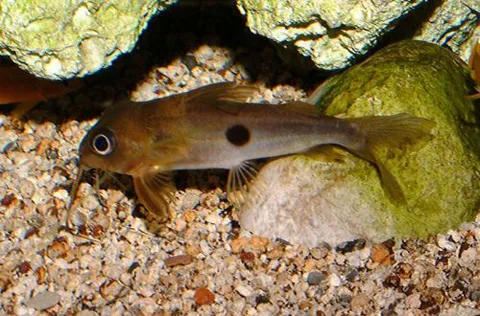
Synodontis notatus
Synodontis notatus, known as the Domino Synodontis or One-Spot Synodontis, belongs to the family Mochokidae. Interestingly, despite the name "one-spot" in one of its common names, the fish can have up to 6 round spots…
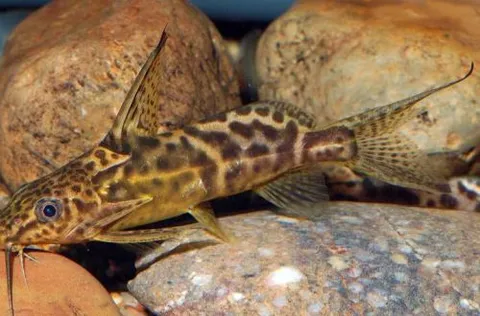
Synodontis greshoffi
Synodontis greshoffi, also known as Synodontis Congo, belongs to the family Mochokidae. This catfish is undemanding, hardy and does not bully its tankmates, and its distinctive body pattern is eye-catching. It will,…
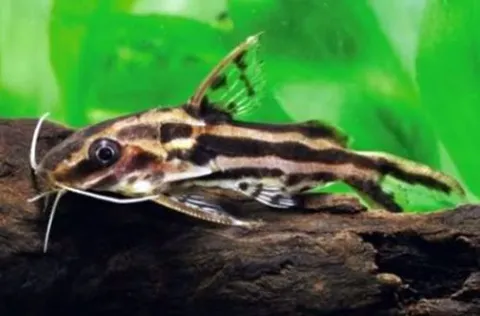
Synodontis flavitaeniatus
Belonging to the Mochokidae family, the Striped Synodontis, also known as the Orange Synodontis (Synodontis flavitaeniatus), easily adapts to various water conditions. This peaceful and undemanding species makes an…
Synodontis alberti
The scientific name Synodontis alberti belongs to the family Mochokidae, and this fish is also known as Albert's Synodontis, High-fin Synodontis, or Big-eyed Synodontis. Since it is most active in the dark, during the…