Temperature16 – 24 °C
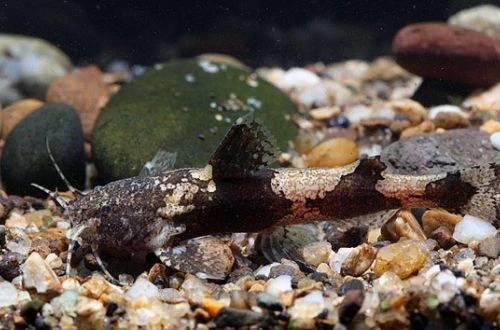
Akysis hendricksoni is the scientific name given to this member of the Akysidae family, known as Hendrickson's Akysis. This inconspicuous catfish is not often found in aquariums; it is one of the few members of its family that has adapted to them. Its preference for a nocturnal lifestyle, with a daytime tendency to hide, contributes to its low popularity among aquarists, as its reclusiveness prevents constant observation.
Adults reach a length of 4–5 cm. Their coloration is a combination of yellow and brown tones. The body pattern can vary significantly among fish caught in different bodies of water, but a dark coloration of the anterior part of the body is characteristic. Sharp spines, designed to protect the fish from small predators, have developed from the first rays of the pectoral and dorsal fins. Sexual dimorphism is weakly expressed, and determining sex by external signs is quite difficult.
The natural habitat of this catfish covers Southeast Asia: the peninsular part of Malaysia and the southern provinces of Thailand. Its typical habitats are fast-flowing streams and rivers with gravel and sand bottoms. Water turbidity levels can vary significantly between the dry and wet seasons. Aquatic vegetation is rare in these areas; sometimes mosses and ferns can be seen on submerged snags.
This is a peaceful and calm catfish that cannot successfully compete with more active or larger bottom-dwelling fish. They can be kept individually or in groups. These fish are absolutely safe for freshwater shrimp. Suitable tank mates include species that inhabit the water column or surface, such as Danios, Rasboras, or small Tetras.
The recommended minimum aquarium volume for a pair of catfish is 40 L. When decorating the aquarium, sandy substrate should be used, and several large stones or boulders should be placed. These fish are known to like hiding in crevices during the day, so it is advisable to provide several such shelters. Otherwise, they will find suitable places on their own, which are not always optimal, for example, between the aquarium walls and internal equipment. For planting, artificial or live plants can be used. Among the latter, unpretentious species such as Anubias, Bucephalandra, as well as various mosses and ferns are preferred. Keeping Akysis hendricksoni is relatively simple, provided several important conditions are met: maintaining clean water rich in dissolved oxygen and the presence of moderate current. For this, regular aquarium maintenance and the installation of appropriate equipment, in particular, an effective aeration and filtration system, are necessary.
Small invertebrates should form the basis of their diet, such as bloodworms, Artemia, or Daphnia, which can be both live and frozen. Over time, the catfish may start to accept dry foods such as flakes and granules, but these products should only be considered as a supplement to the main diet. Given the nocturnal lifestyle of these catfish, the most suitable time for feeding is just before the lights are turned off.
At the time of writing, there was little information about the successful breeding of this catfish in home aquariums. Difficulties may arise for the following reasons. Firstly, sex determination in these fish is difficult, requiring the acquisition of a significant number of individuals to ensure the presence of at least one pair. Secondly, the natural stimulus for spawning is a change in environmental conditions associated with the rainy season, so similar parameters — changes in temperature and hydrochemical composition of the water — will have to be recreated in the aquarium.
Most health problems in fish often arise from unsuitable keeping conditions. Maintaining a stable and comfortable habitat is a key factor for successful keeping. If symptoms of illness appear, the first step is to check the water quality. If deviations are found, it is important to take immediate measures to eliminate them. If the symptoms do not disappear or worsen, medicinal treatment may be required.
When selecting individuals, attention should be paid to the integrity of the fins and the absence of skin damage, as fish of this species are susceptible to stress during transportation. A healthy fish should be active at dusk, and during daylight hours, exhibit natural behavior, such as attempts to burrow into the substrate or hide in a shelter. Avoid purchasing individuals with signs of emaciation, lethargy, or unnatural spots on the body. Keep in mind that all members of the genus Akysis have spines with a venomous apparatus at the base of the dorsal and pectoral fins, so caution should be exercised when catching and transferring them to avoid a painful sting.
The essentials: size, tank volume, water parameters and care
An adult reaches 4–5 cm in length. Plan the tank around the maximum size: the fish quickly outgrows a cramped setup.
The recommended volume is 40 L. A smaller tank speeds up nitrate build-up and raises stress levels.
Temperature 16–24 °C, pH 6–7.2, hardness 2–12 dGH. Stability matters more than exact values: sudden swings are harder on the fish than a small deviation from the ideal.
Around 7 years when kept properly. Lifespan depends directly on tank volume, water quality and a varied diet.
Temperament: peaceful (regular). Keep this in mind when choosing tank mates.
Recommended setup: both solitary and in group (flexible). Ignoring this is a common cause of stress and disease.
Diet type: high protein (predominantly meat). Feed small portions that are finished within a couple of minutes — overfeeding does more harm than underfeeding.
The scientific name of the species is Akysis hendricksoni, family Akysidae.
The water suits 196 of 208 plants in the catalogue — the easiest ones are shown first.
Afzelius's AnubiasAnacharisAnubiasBrazilian PennywortDwarf CloverDwarf CloverDwarf HygrophilaDwarf SagittariaDwarf ValGuppy GrassHornwortJava FernJava MossMoneywortMud SwordNarrow Leaf AnacharisNarrow-leaf CloverStringy MossSüsswassertangTaiwan MossTape GrassTemple PlantUssuri WatermilfoilWater Wisteria
Matched by family, categories and overlapping keeping conditions
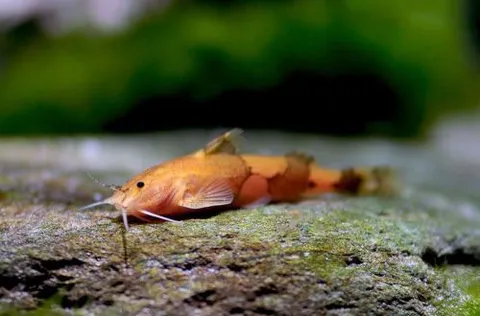
Akysis vespa
Akysis vespa, known as the Orange Stone Catfish or Bumblebee Catfish, belongs to the Akysidae family. This catfish makes an excellent choice for both beginners and experienced aquarists, thanks to its peaceful nature,…
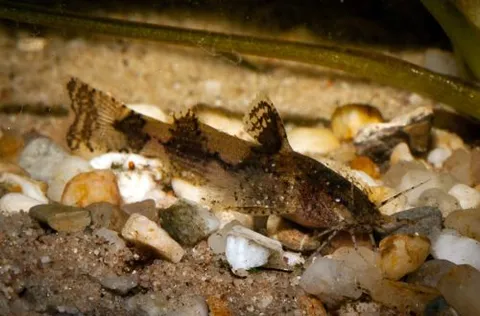
Akysis maculipinnis
The Akysis Catfish, scientifically known as Akysis maculipinnis, is a member of the Akysidae family. This miniature fish, sometimes called tiny, can be difficult to spot in an aquarium due to its predominantly nocturnal…
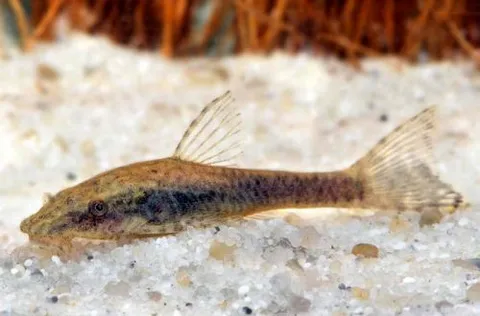
Otothyropsis piribebuy
Otothyropsis piribebuy, known as Otocinclus negros (formerly Otocinclus sp. "Negros"), belongs to the family Loricariidae, which includes armored catfishes. The native habitat of this small catfish is the waters of…
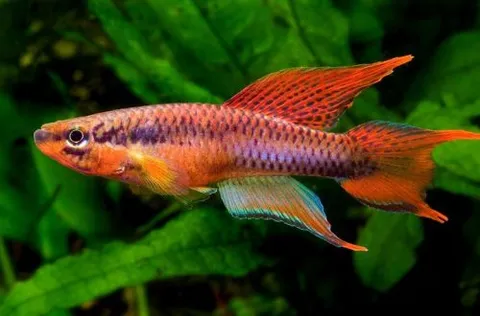
Aphyosemion bitaeniatum
The Two-striped Aphyosemion, scientifically known as Aphyosemion bitaeniatum, belongs to the family Nothobranchiidae, or nothobranchs. These vibrant fish are not particularly demanding to keep and adapt easily to…