Temperature16 – 24 °C
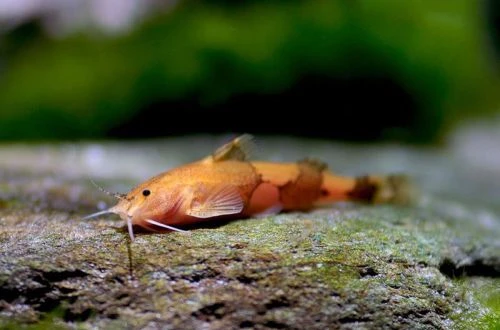
Akysis vespa, known as the Orange Stone Catfish or Bumblebee Catfish, belongs to the Akysidae family. This catfish makes an excellent choice for both beginners and experienced aquarists, thanks to its peaceful nature, attractive coloration, and ease of care.
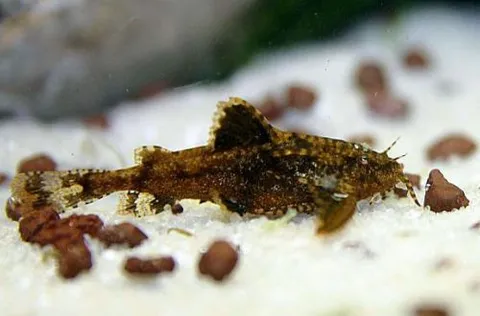
Adults reach approximately 3 cm in length. Their coloration consists of orange-yellow tones with alternating dark markings. This coloring is precisely why it's called the “Wasp” (Bumblebee), which is also the translation of the Latin word vespa in its scientific name. The fish is characterized by a large head with several long barbels and a rather graceful, narrow body. Its fins are short, as is its tail. Sexual dimorphism is weakly expressed, and external differences between males and females are minimal.
Its origin is linked to Southeast Asia. Akysis vespa is considered an endemic species to the upper Salween River basin, located in the border region between Thailand and Myanmar. The natural habitat of this species consists of fast-flowing streams and rivers where the bottom is composed of sandy-stony substrates. The water in these bodies of water is usually clear and clean; only during the rainy season does a small amount of suspended matter appear. Plants are typically absent here, but a large amount of fallen leaves and snags accumulate on the bottom.
This peaceful and calm fish cannot compete with more active catfish species, so it's best to choose inhabitants of the water column or surface as tank mates. Excellent companions include neon tetras, other small tetras, danios, and rasboras.
For a comfortable existence of a group of 5–6 fish, the minimum aquarium volume is 40 liters. The setup can be quite simple: large boulders and snags placed on a sandy substrate are used as the main decorative elements. Since the Wasp Catfish is nocturnal, it prefers to hide in crevices between stones during the day, so it's important to provide such shelters. Otherwise, the fish may choose a less suitable place, for example, between internal equipment and the aquarium walls. Although aquatic plants are not typical of their natural habitat, their use is permissible for aquascaping. You can use both artificial plants and unpretentious live species such as Anubias, Bucephalandra, mosses, and ferns. Being inhabitants of flowing waters, the Orange Stone Catfish needs clean, oxygen-rich water. The presence of an internal current is also beneficial. These conditions are provided by a good filtration system. Regular aquarium maintenance should not be neglected, including weekly water changes of 30–50% of the volume with fresh water and timely removal of organic waste.
Feeding occurs at night. Their diet is primarily small zooplankton. In a home aquarium, it is recommended to offer live or frozen foods such as Artemia, Daphnia, and bloodworms. Over time, with regular feeding, they may adapt to dry foods in the form of flakes or pellets. It is advisable to feed the fish shortly before the aquarium lights are turned off.
In natural conditions, spawning begins with the onset of the rainy season. It is stimulated by a decrease in water temperature (approximately 7°C) and a change in hydrochemical composition towards neutral pH values. The incubation period for eggs is 4 days, after which the fry begin to swim freely after another 11 days. They grow quickly, reaching adult size within a month. Cases of successful breeding of Akysis vespa in home aquariums are rare, as special external conditions must be recreated to stimulate spawning.
Most health problems in fish often arise from unsuitable keeping conditions. Maintaining a stable and comfortable habitat is a key factor for successful keeping. If symptoms of illness appear, the first step is to check the water quality. If deviations are found, it is important to take immediate measures to eliminate them. If the symptoms do not disappear or worsen, medicinal treatment may be required.
When purchasing, choose active fish with clean skin without visible damage, sores, or white film. Since wasp catfish are nocturnal predators, they often hide in shelters in the store, so it is important to ask the seller to carefully lift the decorations to inspect the condition of the individuals. Avoid specimens with severely sunken bellies or signs of emaciation, as these fish may be sensitive to transport and keeping conditions. Keep in mind that members of the Akysidae family have venom glands at the base of their fin spines, so exercise caution when transferring them to avoid injury to yourself or the fish.
The essentials: size, tank volume, water parameters and care
An adult reaches 3 cm in length. Plan the tank around the maximum size: the fish quickly outgrows a cramped setup.
The recommended volume is 40 L. A smaller tank speeds up nitrate build-up and raises stress levels.
Temperature 16–24 °C, pH 6–7.2, hardness 2–12 dGH. Stability matters more than exact values: sudden swings are harder on the fish than a small deviation from the ideal.
Around 5 years when kept properly. Lifespan depends directly on tank volume, water quality and a varied diet.
Temperament: peaceful (regular). Keep this in mind when choosing tank mates.
Recommended setup: both solitary and in group (flexible). Ignoring this is a common cause of stress and disease.
Diet type: high protein (predominantly meat). Feed small portions that are finished within a couple of minutes — overfeeding does more harm than underfeeding.
The scientific name of the species is Akysis vespa, family Akysidae.
The water suits 196 of 208 plants in the catalogue — the easiest ones are shown first.
Afzelius's AnubiasAnacharisAnubiasBrazilian PennywortDwarf CloverDwarf CloverDwarf HygrophilaDwarf SagittariaDwarf ValGuppy GrassHornwortJava FernJava MossMoneywortMud SwordNarrow Leaf AnacharisNarrow-leaf CloverStringy MossSüsswassertangTaiwan MossTape GrassTemple PlantUssuri WatermilfoilWater Wisteria
Matched by family, categories and overlapping keeping conditions
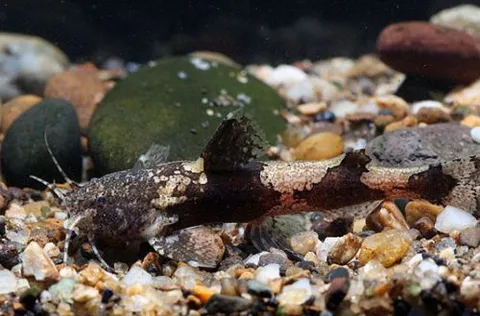
Akysis hendricksoni
Akysis hendricksoni is the scientific name given to this member of the Akysidae family, known as Hendrickson's Akysis. This inconspicuous catfish is not often found in aquariums; it is one of the few members of its…
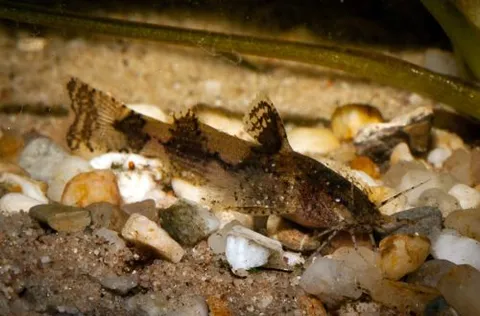
Akysis maculipinnis
The Akysis Catfish, scientifically known as Akysis maculipinnis, is a member of the Akysidae family. This miniature fish, sometimes called tiny, can be difficult to spot in an aquarium due to its predominantly nocturnal…
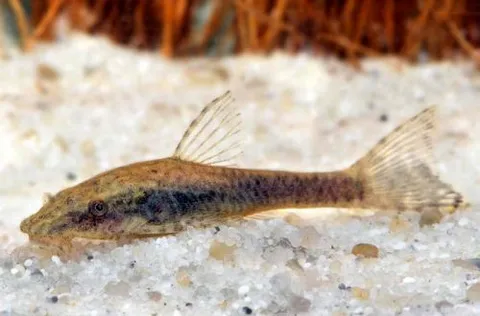
Otothyropsis piribebuy
Otothyropsis piribebuy, known as Otocinclus negros (formerly Otocinclus sp. "Negros"), belongs to the family Loricariidae, which includes armored catfishes. The native habitat of this small catfish is the waters of…
Hara jerdoni
Hara jerdoni, also known as the Anchor Catfish or Asian Stone Catfish (scientific name Hara jerdoni), belongs to the family Erethistidae. This species of catfish is remarkably miniature, reaching only 3 cm in length. It…