Temperature24 – 28 °C
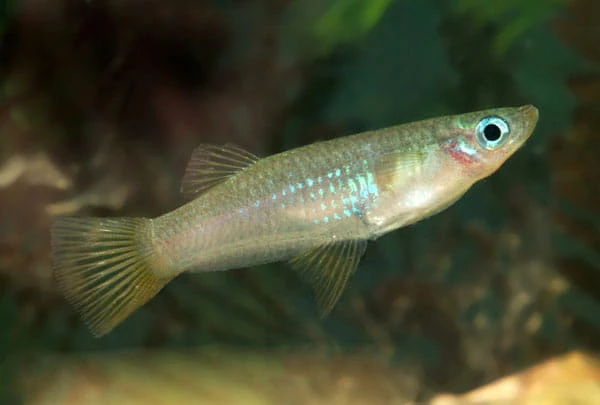
Alfaro cultratus, also known as the knife-edged livebearer, belongs to the family Poeciliidae. This fish is distinguished by its hardiness and unpretentiousness, which means it does not have special requirements for keeping conditions. Although it is not often found in retail chains, this species is quite common among amateur aquarists.
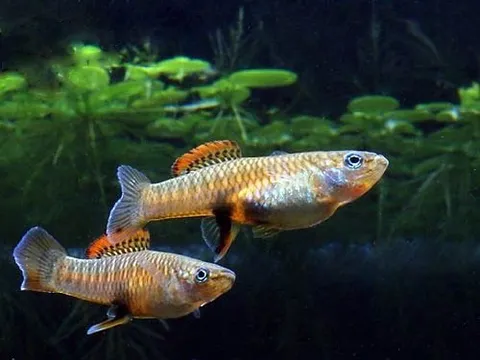
The appearance of this fish is quite simple: its coloration is light gray. From certain angles, a bluish tint can sometimes be noticed. The fins remain translucent. The body is slightly elongated, with males usually being more slender than females, who, in turn, are noticeably larger.
This species is widespread in the waters of Central America, including the territories of Costa Rica, Nicaragua, and Panama. It prefers to inhabit small rivers, streams, canals, and backwaters where the current is moderate or slow.
The fish sometimes shows aggression towards individuals of its own species, but serious injuries are extremely rare. It is compatible with other species if they are larger than it. It is not recommended to keep small fish with Alfaro cultratus.
Alfaro cultratus adapts well to a wide range of pH and GH values, which significantly simplifies water preparation for the aquarium. It is usually sufficient to use tap water that has been left to stand for about a day. The minimum equipment set includes a filter, aerator, heater, and lighting system. Weekly maintenance involves replacing 15–20% of the water volume with fresh water. Substrate cleaning is performed as it becomes silted. In terms of decor, it is recommended to create areas with lush vegetation and open spaces for swimming. Floating plants are also welcome. Roots, snags, and rock formations can be used as additional decor.
The diet can include any dry, frozen, or live foods. For home keeping, the optimal solution is to alternate several types of food from trusted manufacturers throughout the day. Feeding is recommended 2-3 times a day, offering an amount that the fish can eat in 5 minutes. It is important to promptly remove any uneaten leftovers.
Breeding Alfaro cultratus in a home aquarium is not a difficult task. No special conditions for spawning are required, as it can occur in the community tank at any time of year. An adult female can produce up to 100 fry. Upon finding them in the aquarium, it is advisable to transfer the young to a separate tank, for example, a three-liter jar, and feed them micro-food.
In a well-balanced aquarium ecosystem, disease outbreaks are extremely rare. Health problems arise in neglected cases when there are high levels of pollutants, irregular or poor-quality feeding, or contact with already sick fish.
When choosing Alfaro cultratus, attention should be paid to the overall activity of the individuals in the aquarium: healthy fish should swim quickly, show curiosity, and not exhibit signs of timidity or apathy. It is important to carefully inspect the body for the absence of injuries, ulcers, white spots, or signs of fungal infections, as the species is sensitive to water quality and bacterial infections. Avoid buying fish that stay at the bottom or look emaciated, as this may indicate health problems or stress from improper keeping conditions in the store. Since these fish are active swimmers, it is recommended to purchase a group of several individuals to reduce their stress during transportation and adaptation.
The essentials: size, tank volume, water parameters and care
An adult reaches 7 cm in length. Plan the tank around the maximum size: the fish quickly outgrows a cramped setup.
The recommended volume is 50 L. A smaller tank speeds up nitrate build-up and raises stress levels.
Temperature 24–28 °C, pH 6–8, hardness 5–20 dGH. Stability matters more than exact values: sudden swings are harder on the fish than a small deviation from the ideal.
Around 5 years when kept properly. Lifespan depends directly on tank volume, water quality and a varied diet.
Temperament: territorial (often aggressive). Keep this in mind when choosing tank mates.
Recommended setup: schooling (usually from 5–6 individuals and more). Ignoring this is a common cause of stress and disease.
Diet type: any (universal). Feed small portions that are finished within a couple of minutes — overfeeding does more harm than underfeeding.
The scientific name of the species is Alfaro cultratus, family Poeciliidae. It also appears in the literature as: Alfaro acutiventralis, Alfaro amazonum, Petalosoma amazonum.
The water suits 196 of 208 plants in the catalogue — the easiest ones are shown first.
Afzelius's AnubiasAnacharisAnubiasBrazilian PennywortDwarf CloverDwarf CloverDwarf HygrophilaDwarf SagittariaDwarf ValGuppy GrassHornwortJava FernJava MossMoneywortMud SwordNair's LagenandraNarrow Leaf AnacharisNarrow-leaf CloverStringy MossSüsswassertangTaiwan MossTape GrassTemple PlantUssuri Watermilfoil
Matched by family, categories and overlapping keeping conditions
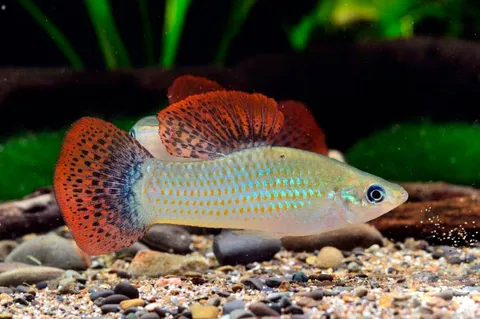
Poecilia salvatoris
The Free Molly, also known as Poecilia salvatoris, belongs to the family Poeciliidae, which includes livebearers or gambusias. Discovered in 1907, this fish lost its species identity shortly after its description. For a…
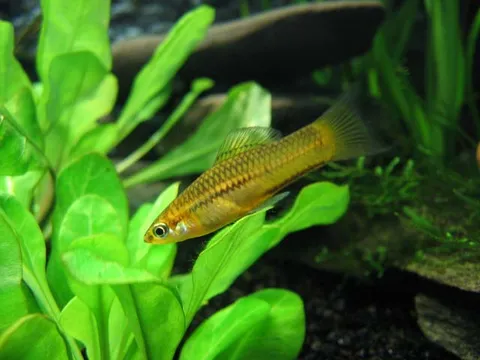
Xiphophorus pygmaeus
The Pygmy Swordtail, also known by its scientific name Xiphophorus pygmaeus, belongs to the family Poeciliidae. The prefix "pygmy" in its name indicates the miniature size of this fish, which is the smallest…
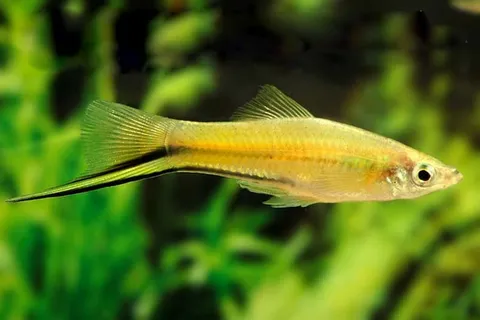
Xiphophorus signum
Xiphophorus signum, known as the Golden Swordtail, belongs to the family Poeciliidae. The Latin name "signum" translates as "sign" or "distinguishing feature," which accurately describes the characteristic black mark…
Brachyrhaphis roseni
Brachyrhaphis roseni, also known as Rosen's Brachyrhaphis, belongs to the family Poeciliidae. It is an active and colorful fish with a rather complex character. Its keeping does not present particular difficulties, but…