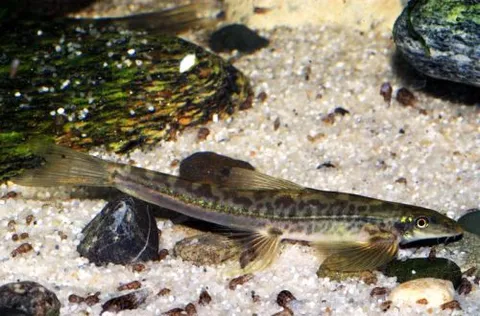
Annamia normani
Annamia normani
The fish named Annamia normani (scientific name Annamia normani) belongs to the Balitoridae family, known as River Loaches. It was named after the Annam region, now central Vietnam, and in memory of the British…
Annamia thuathienensis, also known as the Annamia Thua Thien Loach, belongs to the family Balitoridae, which comprises river loaches. Its name reflects its geographical origin: Annam is the historical name for central Vietnam, and Thua Thien is a modern province. This species is not suitable for a general community aquarium, as it requires specific keeping conditions. This fish is mainly found in Asia, and it is practically impossible to find it in European markets.
Adults of this fish reach a length of 8–10 cm. Their body is elongated and somewhat flattened from above. This body shape helps them successfully withstand fast currents. Large, fan-shaped fins also contribute to this, allowing the fish to cling firmly to the smooth surfaces of rocks. Their coloration is predominantly gray with noticeable golden hues. Sexual dimorphism is weakly expressed, making sex determination difficult. The Annamia Thua Thien Loach bears an external resemblance to its close relative, Annamia normani, which often leads to confusion between the two species.
Its natural habitat is Southeast Asia, specifically the territories of modern Vietnam. The Annamia Thua Thien Loach inhabits shallow rivers and streams, numerous flows of which descend from the Annamite Mountains. The natural conditions of these bodies of water include rapids, creating a fast, in places very turbulent current. The water there is clear and clean, and vegetation grows mainly along the banks. The bottom is typically rocky, with large boulders.
Although this species is peaceful and calm, its specific requirements for keeping conditions impose certain restrictions on the choice of tankmates. These fish should be kept in a group of at least 6–8 individuals. Small skirmishes between conspecifics are possible, but this is part of their social behavior and does not pose a threat to other fish.
For a group of 6–8 fish, an aquarium of at least 110–120 liters is recommended. It is crucial to create conditions that are as close as possible to their natural habitat. A rocky substrate with several large boulders and snags is suitable for decoration. Water movement is provided by a powerful filtration system and/or a special system for creating an artificial current, which can be made independently. Live plants are not essential, as they do not thrive in strong currents and relatively low temperatures. Unpretentious mosses and ferns attached to snags are acceptable. Like most inhabitants of flowing waters, Annamia thuathienensis is sensitive to organic waste and requires oxygen-rich water. Regular aquarium maintenance includes cleaning the substrate and glass, partial water changes (30–50% of the total volume) with fresh water, and maintaining stable pH and dGH parameters. An additional aeration system will also be beneficial.
The diet should include protein-rich foods, such as live or frozen foods like bloodworms, daphnia, and brine shrimp. It is also important to include plant-based supplements, such as spirulina flakes. Algae that form on various decorative elements in the aquarium can serve as a natural dietary supplement. Dry foods, including flakes, granules, and tablets, are used in limited quantities as a source of essential trace elements and vitamins.
To date, there are no documented cases of successful breeding of Annamia normani in home aquariums. Fry intended for the aquarium trade are typically caught directly from the wild.
Non-ornamental fish species that have retained a close resemblance to their wild relatives usually exhibit high endurance, strong immunity, and resistance to various diseases. The occurrence of health problems most often indicates unsuitable keeping conditions. Therefore, before proceeding with treatment, it is strongly recommended to check the water quality and parameters. Only after all indicators have been brought back to normal should treatment begin, if it is still necessary.
When purchasing Annamia loaches, special vigilance should be exercised regarding the health of the specimens, as this species often arrives emaciated. A critically important sign is the absence of pronounced thinness, especially in the area between the pectoral and pelvic fins. A healthy fish should appear well-fed and active. — Avoid purchasing individuals with sunken bellies, as it can be extremely difficult to restore their condition at home; — Prefer fish that appear active and show no visible damage, ulcers, or signs of fungal infections on their bodies and fins; — Given the social nature of the species, it is recommended to acquire a group of 6–8 individuals, as when kept alone or in small groups, the fish become timid and stressed.
There are no pair reviews for this species yet — check tankmates in the matcher.
All tankmatesThe water suits 196 of 208 plants in the catalogue — the easiest ones are shown first.
Afzelius's AnubiasAnacharisAnubiasBrazilian PennywortDwarf CloverDwarf CloverDwarf HygrophilaDwarf SagittariaDwarf ValGuppy GrassHornwortJava FernJava MossMoneywortMud SwordNarrow Leaf AnacharisNarrow-leaf CloverStringy MossSüsswassertangTaiwan MossTape GrassTemple PlantUssuri WatermilfoilWater Wisteria
Matching water does not mean the plant will stay intact.
The essentials: size, tank volume, water parameters and care
An adult reaches 8–10 cm in length. Plan the tank around the maximum size: the fish quickly outgrows a cramped setup.
The recommended volume is 110 L. A smaller tank speeds up nitrate build-up and raises stress levels.
Temperature 16–22 °C, pH 6–7.5, hardness 1–10 dGH. Stability matters more than exact values: sudden swings are harder on the fish than a small deviation from the ideal.
Around 8 years when kept properly. Lifespan depends directly on tank volume, water quality and a varied diet.
Temperament: peaceful (regular). Keep this in mind when choosing tank mates.
Recommended setup: medium group (6–8 individuals). Ignoring this is a common cause of stress and disease.
Diet type: meat / protein (live, frozen, fresh). Feed small portions that are finished within a couple of minutes — overfeeding does more harm than underfeeding.
The scientific name of the species is Annamia thuathienensis, family River Loaches (Balitoridae).
Matched by family, categories and overlapping keeping conditions
Annamia normani
The fish named Annamia normani (scientific name Annamia normani) belongs to the Balitoridae family, known as River Loaches. It was named after the Annam region, now central Vietnam, and in memory of the British…
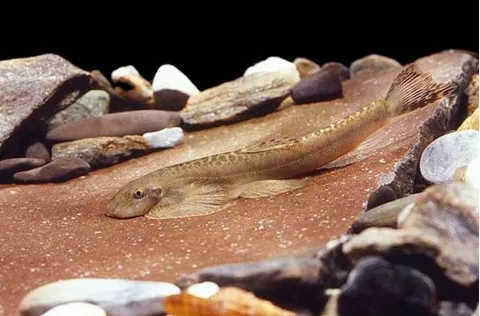
Hemimyzon formosanus
The Formosa Loach, scientifically known as Hemimyzon formosanus, belongs to the family Balitoridae, which includes river loaches. This fish may not immediately captivate with its appearance, but it is primarily valued…
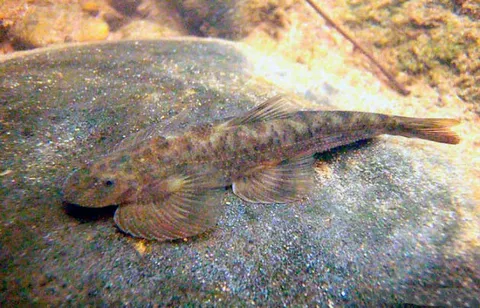
Hemimyzon nanensis
Hemimyzon nanensis, known as the Nan River Gastromyzon, belongs to the family Balitoridae. This fish is native to Southeast Asia, specifically Thailand, which is part of the Indochina region. It was first discovered in…
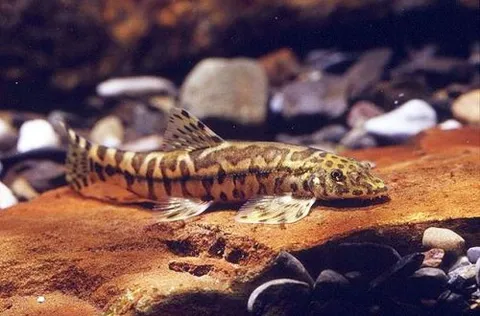
Formosania lacustris
Formosania lacustris, also known as the Brushmouth Loach, belongs to the family Balitoridae, known as river loaches. The fish owes its name to its body structure: it is elongated and slender, but has a rather large…