Temperature16 – 22 °C
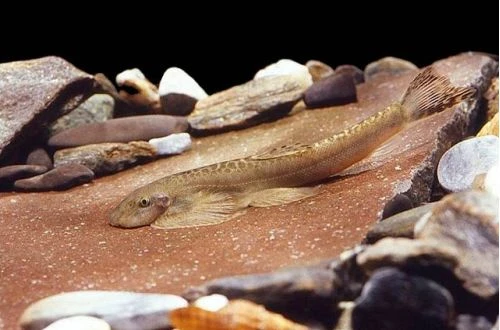
The Formosa Loach, scientifically known as Hemimyzon formosanus, belongs to the family Balitoridae, which includes river loaches. This fish may not immediately captivate with its appearance, but it is primarily valued among true aquarium enthusiasts. Its care is relatively straightforward, but there is one important nuance: it requires the recreation of powerful currents characteristic of the mountain rivers where it lives in nature. This requirement often complicates the selection of suitable tank mates.
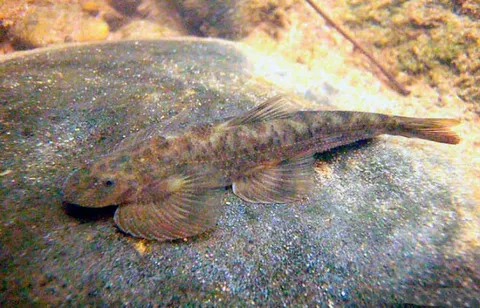
Adults of this species reach a length of 9–10 cm. The fish's body is noticeably flattened, and its ventral and pectoral fins are very wide, resembling a fan. With their help, it clings tightly to the surface of large boulders. This anatomy, combined with a specialized mouth structure resembling a sucker, allows it to effectively withstand strong currents. The caudal and dorsal fins, in contrast, are small. The coloration is usually gray or brownish, complemented by a pattern of light spots.
The native habitat of this fish is the eastern part of Asia. It is endemic to Taiwan, an island located off the coast of China. The Formosa Loach inhabits numerous mountain streams and small rivers that flow down from the central mountain range. Typical biotopes are shallow, fast-flowing streams with many cascades and rapids. The bottom of such bodies of water is strewn with stones, boulders, and also snags that get stuck in various places. Aquatic plants are rarely found in the main channel; they are usually located along the banks. Streams and rivers exposed to sunlight promote the formation of a biofilm of algae and microorganisms on the stones, which is the primary food source for these fish.
This fish has a peaceful and calm disposition, coexisting well with its own kind and with other species capable of adapting to conditions of strong currents. Among such tank mates, some large danios, Akysis catfishes, Gastromyzon, and other loaches can be distinguished. It should be noted, however, that the latter are not always friendly.
For a small group of these fish, an aquarium should have a volume of at least 100 liters. A key aspect of caring for the Formosa Loach is providing high-quality water with abundant oxygen content, as well as creating a powerful internal current. These conditions can be achieved by installing a high-performance internal filter or a combination of several filters, which, in addition to purification, will serve as a source of intense water movement, mimicking a mountain stream. It is recommended that the water volume be renewed 10–15 times per hour; for a 100-liter aquarium, this means a filter capacity of 1000 liters/hour. An important factor in maintaining water quality is regular aquarium maintenance, which includes weekly partial water changes and timely removal of organic waste (food remnants, excrement). The aquarium decor should use elements that replicate the natural biotope: stones, boulders, and snags. Natural snags under bright lighting will create a basis for algal growth, providing an additional food source. Live plants are usually not used, but some species that can attach to wood (e.g., Anubias, Bucephalandra, certain types of mosses and ferns) can be utilized.
The natural diet of these fish primarily consists of algae, with small invertebrates playing a secondary role. In the aquarium, nutrition should also be based on plant components. Live or frozen foods such as bloodworms, Artemia, and Daphnia can be a good supplement, but protein products should be offered in limited quantities. Some manufacturers offer special gel-like (paste-like) foods in tubes. These foods can be an optimal choice, especially given the need for strong currents: in turbulent flows, any other granulated or flake foods will quickly disperse throughout the aquarium.
At the time of collecting information for this article, no reliable data on successful breeding of Formosa Loaches by hobbyists in home aquariums were found.
Health problems in these fish arise only in the presence of injuries or keeping in unsuitable conditions, which leads to a weakening of the immune system and the subsequent occurrence of various diseases. At the first signs of illness, it is necessary first to check the water parameters for exceeding permissible values or the presence of toxic substances (such as nitrites, nitrates, ammonia). If deviations are found, all indicators should be normalized, and then treatment should begin.
When purchasing, it should be noted that this species is a rare guest in the aquarium trade and often enters sale as an accidental bycatch during the import of other loach species from Taiwan. Due to transportation peculiarities and high water quality requirements, individuals can be severely emaciated or weakened, so it is important to carefully assess their condition before acquisition. — choose fish that are actively moving on surfaces or glass, rather than lying motionless on the substrate in an apathetic state; — avoid specimens with sunken bellies, signs of fin damage, or an unnatural film on the body; — ensure that the aquarium with the fish maintains a strong current and high aeration, as the absence of these conditions in the store quickly leads to a deterioration in the health of the individuals.
The essentials: size, tank volume, water parameters and care
An adult reaches 9–10 cm in length. Plan the tank around the maximum size: the fish quickly outgrows a cramped setup.
The recommended volume is 100 L. A smaller tank speeds up nitrate build-up and raises stress levels.
Temperature 16–22 °C, pH 6.5–8, hardness 2–15 dGH. Stability matters more than exact values: sudden swings are harder on the fish than a small deviation from the ideal.
Around 5 years when kept properly. Lifespan depends directly on tank volume, water quality and a varied diet.
Temperament: peaceful (regular). Keep this in mind when choosing tank mates.
Recommended setup: both solitary and in group (flexible). Ignoring this is a common cause of stress and disease.
Diet type: sinking (plant-based). Feed small portions that are finished within a couple of minutes — overfeeding does more harm than underfeeding.
The scientific name of the species is Hemimyzon formosanus, family River Loaches (Balitoridae). It also appears in the literature as: Homaloptera formosana.
The water suits 196 of 208 plants in the catalogue — the easiest ones are shown first.
Afzelius's AnubiasAnacharisAnubiasBrazilian PennywortDwarf CloverDwarf CloverDwarf HygrophilaDwarf SagittariaDwarf ValGuppy GrassHornwortJava FernJava MossMoneywortMud SwordNarrow Leaf AnacharisNarrow-leaf CloverStringy MossSüsswassertangTaiwan MossTape GrassTemple PlantUssuri WatermilfoilWater Wisteria
Matched by family, categories and overlapping keeping conditions
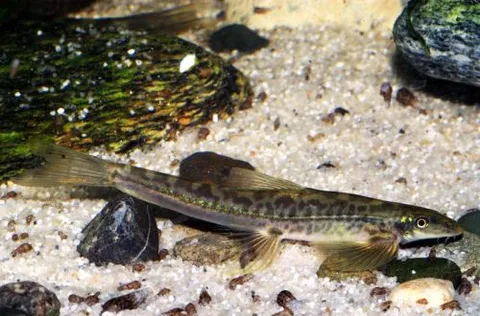
Annamia normani
The fish named Annamia normani (scientific name Annamia normani) belongs to the Balitoridae family, known as River Loaches. It was named after the Annam region, now central Vietnam, and in memory of the British…
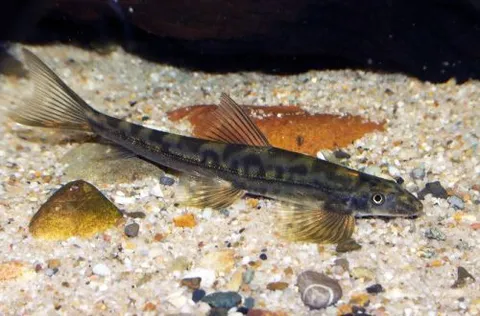
Annamia thuathienensis
Annamia thuathienensis, also known as the Annamia Thua Thien Loach, belongs to the family Balitoridae, which comprises river loaches. Its name reflects its geographical origin: Annam is the historical name for central…
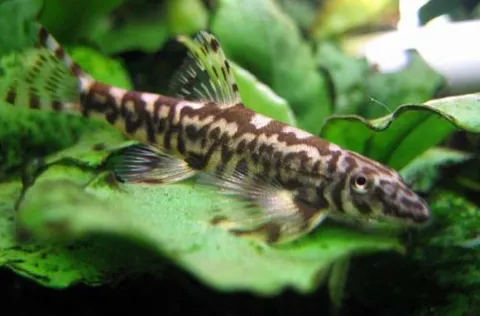
Liniparhomaloptera disparis
Liniparhomaloptera disparis, also known as Lina's Loach, belongs to the family Balitoridae, or river loaches. It was named after Shu-Yen Lin, a renowned Chinese ichthyologist. The natural habitat of this species covers…
Hemimyzon nanensis
Hemimyzon nanensis, known as the Nan River Gastromyzon, belongs to the family Balitoridae. This fish is native to Southeast Asia, specifically Thailand, which is part of the Indochina region. It was first discovered in…