Temperature20 – 24 °C
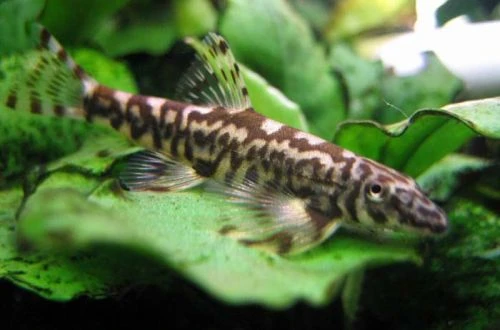
Liniparhomaloptera disparis, also known as Lina's Loach, belongs to the family Balitoridae, or river loaches. It was named after Shu-Yen Lin, a renowned Chinese ichthyologist. The natural habitat of this species covers the river systems of the southern provinces of mainland China and northeastern Vietnam. These fish prefer shallow mountain streams where the water has a fast, sometimes even turbulent current, and the bottom is covered with stony substrates.
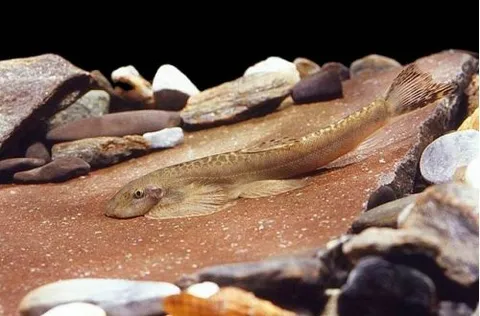
Adults of this fish grow to approximately 8 cm in length. Their body is elongated, and the head is small, flattened, and conical. The mouth is located on the underside of the head, which is characteristic of gastromyzons as well, since their feeding strategy is similar: the fish scrape algal growth from stones. The pectoral fins are large and fan-shaped. They help Lina's Loach cling to the substrate and hold its position even in strong water currents. The fish moves more along the bottom than it swims. The body coloration is light with a dark gray pattern, which allows for good camouflage on sandy-stony bottoms. Sexual dimorphism is weakly expressed. Males may be slightly smaller than females, but in a mixed-age group, it will be difficult to distinguish them by this characteristic.
The species occurs in southern China — Guangdong province and Hong Kong — as well as northern Vietnam. The species inhabits shallow mountain streams and tributaries with fast currents and high oxygen content. In nature, it prefers areas with stony or sand-gravel bottoms, where boulder formations are found. Aquatic vegetation in such biotopes is usually poorly developed, but the fish use the surfaces of stones to search for biofouling.
This fish has a peaceful and friendly disposition; it is comfortable in a school of its own kind. It coexists well with many other non-aggressive species of comparable size. However, it is important to consider the peculiarities of its natural habitat, particularly the need for moderate to strong current. This significantly limits the range of potential tank mates. If very strong currents are not simulated, fish such as Cardinal Tetras, Danios, Rasboras, and some other cyprinids can be considered. Among bottom dwellers, the aforementioned gastromyzons, as well as Akysis catfishes and their relatives, will make excellent companions.
For keeping 3–4 Lina's Loaches, an aquarium of 70–80 liters will be required. Its decor should be simple: coarse sand, various stones, boulders, and a few snags. The lighting should be bright. It is highly desirable to provide a sufficiently powerful current, with which the water will turn over 10–15 times per hour. For this, a high-performance filtration system can be installed or additional pumps can be used. The calculation for filtration power is as follows: for an 80-liter aquarium, a device capable of pumping at least 800–1000 liters of water per hour will be needed. The fish are very sensitive to water quality. The accumulation of organic waste is unacceptable, as this can negatively affect key hydrochemical parameters. Despite active filtration, weekly water changes of 20–30% of the volume with fresh water are mandatory. In addition to algae, which forms the basis, Lina's Loach's diet includes other components. These include various insect larvae, aquatic worms, and other invertebrates living in the substrate. In a home aquarium, daily feeding can be organized using popular sinking foods (granules, flakes) with a high proportion of plant ingredients.
Although algae constitute the main part of Lina's Loach's diet, it is not its only food. In its natural environment, it also consumes insect larvae, aquatic worms, and other invertebrates living in the substrate. In a home aquarium, daily feeding can be organized using popular sinking foods, such as granules and flakes, with a high content of plant components.
Breeding is possible in aquarium conditions with the creation of a suitable current. The female selects a section of the substrate and digs a depression in it, into which she lays her eggs. The male participates in the process, fertilizing the clutch, after which the female covers the pit with substrate. Fry appear after 10–14 days, beginning to feed independently after the yolk sac is absorbed.
No specific species-specific diseases have been recorded. Fish are sensitive to water quality, oxygen levels, and the presence of organic pollutants. The main health risks are associated with emaciation due to a lack of suitable food and stress from not adhering to keeping parameters. Prevention includes maintaining cleanliness, powerful filtration, and regular water changes.
When purchasing, it is important to assess the fish's plumpness, as emaciated individuals often adapt poorly. A healthy fish should show activity, have clean skin without spots or damage, and press tightly against surfaces in the water flow. It is recommended to acquire a group of 4 or more individuals to reduce stress levels and observe natural behavior.
The essentials: size, tank volume, water parameters and care
An adult reaches 6–8 cm in length. Plan the tank around the maximum size: the fish quickly outgrows a cramped setup.
The recommended volume is 70 L. A smaller tank speeds up nitrate build-up and raises stress levels.
Temperature 20–24 °C, pH 6.5–8, hardness 5–12 dGH. Stability matters more than exact values: sudden swings are harder on the fish than a small deviation from the ideal.
Around 6 years when kept properly. Lifespan depends directly on tank volume, water quality and a varied diet.
Temperament: peaceful (regular). Keep this in mind when choosing tank mates.
Recommended setup: small group (3–4 individuals). Ignoring this is a common cause of stress and disease.
Diet type: sinking (plant-based). Feed small portions that are finished within a couple of minutes — overfeeding does more harm than underfeeding.
The scientific name of the species is Liniparhomaloptera disparis, family River Loaches (Balitoridae). It also appears in the literature as: Homaloptera disparis, Linipaxhomaloptera disparis, Parhomaloptera disparis.
The water suits 196 of 208 plants in the catalogue — the easiest ones are shown first.
Afzelius's AnubiasAnacharisAnubiasBrazilian PennywortDwarf CloverDwarf CloverDwarf HygrophilaDwarf SagittariaDwarf ValGuppy GrassHornwortJava FernJava MossMoneywortMud SwordNarrow Leaf AnacharisNarrow-leaf CloverStringy MossSüsswassertangTaiwan MossTape GrassTemple PlantUssuri WatermilfoilWater Wisteria
Matched by family, categories and overlapping keeping conditions
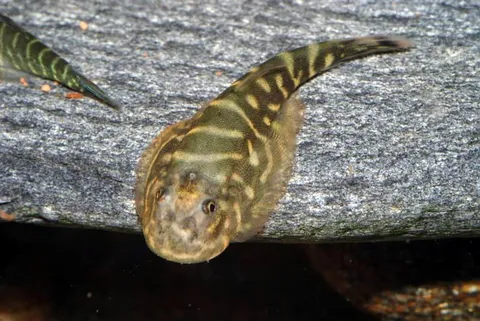
Gastromyzon zebrinus
The Zebra Gastromyzon, also known by its scientific name Gastromyzon zebrinus, belongs to the family Balitoridae. This species does not attract the attention of all aquarists, which is due to its unusual appearance,…
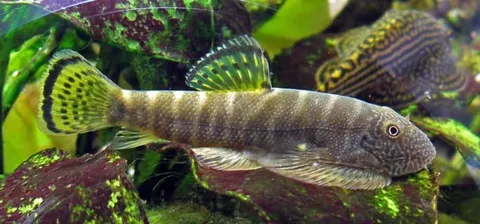
Gastromyzon viriosus
Gastromyzon viriosus, scientifically known as Gastromyzon viriosus, belongs to the family Balitoridae. It is worth noting that this species is not frequently found in pet stores, usually appearing for sale alongside…
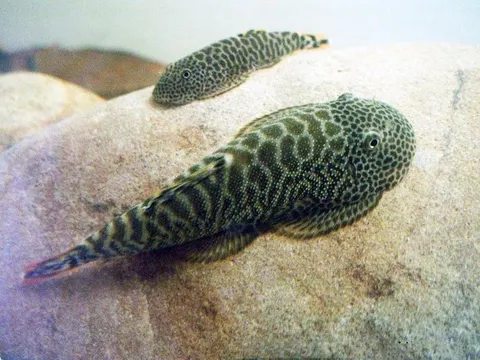
Gastromyzon monticola
Gastromyzon monticola, known as the Gastromyzon monticola, is a representative of the Balitoridae family (River Loaches). This species is endemic to the island of Borneo, also known as Kalimantan. Its natural habitat is…
Hemimyzon formosanus
The Formosa Loach, scientifically known as Hemimyzon formosanus, belongs to the family Balitoridae, which includes river loaches. This fish may not immediately captivate with its appearance, but it is primarily valued…