Temperature20 – 24 °C
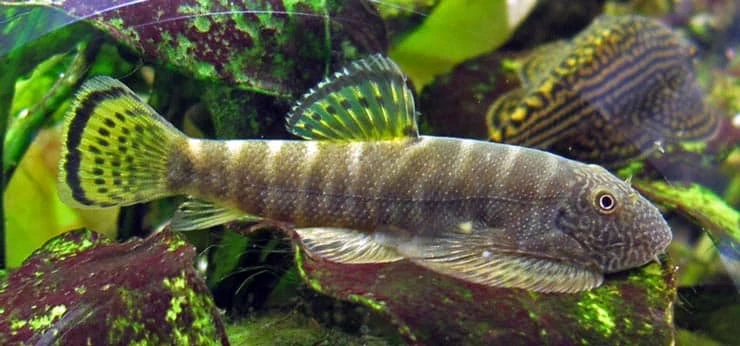
Gastromyzon viriosus, scientifically known as Gastromyzon viriosus, belongs to the family Balitoridae. It is worth noting that this species is not frequently found in pet stores, usually appearing for sale alongside other representatives of the Gastromyzon genus. Its keeping can be somewhat complex, as it requires exceptionally clean, flowing water and quite intense current. For these reasons, it is not recommended for beginner aquarists.
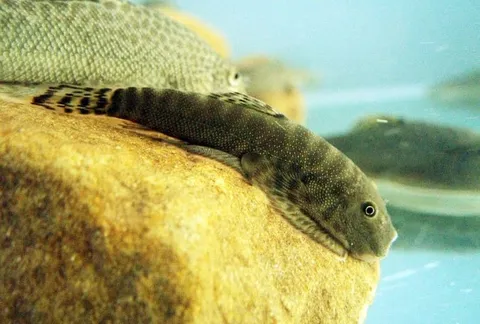
Adults of this species reach approximately 5 cm in length. The body structure is typical for Gastromyzon and adapted to life in strong currents — it is highly flattened dorsally, resembling an elongated water droplet with a rounded head and a pointed tail. The pectoral and pelvic fins are wide and fan-shaped. The body coloration is dark brown, adorned with 8–10 light transverse stripes on the dorsal side.
The natural habitat of this species extends across Southeast Asia. It is endemic to the island of Borneo, found only in the Tatau River basin, which flows through the central regions of the Malaysian state of Sarawak. Gastromyzon viriosus prefers the upper reaches of the river, originating in mountainous areas. A typical biotope for it is a fast-flowing stream with a turbulent current, its bottom covered with stones and boulders. Aquatic flora is mainly found along the banks or on snags submerged in the water.
If food is available in various places in the aquarium, the fish will not compete with each other and will maintain a peaceful demeanor. However, with insufficient space, competition for the most favorable areas of the aquarium bottom is possible. Such competition often escalates into skirmishes between the strongest individuals. Otherwise, these fish coexist perfectly with non-aggressive species of comparable size that can also thrive in turbulent current conditions. Other Gastromyzon species, loaches, and some cyprinids are suitable tankmates.
For a group of 3–5 fish, the optimal aquarium volume starts from 60–70 liters. The fundamental condition for the long-term and successful keeping of Gastromyzon viriosus is the most accurate recreation of conditions inherent in its natural environment. It is important to provide an intense internal current and maintain high water quality, i.e., a low concentration of pollutants and sufficient oxygen saturation. A powerful internal filter will successfully cope with these tasks, providing both the necessary water movement and its purification. It is desirable that the entire volume of water in the aquarium be renewed 10–15 times per hour. For example, a 100-liter aquarium will require a filter capable of pumping at least 1000 liters of water per hour. Only heavy elements should be used in the aquarium decor: stony substrate, large snags, and other massive decorations. Under bright lighting, algae can grow on the surface of snags, serving as an additional food source for the fish. As for plants, artificial alternatives can be used, or undemanding species that can adapt to such conditions, such as Anubias, Crinum, or Java fern, can be planted.
In the wild, the fish's diet consists of algae that form a thin film on the surface of stones, as well as microorganisms living within these algae. In a home aquarium, the food should also contain a significant amount of plant components. Ideally, natural algae growth can be encouraged, but this carries the risk of uncontrolled proliferation. In strong currents, most dry foods, such as flakes and granules, will be immediately dispersed throughout the water volume, making them unsuitable. Specialized gel or paste-like foods that can be securely attached to a surface without fear of being carried away by the current are an excellent solution. The gel should be placed in different parts of the aquarium to avoid conflicts between fish over food.
Due to the limited prevalence of Gastromyzon in amateur aquaristics, there is insufficient information about their reproduction in home conditions. It is known that high-protein diets and changes in water temperature can serve as spawning stimuli. A gradual temperature increase from 24°C to 30°C over 8 weeks has been noted. High values were then maintained for 3 weeks, after which the temperature dropped back to normal levels. It is also important to significantly reduce the intensity of water movement. It is assumed that upon completion of this process, a clutch of several dozen or hundreds of tiny eggs, less than 1 mm in size, may appear. The incubation period lasts about 3 days. Parental instincts are not developed in these fish, and there is a complete lack of fry care. Fry are extremely sensitive to water quality; any, even minor, contamination, such as decaying plant debris, can negatively affect their well-being and lead to the death of the entire brood.
Health problems usually arise only with injuries or keeping in unfavorable conditions, which weakens the immune system and, consequently, provokes the development of various diseases. At the first signs of illness, it is primarily necessary to test the water to rule out exceeding certain parameters or the presence of dangerous concentrations of toxic substances (such as nitrites, nitrates, ammonia, etc.). After detecting and eliminating deviations and bringing all parameters back to normal, treatment can begin.
When selecting individuals, attention should be paid to the activity of the fish: healthy Gastromyzon should actively move across surfaces, using their suction-cup fins, or remain motionless on glass and stones. Avoid specimens with signs of emaciation, sunken bellies, or skin damage. Given that these fish often come directly from natural waters into trade, they may be under stress, so it is important to assess the cleanliness of the water in the seller's aquarium and the absence of visible contamination or dead individuals. Since species identification of Gastromyzon representatives is difficult due to their external similarity, it is recommended to purchase a group of 4 or more individuals to observe their natural behavior. Quarantine after purchase is mandatory, as the fish may be carriers of parasites or infections acquired during transportation. Refuse to purchase if the fish appear lethargic, constantly lie on the bottom, or have an unnaturally pale coloration, which may indicate serious health problems or recent stress.
The essentials: size, tank volume, water parameters and care
An adult reaches 5 cm in length. Plan the tank around the maximum size: the fish quickly outgrows a cramped setup.
The recommended volume is 60 L. A smaller tank speeds up nitrate build-up and raises stress levels.
Temperature 20–24 °C, pH 6–7.5, hardness 2–15 dGH. Stability matters more than exact values: sudden swings are harder on the fish than a small deviation from the ideal.
Around 4 years when kept properly. Lifespan depends directly on tank volume, water quality and a varied diet.
Temperament: peaceful (regular). Keep this in mind when choosing tank mates.
Recommended setup: both solitary and in group (flexible). Ignoring this is a common cause of stress and disease.
Diet type: sinking (plant-based). Feed small portions that are finished within a couple of minutes — overfeeding does more harm than underfeeding.
The scientific name of the species is Gastromyzon viriosus, family River Loaches (Balitoridae).
The water suits 196 of 208 plants in the catalogue — the easiest ones are shown first.
Afzelius's AnubiasAnacharisAnubiasBrazilian PennywortDwarf CloverDwarf CloverDwarf HygrophilaDwarf SagittariaDwarf ValGuppy GrassHornwortJava FernJava MossMoneywortMud SwordNarrow Leaf AnacharisNarrow-leaf CloverStringy MossSüsswassertangTaiwan MossTape GrassTemple PlantUssuri WatermilfoilWater Wisteria
Matched by family, categories and overlapping keeping conditions
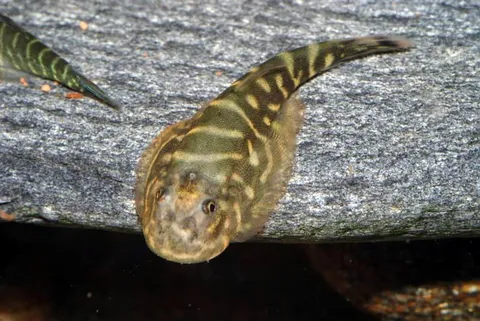
Gastromyzon zebrinus
The Zebra Gastromyzon, also known by its scientific name Gastromyzon zebrinus, belongs to the family Balitoridae. This species does not attract the attention of all aquarists, which is due to its unusual appearance,…
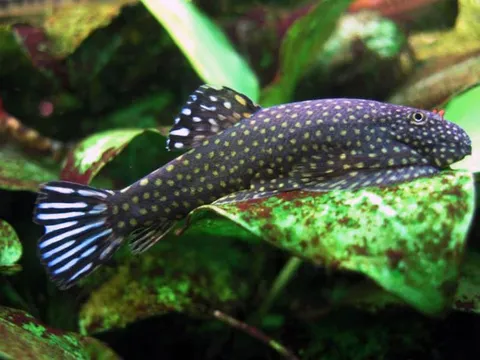
Gastromyzon ctenocephalus
Gastromyzon ctenocephalus, also known as the Gastromyzon ctenocephalus, belongs to the family Balitoridae, which includes river loaches. This fish is endemic to the island of Borneo, or Kalimantan, and is found…
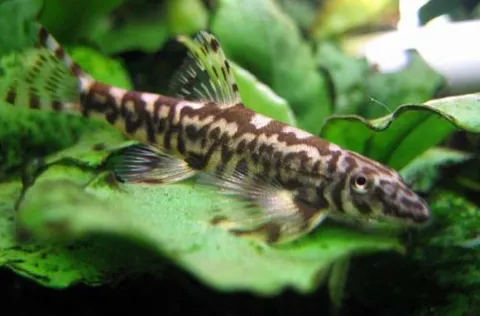
Liniparhomaloptera disparis
Liniparhomaloptera disparis, also known as Lina's Loach, belongs to the family Balitoridae, or river loaches. It was named after Shu-Yen Lin, a renowned Chinese ichthyologist. The natural habitat of this species covers…
Gastromyzon cornusaccus
Gastromyzon cornusaccus, also known by its scientific name Gastromyzon cornusaccus, belongs to the family Balitoridae, or river loaches. It is quite rare in the aquarium trade, and its primary distribution area is among…