Temperature18 – 22 °C
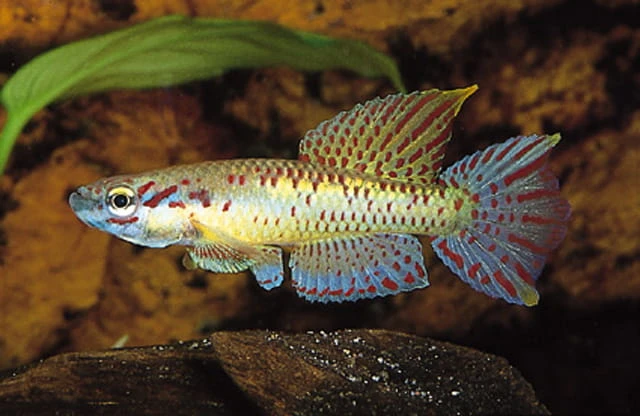
Known scientifically as Aphyosemion loennbergii, this fish is a member of the Nothobranchiidae family. It owes its name to the Swedish zoologist Einar Lönnberg. This species is quite rare in aquariums and is practically unknown outside its natural habitats.
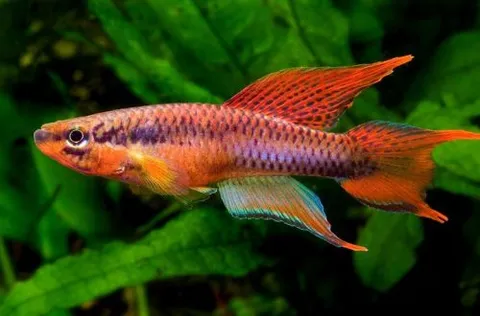
Adult specimens reach lengths of 4 to 5 cm. The fish are characterized by a yellow coloration with a distinctive pattern: two dark horizontal stripes are complemented by numerous bright red speckles. Their fins are tall and colorful, displaying gradient transitions from red to yellow and blue. The caudal fin is predominantly blue with visible burgundy veins. Males have more intense and vibrant coloration compared to females. Unlike many other Killifish species, Aphyosemion loennbergii has a longer life cycle and often lives for 3–5 years.
Equatorial Africa is the native land of this species. Individuals of these fish have been found in the Lokundje and Nyong river basins, located in southwestern Cameroon. They prefer to inhabit shallow waters, found in streams and backwaters, hiding among fallen leaves, snags, and branches.
These fish are peaceful and active. Competition for female attention may occur among males. To avoid potential injuries, especially in smaller aquariums, it is recommended to keep these fish in a harem-like setup: one male should be accompanied by 2–3 females. They coexist well with many other species of comparable size.
Aphyosemion loennbergii is not frequently encountered in home aquariums, largely due to breeding difficulties. In artificial environments, these fish exhibit extremely low offspring productivity or do not reproduce at all. However, their maintenance is relatively straightforward. For a group of two or three fish, an aquarium of 40 L or more will be required. When decorating, it is recommended to provide an abundance of aquatic vegetation, including floating species. The substrate should be soft and dark, preferably covered with a layer of fallen leaves, branches, or snags. Soft, slightly acidic water with a temperature between 18–22°C is optimal for them. It is important to avoid using powerful filters that can create excessive current; a simple air-driven sponge filter would be an ideal choice. Aquarium maintenance traditionally includes weekly partial water changes with fresh water and regular removal of organic waste. Although the fish can adapt to most popular foods, their diet must include protein-rich products such as dry, frozen, or live bloodworms, Artemia, and others.
The fish can adapt to most widely available foods. However, it is extremely important to include protein-rich products in their diet, such as dry, frozen, or live bloodworms, Artemia, and similar items.
Breeding this species is considered challenging, as the fish often produce a small number of offspring or refuse to spawn in captivity. Spawning is paired, and it is recommended to keep breeders in a ratio of one male to two or three females. Eggs are laid on fine-leaved plants or substrates that mimic natural conditions. Due to reproduction difficulties, the species is rarely found in wide commercial sale.
The species is sensitive to sudden changes in hydrochemical water parameters and the accumulation of organic waste. The main health problems arise from improper keeping conditions, which provoke the development of bacterial infections and fin rot. Prevention involves maintaining a stable environment, using soft, slightly acidic water, regular water changes, and avoiding strong currents that cause stress to the fish.
When purchasing, choose active fish with clean fins and no visible body damage. It is important to ensure there is no plaque or sores, which indicate diseases. In the store, the fish should exhibit natural caution for the species, but not be excessively timid or apathetic. It is recommended to acquire individuals from the same group, considering their intraspecific competition, and to clarify in advance the keeping conditions to which they have been adapted.
The essentials: size, tank volume, water parameters and care
An adult reaches 4–5 cm in length. Plan the tank around the maximum size: the fish quickly outgrows a cramped setup.
The recommended volume is 40 L. A smaller tank speeds up nitrate build-up and raises stress levels.
Temperature 18–22 °C, pH 6–7, hardness 2–8 dGH. Stability matters more than exact values: sudden swings are harder on the fish than a small deviation from the ideal.
Around 5 years when kept properly. Lifespan depends directly on tank volume, water quality and a varied diet.
Temperament: peaceful (regular). Keep this in mind when choosing tank mates.
Recommended setup: harem (1 male and several females). Ignoring this is a common cause of stress and disease.
Diet type: plant-based (algae, vegetables). Feed small portions that are finished within a couple of minutes — overfeeding does more harm than underfeeding.
The scientific name of the species is Aphyosemion loennbergii, family Nothobranchiidae. It also appears in the literature as: Aphyosemion pappenheimi, Aphyosemion unistrigatus, Fundulus loennbergii.
The water suits 195 of 208 plants in the catalogue — the easiest ones are shown first.
Afzelius's AnubiasAnacharisAnubiasBrazilian PennywortDwarf CloverDwarf CloverDwarf HygrophilaDwarf SagittariaDwarf ValGuppy GrassHornwortJava FernJava MossMoneywortMud SwordNarrow Leaf AnacharisNarrow-leaf CloverStringy MossSüsswassertangTaiwan MossTape GrassTemple PlantUssuri WatermilfoilWater Wisteria
Matched by family, categories and overlapping keeping conditions
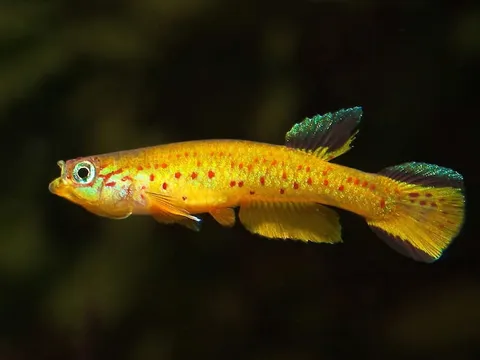
Aphyosemion congicum
Aphyosemion congicum, or the Congo Aphyosemion, is a representative of the family Nothobranchiidae. This fish is not often found in home aquariums, as its keeping requires certain efforts, and breeding offspring is…
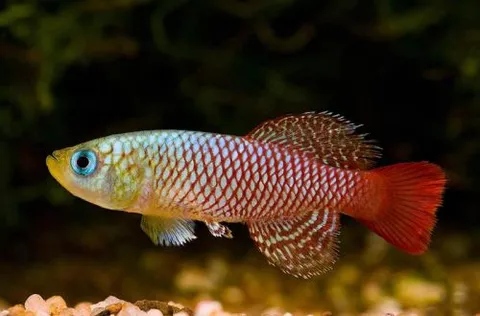
Nothobranchius palmqvisti
The fish Nothobranchius palmqvisti, known scientifically as Nothobranchius palmqvisti, is a member of the family Nothobranchiidae, which includes African rivulines, or Nothobranchius. It is named in honor of G.…
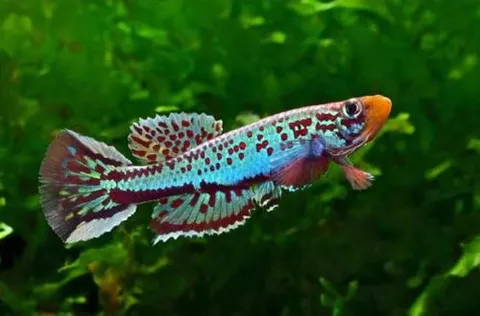
Aphyosemion cameronense
Aphyosemion cameronense, known in scientific literature as Aphyosemion cameronense, is a member of the family Nothobranchiidae. This small fish is distinguished by its bright coloration and rather spirited character.…
Aphyosemion bitaeniatum
The Two-striped Aphyosemion, scientifically known as Aphyosemion bitaeniatum, belongs to the family Nothobranchiidae, or nothobranchs. These vibrant fish are not particularly demanding to keep and adapt easily to…