Temperature16 – 23 °C
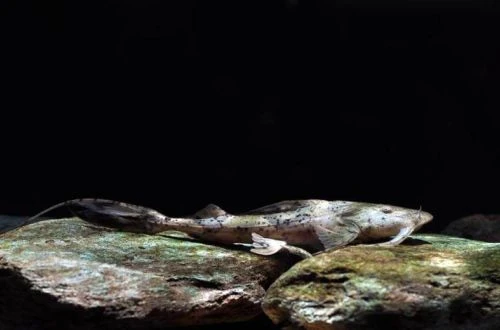
The Bagarius Catfish, also known as the “Freshwater Sand Shark” or by its scientific name Bagarius yarrelli, belongs to the family Sisoridae (Bagridae, or mountain catfishes). This species is rarely encountered among amateur aquarists due to its impressive size and significant maintenance costs.
Adult specimens can reach two meters in length, though in artificial conditions, they rarely exceed 1.5 meters. The body of these fish is elongated with a massive, flattened head featuring a large mouth equipped with sharp, conical teeth. Notably, their fins are relatively short, while the caudal fin is quite large. The coloration typically ranges from gray to sandy, adorned with dark speckles of random shape and size. Thanks to its characteristic body shape and coloration, this catfish has earned an interesting nickname — the “Freshwater Sand Shark.”
This catfish can be found in the extensive river basins of the Indian subcontinent, including the Ganges, Indus, and Brahmaputra, as well as their numerous tributaries. Reports of its presence in Southeast Asia will likely not be confirmed by future research. It prefers the main river channels, inhabiting areas with fast, sometimes turbulent currents, especially in hilly terrain. The catfish stays in the bottom layer, finding refuge among large boulders and rock fragments.
Due to its diet, this catfish cannot peacefully coexist with other fish small enough to fit into its mouth, which includes virtually all aquarium species. For this reason, it is recommended to keep it alone.
Maintaining a fish of such magnitude requires an enormous tank, holding thousands of liters of water. Sustaining biological balance in such a large volume, considering the significant amount of waste produced by the catfish, demands strict adherence to an aquarium maintenance schedule, as well as the installation and connection of high-performance filtration systems and other equipment. The total weight of the aquarium, including water, can reach several tons, making its installation associated with construction work and the laying of utility lines. Typically, specialized companies are responsible for the implementation of such projects and subsequent maintenance, leaving the owner to merely enjoy the result and regularly feed their pets. In this case, keeping a Bagarius catfish becomes quite simple, but it involves significant financial costs and hardly falls within the realm of amateur aquaristics.
As a predator, in nature, it hunts fish, amphibians, crustaceans, and other invertebrates. In aquarium conditions, the catfish can usually be accustomed to alternative foods such as white fish meat, shrimp, shell-less mussels, or large earthworms. Commercial foods designed for carnivorous species are also an excellent choice. They must not be fed mammalian or avian meat: the lipids it contains cannot be properly metabolised by the fish and lead to excess fat deposits and even organ degeneration.
This species is not bred in aquaria. It is a large riverine predator, fished for food across much of its range; spawning is tied to the monsoon floods, when the fish move up into the headwaters. Adults reach a size only a handful of private aquarists can house, so breeding does not arise as a practical question.
Most often, diseases are caused by unsuitable keeping conditions. Maintaining a stable environment in the aquarium is a key factor for successful keeping. If any symptoms of illness appear, the first step is to check the water quality. If deviations are found, measures should be taken immediately to correct them. If symptoms persist or even worsen, medicinal treatment will be required.
When purchasing, it should be noted that this species is a large predator requiring specific keeping conditions and enormous volumes of water, which makes it unsuitable for most home aquariums. A healthy specimen should be active, have clean skin without visible damage, ulcers, or film, and a robust physique without signs of emaciation. — Avoid fish with sunken bellies or atypical spots on their bodies. — Pay attention to behavior: a healthy fish should be alert and responsive to external stimuli. — Ask the seller about the current diet to ensure a smooth transition to food in new conditions.
The essentials: size, tank volume, water parameters and care
An adult reaches 15–200 cm in length. Plan the tank around the maximum size: the fish quickly outgrows a cramped setup.
The recommended volume is 1500 L. A smaller tank speeds up nitrate build-up and raises stress levels.
Temperature 16–23 °C, pH 6–7.5, hardness 2–12 dGH. Stability matters more than exact values: sudden swings are harder on the fish than a small deviation from the ideal.
Around 10 years when kept properly. Lifespan depends directly on tank volume, water quality and a varied diet.
Temperament: aggressive / incompatible / unfriendly. This is a predatory species — any fish small enough to fit in its mouth will eventually be eaten.
Recommended setup: solitary. Ignoring this is a common cause of stress and disease.
Diet type: meat / protein (live, frozen, fresh). Feed small portions that are finished within a couple of minutes — overfeeding does more harm than underfeeding.
The scientific name of the species is Bagarius yarrelli, family Sisoridae (Asian hillstream catfishes). It also appears in the literature as: Bagarius lica, Bagarius nieuwenhuisii, Bagrus yarrelli.
The water suits 196 of 208 plants in the catalogue — the easiest ones are shown first.
Afzelius's AnubiasAnacharisAnubiasBrazilian PennywortDwarf CloverDwarf CloverDwarf HygrophilaDwarf SagittariaDwarf ValGuppy GrassHornwortJava FernJava MossMoneywortMud SwordNarrow Leaf AnacharisNarrow-leaf CloverStringy MossSüsswassertangTaiwan MossTape GrassTemple PlantUssuri WatermilfoilWater Wisteria
Matched by family, categories and overlapping keeping conditions
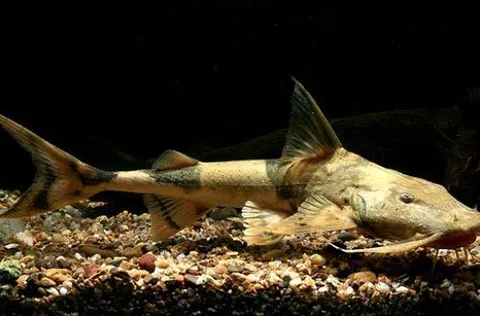
Bagarius bagarius
The Goonch, scientifically known as Bagarius bagarius, belongs to the family Sisoridae, or Asian hillstream catfishes. This species, distinguished by its impressive size and high maintenance costs, does not coexist well…
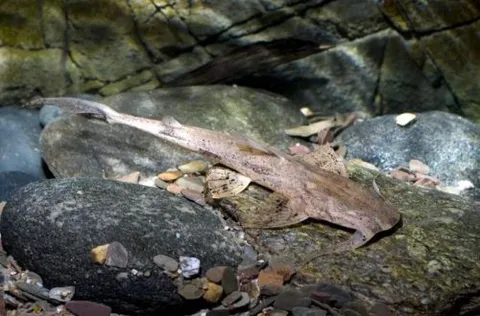
Bagarius suchus
Bagarius suchus, known as the Crocodile Catfish, belongs to the family Sisoridae, or Bagridae (mountain catfishes). This large predator is characterized by a complex temperament. Its keeping, if undertaken…
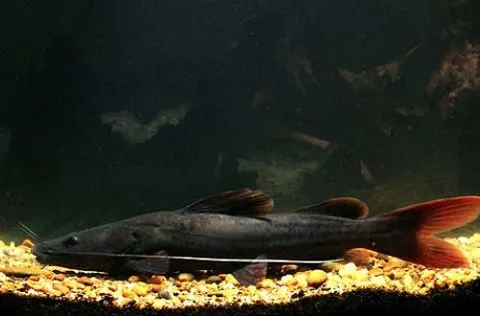
Hemibagrus wyckioides
The Asian Red-tailed Catfish, known scientifically as Hemibagrus wyckioides, is a member of the Bagridae family (Bagrid Catfishes). This is a very large and aggressive predatory fish, rarely suitable for beginner…
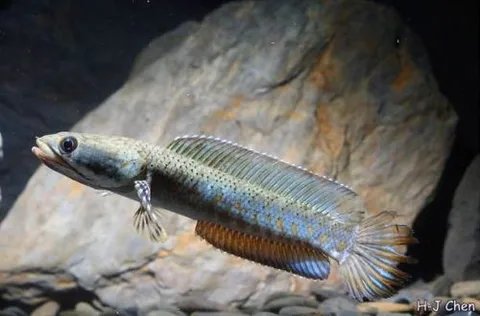
Channa pulchra
Channa pulchra, officially known by its scientific name Channa pulchra, belongs to the snakehead family (Channidae). This species was first described as new in 2007 by researcher R. Britz. Since the early 2010s, it has…