Temperature18 – 23 °C
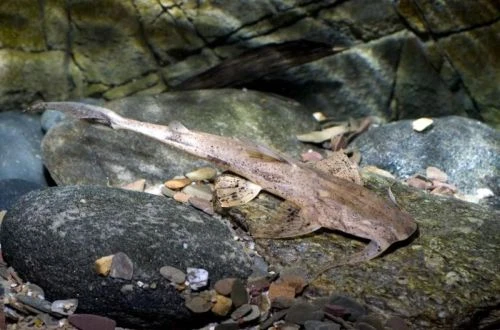
Bagarius suchus, known as the Crocodile Catfish, belongs to the family Sisoridae, or Bagridae (mountain catfishes). This large predator is characterized by a complex temperament. Its keeping, if undertaken independently, requires significant expense and effort. In the aquarium hobby, it is rarely encountered among enthusiasts and is not suitable for beginners.
Adult Crocodile Catfish can reach a length of up to 65–70 cm. The fish's body is straight, somewhat flattened, and its head is very narrow. Two massive pairs of barbels are located near the mouth. This structure allows the catfish to easily penetrate crevices between boulders in search of food and effectively resist strong currents. Its coloration is light brown, covered with black spots. Thanks to this camouflage, it is difficult to spot against a sandy bottom.
Its natural habitat is Southeast Asia, specifically the basin of the extensive Mekong River, which flows through Thailand, Laos, and Cambodia. It can also be found in the Chao Phraya River and its tributaries, located in Thailand. In nature, this species prefers main channels with fast, sometimes turbulent currents, where it finds shelter among large boulders and rocks.
Selecting compatible species is a challenging task, given this catfish's predatory diet. Furthermore, it is not particularly tolerant of conspecifics and other bottom-dwelling fish that may encroach on its aquatic space.
Due to the significant size of this fish, the aquarium for it should have a volume of at least 1000 liters. Within it, a strong current and a high level of dissolved oxygen must be maintained. It is also important to ensure the stability of the water's hydrochemical composition and temperature within acceptable limits, and to prevent the accumulation of organic waste. The aquarium's decor should mimic its natural habitat — subdued lighting and several shelters on a sandy substrate. These are just some of the main tasks that an aquarist who decides to keep a Crocodile Catfish will face. The installation and subsequent maintenance of such an aquarium (whose total weight with water can exceed a ton) involve significant financial investment. This includes not only the acquisition of expensive equipment and the tank itself, but also the execution of construction work, as well as the installation of engineering systems for automating many processes. For example, for water treatment and the regular renewal of 50–70% of the water in the aquarium.
As a predator, the catfish feeds on small fish, amphibians, crustaceans, and other invertebrates. In a home aquarium, its diet can consist of similar products, or alternative fresh or frozen foods. These include bloodworms, earthworms, chopped shrimp, and shelled mussels. Specialized commercial foods developed for carnivorous species will also be a good choice. They must not be fed mammalian or avian meat: the lipids it contains cannot be properly metabolised by the fish and lead to excess fat deposits and even organ degeneration.
Breeding of the crocodile catfish in aquarium conditions has not been recorded to date. In nature, this species is oviparous and migrates to spawn in deep river channels with strong currents. Given the specific habitat requirements and complex reproductive behavior, simulating the breeding process in captivity is considered practically impossible.
Most health problems in fish often arise from unsuitable keeping conditions. Maintaining a stable and comfortable habitat is a key factor for successful keeping. If symptoms of illness appear, the first step is to check the water quality. If deviations are found, it is important to take immediate measures to eliminate them. If the symptoms do not disappear or worsen, medicinal treatment may be required.
When purchasing a crocodile catfish, it should be noted that this is a rare and large predator requiring specific conditions. The main criteria for choosing a healthy specimen are: — absence of visible damage, ulcers, or white film on the body and fins, which often occur during transportation or due to poor water quality; — activity of the fish in the evening, as it is a crepuscular species; lethargy or apathy may indicate stress or exhaustion; — intact barbels, which are an important sensory organ; — clear breathing without frequent gill cover movement, which indicates no problems with water oxygen saturation. Before purchasing, it is important to ensure that the fish is adapted to non-live foods (frozen seafood or fish fillets), as feeding exclusively live fish increases the risk of introducing infections and parasites into the aquarium. Due to high sensitivity to water quality, it is recommended to clarify the keeping conditions in the store and avoid specimens kept in overcrowded or poorly filtered aquariums.
The essentials: size, tank volume, water parameters and care
An adult reaches 65–70 cm in length. Plan the tank around the maximum size: the fish quickly outgrows a cramped setup.
The recommended volume is 1000 L. A smaller tank speeds up nitrate build-up and raises stress levels.
Temperature 18–23 °C, pH 6–7.5, hardness 2–12 dGH. Stability matters more than exact values: sudden swings are harder on the fish than a small deviation from the ideal.
Around 10 years when kept properly. Lifespan depends directly on tank volume, water quality and a varied diet.
Temperament: aggressive / incompatible / unfriendly. This is a predatory species — any fish small enough to fit in its mouth will eventually be eaten.
Recommended setup: solitary. Ignoring this is a common cause of stress and disease.
Diet type: meat / protein (live, frozen, fresh). Feed small portions that are finished within a couple of minutes — overfeeding does more harm than underfeeding.
The scientific name of the species is Bagarius suchus, family Sisoridae (Asian hillstream catfishes).
The water suits 196 of 208 plants in the catalogue — the easiest ones are shown first.
Afzelius's AnubiasAnacharisAnubiasBrazilian PennywortDwarf CloverDwarf CloverDwarf HygrophilaDwarf SagittariaDwarf ValGuppy GrassHornwortJava FernJava MossMoneywortMud SwordNarrow Leaf AnacharisNarrow-leaf CloverStringy MossSüsswassertangTaiwan MossTape GrassTemple PlantUssuri WatermilfoilWater Wisteria
Matched by family, categories and overlapping keeping conditions
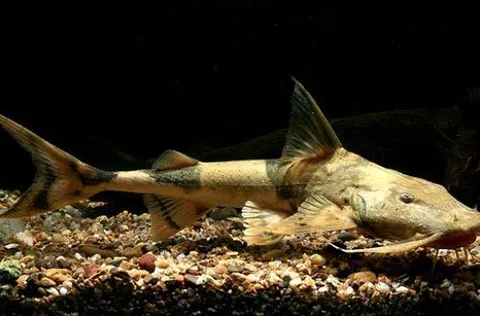
Bagarius bagarius
The Goonch, scientifically known as Bagarius bagarius, belongs to the family Sisoridae, or Asian hillstream catfishes. This species, distinguished by its impressive size and high maintenance costs, does not coexist well…
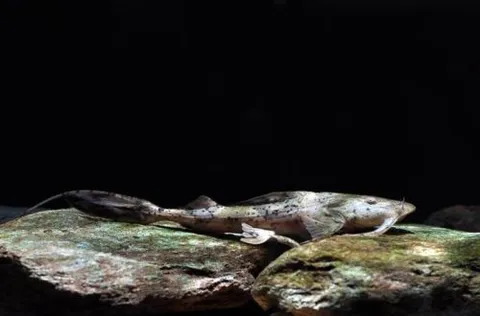
Bagarius yarrelli
The Bagarius Catfish, also known as the “Freshwater Sand Shark” or by its scientific name Bagarius yarrelli, belongs to the family Sisoridae (Bagridae, or mountain catfishes). This species is rarely encountered among…
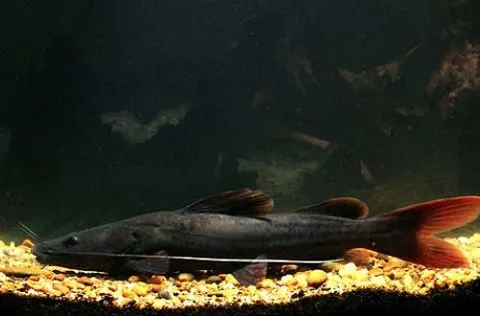
Hemibagrus wyckioides
The Asian Red-tailed Catfish, known scientifically as Hemibagrus wyckioides, is a member of the Bagridae family (Bagrid Catfishes). This is a very large and aggressive predatory fish, rarely suitable for beginner…
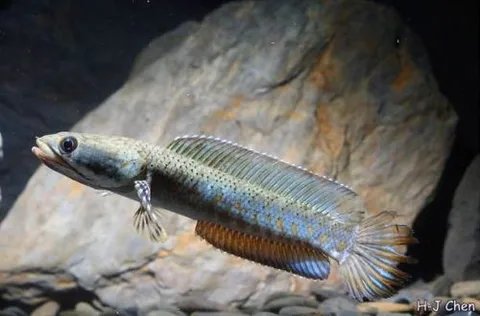
Channa pulchra
Channa pulchra, officially known by its scientific name Channa pulchra, belongs to the snakehead family (Channidae). This species was first described as new in 2007 by researcher R. Britz. Since the early 2010s, it has…