Temperature23 – 26 °C
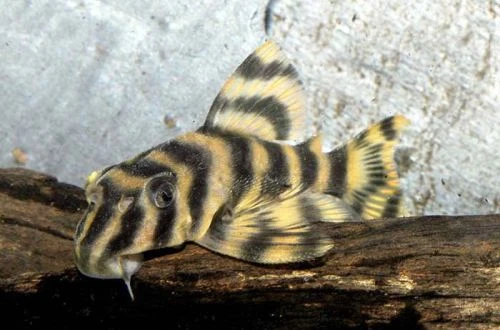
Peckoltia vittata, also known as the Banded Peckoltia, belongs to the family Loricariidae, which includes armored catfish. This fish inhabits extensive tributaries of the Amazon River, spreading across Brazil, Venezuela, and Colombia.
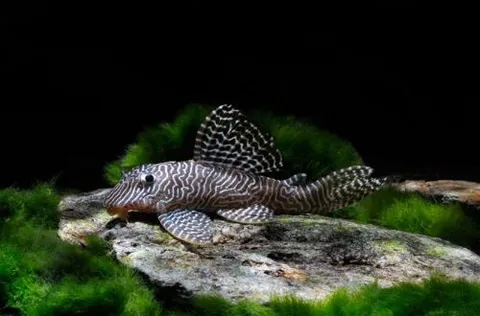
Adults most often reach 8–9 cm in length, although larger specimens, up to 15 cm, are sometimes found. Such sizes are likely characteristic of individual geographical populations, given the wide range of the species. The catfish's body is slightly flattened, and its head, when viewed from above, has a triangular, pointed shape. Hard bony plates covering its body provide reliable protection for the fish. The fins are large and fan-shaped, with the first rays being thick and formed by spines. A distinctive feature is the pattern: dark lines along the entire body are clearly visible against a lighter background, which can be yellow, orange, or gray.
The Banded Peckoltia inhabits river basins of South America, including the Amazon, Tapajós, Madeira, Xingu, and other tributaries. In nature, this species prefers river sections with fast currents and rocky bottoms. The fish lead a predominantly benthic lifestyle, hiding among rocks and snags during the day.
The Banded Peckoltia generally exhibits a peaceful nature. However, in the absence of sufficient free space, minor territorial disputes may arise both between individuals of the same species and with other bottom dwellers. As a guideline for comfortable keeping, it is recommended to allocate at least 100 cm² of bottom area per catfish. When selecting tank mates for a small aquarium, it is better to prioritize species that inhabit the water column or surface. There is no need to worry about the safety of snails and shrimp – the catfish do not perceive them as a threat to their territory. In spacious aquariums, these fish coexist perfectly with many non-aggressive species. Thanks to their "armor," they successfully tolerate the proximity of not-so-friendly inhabitants, such as some South American cichlids.
For comfortable keeping of one catfish and several compatible species of similar size, an aquarium of 80 to 100 liters will be required. The decor must include shelters, such as snags or other decorative elements, where Peckoltia vittata can find refuge during daylight hours. The rest of the setup is chosen at the discretion of the aquarist or according to the needs of other inhabitants. For the long-term well-being of the fish, clean water with pH and dGH parameters within acceptable limits is crucial. This requires regular aquarium maintenance and timely partial water changes.
In their natural habitat, their diet consists of vegetation, wood fibers (snags), algae, and small invertebrates. In a home aquarium, they readily accept common sinking foods such as flakes, tablets, and pellets, provided they contain plant components.
Breeding occurs in enclosed shelters, which the fish use as spawning caves. The male takes care of the offspring, guarding the clutch of eggs until the larvae hatch. To stimulate spawning in the aquarium, stable water parameters must be maintained, and appropriately sized ceramic or stone tubes must be provided.
The species is sensitive to water quality and the accumulation of organic compounds such as ammonia and nitrites. With poor filtration or failure to adhere to the water change schedule, fish may be susceptible to bacterial infections and skin lesions. Prevention involves maintaining substrate cleanliness, effective aeration, and regular monitoring of water chemistry.
When purchasing, choose active individuals with clean fins and no visible body damage. A healthy fish should have normal plumpness, no signs of a sunken belly, and show interest in foraging. It is recommended to avoid specimens with signs of apathy, which constantly lie in open areas of the aquarium or have an unnaturally pale coloration.
The essentials: size, tank volume, water parameters and care
An adult reaches 9–15 cm in length. Plan the tank around the maximum size: the fish quickly outgrows a cramped setup.
The recommended volume is 80 L. A smaller tank speeds up nitrate build-up and raises stress levels.
Temperature 23–26 °C, pH 5–7.5, hardness 2–20 dGH. Stability matters more than exact values: sudden swings are harder on the fish than a small deviation from the ideal.
Around 10 years when kept properly. Lifespan depends directly on tank volume, water quality and a varied diet.
Temperament: semi-peaceful (including aggression during spawning / intraspecific conflicts). Keep this in mind when choosing tank mates.
Recommended setup: both solitary and in group (flexible). Ignoring this is a common cause of stress and disease.
Diet type: sinking (any). Feed small portions that are finished within a couple of minutes — overfeeding does more harm than underfeeding.
The scientific name of the species is Peckoltia vittata, family Armored Catfishes (Loricariidae). It also appears in the literature as: Ancistrus vittatus, Chaetostomus vittatus, Peckoltia kuhlmanni.
The water suits 198 of 208 plants in the catalogue — the easiest ones are shown first.
Afzelius's AnubiasAnacharisAnubiasBrazilian PennywortDwarf CloverDwarf CloverDwarf HygrophilaDwarf SagittariaDwarf ValGuppy GrassHornwortJava FernJava MossMoneywortMud SwordNair's LagenandraNarrow Leaf AnacharisNarrow-leaf CloverStringy MossSüsswassertangTaiwan MossTape GrassTemple PlantUssuri Watermilfoil
Matched by family, categories and overlapping keeping conditions
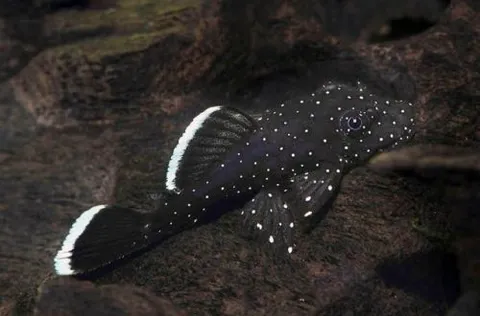
Ancistrus dolichopterus
The Common Bristlenose Pleco, scientifically known as Ancistrus dolichopterus, is a member of the Loricariidae family, also known as armored catfish. This attractive, medium-sized catfish is very popular due to its…
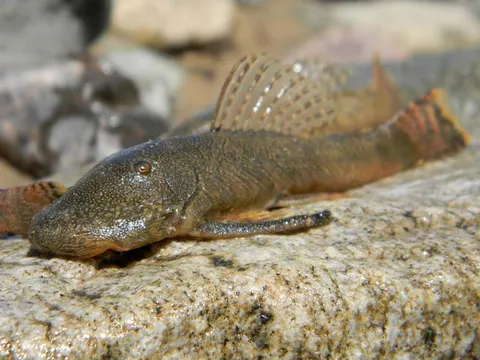
Chaetostoma fischeri
Chaetostoma fischeri, known as Fischer's Chaetostoma, is a member of the family Loricariidae, or armored catfish. Its natural habitat is in the river systems of Central America, as well as in some South American rivers…
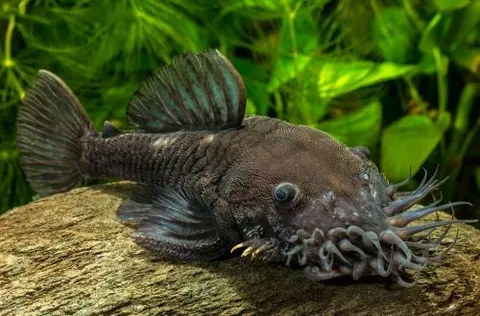
Ancistrus ranunculus
Ancistrus ranunculus, or the Jellyfish Bristlenose Pleco, belongs to the Loricariidae family — the armored catfish. Its scientific name is Ancistrus ranunculus. The unusual appearance of this catfish can evoke mixed…
Hypancistrus sp. L260
The Queen Arabesque Pleco, or Painted Pleco, scientifically known as Hypancistrus sp. L260, belongs to the Loricariidae family, which includes armored catfish. The lack of a universally recognized scientific…