Temperature23 – 27 °C
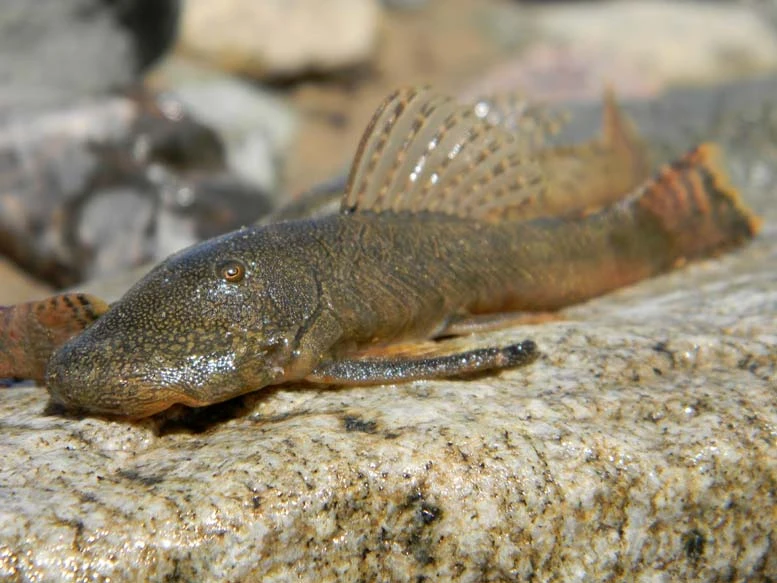
Chaetostoma fischeri, known as Fischer's Chaetostoma, is a member of the family Loricariidae, or armored catfish. Its natural habitat is in the river systems of Central America, as well as in some South American rivers that flow into the Caribbean Sea. These fish prefer shallow areas with fast currents and rocky bottoms.
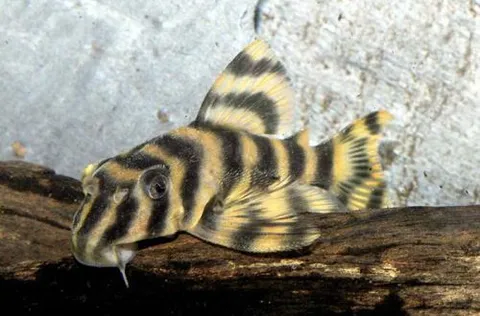
Adults of this fish can reach up to 30 cm in length. A distinctive feature of this catfish is its unremarkable gray coloration, flattened body, large head, and a mouth located on the underside that functions as a suction cup. This suction cup plays a key role, allowing the fish to hold firmly to the bottom even in strong currents. The catfish's body is covered with rows of hard bony plates, providing protection from small predators. The first rays of the fins, which are significantly thickened and form sharp spines, perform a similar protective function. The pectoral fins are located closer to the belly and are oriented to help Chaetostoma fischeri hold onto the substrate surface, be it rocks or boulders.
The species is widespread in the river systems of Central and South America, including the Magdalena, Atrato, Sinú, Chagres, Guayas, and other river basins. It inhabits freshwater bodies, primarily in areas with fast currents and rocky bottoms. It prefers a benthic lifestyle, using its developed oral suction cup to hold onto rocks in strong currents.
The fish has a conditionally peaceful temperament but can display intraspecific aggression if space is insufficient. It is predominantly nocturnal or crepuscular, hiding among rocks and snags during the day. Due to its large size and specific requirements for strong current, it is recommended to keep it in spacious aquariums that simulate mountain river conditions.
Fischer's Chaetostoma is rarely kept in aquariums, and it is almost impossible to find it in European markets. For this reason, there is very little information about its keeping in home conditions. It is generally believed that a single catfish will require an aquarium of at least 500–600 liters. The tank's setup should mimic a mountain riverbed: a rocky substrate with snags and a moderate current. As a rule, aquatic plants are not used.
In natural conditions, the diet of Chaetostoma fischeri consists of algal growth, which it scrapes from rocks and snags. In a home aquarium, it is necessary to offer specialized algae-based foods, such as sinking pellets, tablets, or wafers, secured to the bottom. It is important that, in addition to plant components, the food also contains protein supplements, as in nature, along with algae, the catfish also consumes microorganisms living within them.
In nature, these fish spawn in fast-flowing, shallow waters. The process occurs under flat objects, such as rocks, to which the female attaches a clutch of eggs. The male guards the offspring, positioning himself upside down over the clutch. It is believed that the male's large pelvic fins play an important role in fertilization, allowing him to cover the eggs and prevent sperm from being washed away by the strong water flow.
No specific diseases unique to this species have been recorded. Like other members of the Loricariidae family, Chaetostoma fischeri is sensitive to water quality and dissolved oxygen levels, which is due to their natural habitat in fast-flowing rivers. The main health risks are associated with improper keeping conditions: — Bacterial infections and fungal lesions, arising from the accumulation of organic waste and high nitrate levels. — Injuries sustained from contact with sharp decorations if the aquarium lacks suitable hiding places or if the feeding regimen is disrupted. — Parasitic infestations, which are more likely to develop when the fish's immune system is weakened due to non-compliance with temperature regimes or lack of aeration. Prevention involves maintaining high water purity, regular partial water changes, and providing a strong current that mimics natural conditions. It is important to avoid sharp fluctuations in hydrochemical parameters, as these fish adapt poorly to an unstable environment.
When choosing, attention should be paid to the fish's activity and the condition of its skin. A healthy specimen should have clean fins without signs of damage, ulcers, or white film. It is important to ensure there is no emaciation, as fish of this species are sensitive to food quality and transport conditions. It is recommended to observe their behavior in the store: the fish should firmly hold onto surfaces using its suction cup.
The essentials: size, tank volume, water parameters and care
An adult reaches 30 cm in length. Plan the tank around the maximum size: the fish quickly outgrows a cramped setup.
The recommended volume is 500 L. A smaller tank speeds up nitrate build-up and raises stress levels.
Temperature 23–27 °C, pH 6–7.8, hardness 5–19 dGH. Stability matters more than exact values: sudden swings are harder on the fish than a small deviation from the ideal.
Around 10 years when kept properly. Lifespan depends directly on tank volume, water quality and a varied diet.
Temperament: semi-peaceful (including aggression during spawning / intraspecific conflicts). Keep this in mind when choosing tank mates.
Recommended setup: both solitary and in group (flexible). Ignoring this is a common cause of stress and disease.
Diet type: plant-based (algae, vegetables). Feed small portions that are finished within a couple of minutes — overfeeding does more harm than underfeeding.
The scientific name of the species is Chaetostoma fischeri, family Armored Catfishes (Loricariidae). It also appears in the literature as: Chaetostomus fischeri, Chaetostomus fisheri.
The water suits 197 of 208 plants in the catalogue — the easiest ones are shown first.
Afzelius's AnubiasAnacharisAnubiasBrazilian PennywortDwarf CloverDwarf CloverDwarf HygrophilaDwarf SagittariaDwarf ValGuppy GrassHornwortJava FernJava MossMoneywortMud SwordNair's LagenandraNarrow Leaf AnacharisNarrow-leaf CloverStringy MossSüsswassertangTaiwan MossTape GrassTemple PlantUssuri Watermilfoil
Matched by family, categories and overlapping keeping conditions
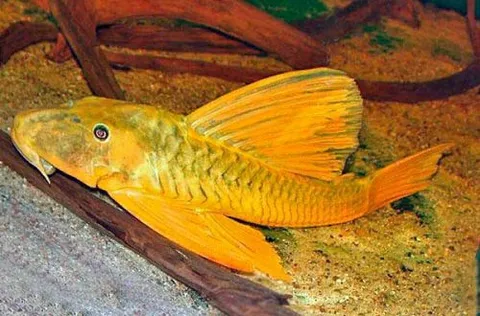
Hypostomus luteus
The Golden Pleco, scientifically known as Hypostomus luteus, belongs to the family Loricariidae, also called Armored Catfishes. The natural habitat of this catfish is the waters of the South American continent. It can…
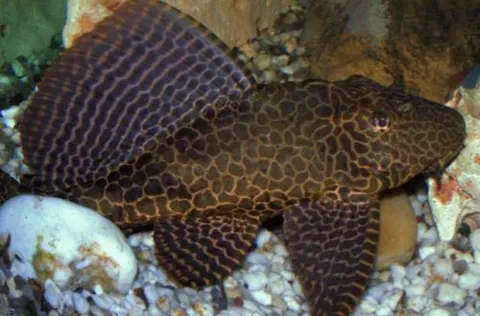
Pterygoplichthys gibbiceps
The Leopard or Brocade Catfish, often colloquially known as Pterygoplichthys, belongs to the Loricariidae family and is scientifically named Pterygoplichthys gibbiceps. This species has gained widespread popularity and…
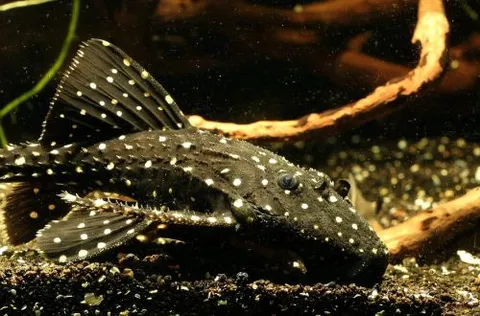
Acanthicus adonis
Acanthicus adonis, scientifically known as Acanthicus adonis, belongs to the family Loricariidae, also known as Armored Catfish. This species is generally not considered suitable for home aquariums due to its impressive…
Peckoltia vittata
Peckoltia vittata, also known as the Banded Peckoltia, belongs to the family Loricariidae, which includes armored catfish. This fish inhabits extensive tributaries of the Amazon River, spreading across Brazil,…