Temperature24 – 27 °C
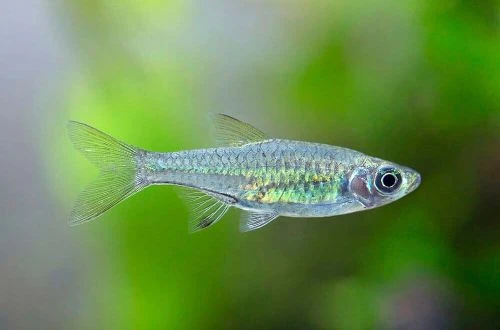
Rasbora bankanensis, scientifically known as Bankanensis Rasbora, belongs to the Cyprinidae family. This fish originates from Southeast Asia, where it can be found in the river systems of the Malay Peninsula, in present-day Malaysia and Thailand. It inhabits small streams and rivers flowing through tropical forests, as well as swamps and other marshy bodies of water. A characteristic feature of tropical peat swamps is the rich brown tint of the water, caused by a high concentration of tannins and other humic substances that result from the decomposition of abundant plant organic matter.
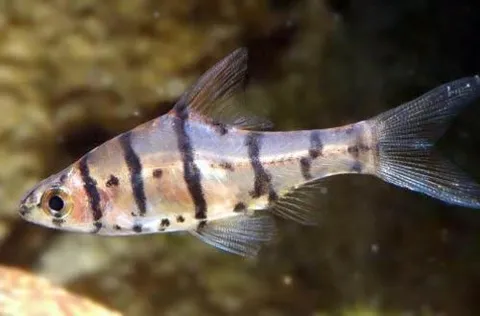
Adults of this fish can reach up to 6 cm in length. They have a classic slender body shape, complemented by small fins and a tail. A distinctive feature, against their modest size, are their large eyes, which help them navigate in darkened waters. The coloration of Rasbora bankanensis is predominantly silvery-blue, with a slight greenish tint. A characteristic black spot can often be observed on the anal fin.
This species inhabits Southeast Asia, including the Malay Peninsula and Bangka Island. It lives in small forest streams, rivers, and swampy bodies of water. It is often found in "blackwater" biotopes, where the water is stained brown due to a high concentration of tannins released from decomposing organic matter. In nature, it prefers areas with soft substrate and subdued lighting.
Rasbora bankanensis is an active and agile fish with a peaceful disposition. It is comfortable in the company of its own kind, as well as other species of similar size, particularly related Rasboras, Danios, and similar fish.
This species is considered relatively easy to care for. For a group of 8–10 fish, an aquarium of 40–50 liters will be optimal. The aquarium decor can be arbitrary, but it is recommended to provide both hiding places and open areas for free swimming. To create a decorative arrangement, a combination of aquatic plant thickets and snags can be used, placed on a dark substrate covered with a layer of leaves. These leaves and the bark of some trees will be an important source of tannins, mimicking the fish's natural habitat. The hydrochemical composition of the water is of significant importance. It is crucial to ensure and maintain low pH and dGH values. Regular aquarium maintenance combined with the uninterrupted operation of the filtration system will help prevent the excessive accumulation of organic waste and subsequent water pollution by fish waste products. This fish is omnivorous and readily accepts most popular foods of appropriate size — both dry and frozen or live.
The fish's diet is omnivorous; they readily accept most common foods of appropriate size, whether dry, frozen, or live options.
Information on the targeted breeding of this species in captivity is extremely limited. Like most members of the genus, these fish are egg-layers. In their natural habitat, they deposit eggs among aquatic vegetation. To stimulate spawning in aquarium conditions, it is usually necessary to create specific water parameters that mimic tropical "black waters": high acidity (low pH) and very low general hardness. Fry require microscopic starter foods after hatching, such as infusoria or specialized dry mixes for juveniles.
No diseases that affect only this species have been described. Under suitable conditions — clean water, a balanced diet and calm tank mates — health problems usually do not arise. The most common cause of illness is a decline in conditions: it weakens the immune system, and the fish becomes vulnerable to infections that are always present in an aquarium. At the first signs of trouble — lethargy, wasting, refusal of food or clamped fins — check the basic water parameters and the levels of ammonia, nitrite and nitrate first. Restoring acceptable conditions often lets the fish recover on its own.
When purchasing, select active individuals with clean fins and no visible skin damage. It is important to assess the overall condition of the shoal in the store's aquarium: the fish should exhibit shoaling behavior and show no signs of emaciation. Avoid acquiring individuals showing signs of apathy, rapid breathing, or body film, as the species can be sensitive to abrupt changes in hydrochemical water parameters during transport and adaptation.
The essentials: size, tank volume, water parameters and care
An adult reaches 6 cm in length. Plan the tank around the maximum size: the fish quickly outgrows a cramped setup.
The recommended volume is 50 L. A smaller tank speeds up nitrate build-up and raises stress levels.
Temperature 24–27 °C, pH 5–7, hardness 4–10 dGH. Stability matters more than exact values: sudden swings are harder on the fish than a small deviation from the ideal.
Around 5 years when kept properly. Lifespan depends directly on tank volume, water quality and a varied diet.
Temperament: peaceful (regular). Keep this in mind when choosing tank mates.
Recommended setup: group (8–10 individuals). Ignoring this is a common cause of stress and disease.
Diet type: any (universal). Feed small portions that are finished within a couple of minutes — overfeeding does more harm than underfeeding.
The scientific name of the species is Rasbora bankanensis, family Cyprinids (Cyprinidae). It also appears in the literature as: Leuciscus bankanensis.
The water suits 197 of 208 plants in the catalogue — the easiest ones are shown first.
Afzelius's AnubiasAnacharisAnubiasBrazilian PennywortDwarf CloverDwarf CloverDwarf HygrophilaDwarf SagittariaDwarf ValGuppy GrassHornwortJava FernJava MossMoneywortMud SwordNair's LagenandraNarrow Leaf AnacharisNarrow-leaf CloverStringy MossSüsswassertangTaiwan MossTape GrassTemple PlantUssuri Watermilfoil
Matched by family, categories and overlapping keeping conditions
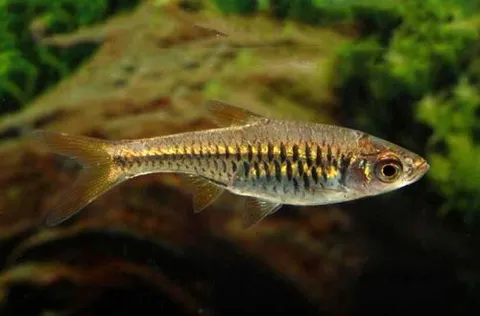
Rasbora reticulata
Rasbora reticulata, known as the Reticulated Rasbora, is a member of the carp family (Cyprinidae). This fish originates from Southeast Asia. It is found on Sumatra and on Nias Island, which lies to the west of it. It…
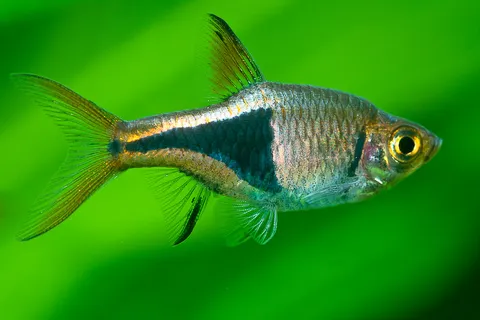
Trigonostigma heteromorpha
The Harlequin Rasbora, also known as the Wedge-spot Rasbora (Trigonostigma heteromorpha), belongs to the family Cyprinidae. This fish has been popular among aquarists since the early 20th century. Thanks to targeted…
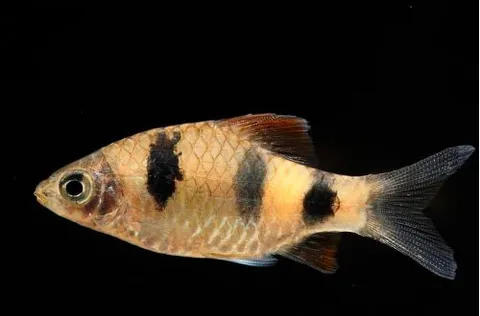
Pethia setnai
Pethia setnai, known as the Setnai Barb, belongs to the family Cyprinidae. This species of barb was named after the Indian ichthyologist Setna, who was involved in its classification. This fish is easy to keep and…
Eirmotus octozona
A member of the family Cyprinidae, known as the Eight-banded Barb or Eight-striped Barb, scientifically named Eirmotus octozona, is a small schooling fish. It has a peaceful disposition and will perfectly complement a…