Cyprinids (Cyprinidae)

Harlequin Rasbora

Trigonostigma heteromorpha

The Harlequin Rasbora, also known as the red-striped rasbora (Trigonostigma heteromorpha), belongs to the family Cyprinidae. This fish has been popular with aquarists since the early 20th century. Selective breeding has produced many colour forms, such as the Blue Harlequin, Black Harlequin and Gold Harlequin, which have greatly expanded the variety available in the hobby.

Tank
from 54 L (14 gal), 80 L (21 gal) recommended
Temperature
23 – 28 °C (73 – 82 °F)
Size in aquarium
4 – 5 cm (1.6 – 2 in)
Acidity
pH 5–7
Natural rangeRange on the map
  • Southeast Asia area
  • Malay Peninsula area
  • Indonesia
  • Malaysia
  • Singapore

Tank conditions

Plan the tank stocking
Temperature
23 – 28 °C (73 – 82 °F)
Water pH
Slightly acidic (5) – Neutral (7)
Water dH
Very soft (1) – Hard (12)
Water salinity
no salt (freshwater)
Size in aquarium
4 – 5 cm (1.6 – 2 in)
Lifespan
6 years
Temperament
Peaceful (regular)
Toward small fish
not a predator
Required aquarium volume
from 54 L (14 gal), 80 L (21 gal) recommended
Lighting
dimmed
Substrate
any, but dark
Water flow
none or stagnant (no flow)
Swimming level
middle level
Feeding
Any (universal)
Keeping
Schooling usually from 5–6 individuals and more
Jumping
noticeable a lid is needed
  • Lifespan. A lifespan to expect under good care, not a measured value: it depends heavily on tank volume, water quality and diet — and for selectively bred forms, on their origin as well.
  • Toward small fish. Based on the Predators category in the catalog or the temperament in the species parameters. “A risk to small fish” means the species is not a predator by habit, yet will swallow any fish that fits in its mouth.
  • Required aquarium volume. The 54 L minimum corresponds to a tank footprint of 60×30 см. The recommended 80 L is for the group size given under keeping mode.

Care and keeping

Description

The Harlequin Rasbora reaches only about 5 cm, yet displays striking colouration that ranges from pale pink to bright orange with a copper sheen on the upper and lower edges of the body. A distinctive feature is a black triangular patch tapering towards the tail, sometimes with a blue or violet tint. Selectively bred forms have different colours: the Blue Harlequin has a blue body, while the Black Harlequin's body matches the colour of the triangular patch. Males and females differ: males are usually slightly smaller, and their black patch is more rounded with elongated points at the edges.

Habitat

The red-striped rasbora was first described in 1904, though earlier references probably concerned other species. Its natural range spans Southeast Asia, both mainland and islands. In the wild, it prefers shaded forest streams and channels, as well as peat swamps, where water flow is absent or very weak. The water in such places often turns yellowish or brown from decomposing organic matter such as leaves, grass and fruit.

Behavior and Compatibility

The Harlequin Rasbora gets along well with most peaceful aquarium fish of similar size. Keep them in groups of at least 10 individuals. Under these conditions, males display brighter colours as they compete for the females' attention. A smaller group (fewer than 10) may show some restlessness towards other tank inhabitants, trying to involve them in their activities—not all fish species tolerate this.

Care and Maintenance

To keep these fish successfully, the water must be slightly acidic, which can be achieved using a filter with appropriate material. The filter's flow rate should be chosen with the tank size in mind, as this fish does not tolerate strong currents. Perform a weekly partial water change of at least one quarter of the tank volume. Dimmed lighting that mimics conditions under a forest canopy is preferable. The tank looks best with rooted plants with large leaves that reach the surface; dense growth should run along the sides, and floating plants provide extra shade. Use a dark substrate, decorated with driftwood or bogwood pieces.

Diet

This omnivore feeds on small insects, worms, crustaceans and zooplankton in nature. In the aquarium, supplement dry food (flakes or granules) with live foods such as bloodworm at least twice a week, or use dried bloodworm. Plant-based foods such as finely chopped lettuce or spinach also make a useful dietary addition.

Breeding and Reproduction

Breeding this species requires careful planning and a separate tank. To trigger spawning, feed high-protein foods daily for a month. Prepare a separate aquarium of at least 40 litres, filled to no more than 20 cm depth. Optimal water parameters: very soft (1–3 dGH), slightly acidic (pH 5.3–6.0) and temperature 25–28°C. A simple sponge filter running at low power is sufficient, and dimmed room light works. Live or artificial broad-leaved plants for egg attachment are essential. Use coarse pebbles as substrate. When males become brightly coloured and the female's belly is full, move the pair to the prepared tank and continue feeding high-protein foods. Spawning may begin within days. The male performs a courtship dance, circling the female and pointing to the chosen plant where eggs will be laid. Eggs attach to the underside of the leaf; fallen eggs roll under pebbles and become inaccessible to the parents, who readily eat their own eggs. After spawning, return the adults to the main tank. Lower the water level in the breeding tank to 15 cm, ensuring the eggs remain submerged. Fry appear after one day and begin free-swimming in 3–5 days.
Diseases

When kept in favourable conditions, disease is rare. Poor water quality or introducing infected fish usually causes problems.

How to choose

When selecting Harlequin Rasboras, observe the activity of fish in the group: healthy individuals should be mobile, brightly coloured and show obvious schooling behaviour. Avoid fish showing signs of emaciation, torn fins, or visible spots on the body, as these may indicate stress or disease. Buy a group of 8–10 individuals at once; solitary keeping or very small groups make the fish timid and chronically stressed.

Compatibility

There are no pair reviews for this species yet — check tankmates in the matcher.

All tankmates

Plants and this fish

Matching water does not mean the plant will stay intact.

Frequently asked questions

The essentials: size, tank volume, water parameters and care

How big does Harlequin Rasbora get?

An adult reaches 4–5 cm in length. Plan the tank around the maximum size: the fish quickly outgrows a cramped setup.

What size aquarium does Harlequin Rasbora need?

The recommended volume is 80 L. A smaller tank speeds up nitrate build-up and raises stress levels.

What water parameters does Harlequin Rasbora need?

Temperature 23–28 °C, pH 5–7, hardness 1–12 dGH. Stability matters more than exact values: sudden swings are harder on the fish than a small deviation from the ideal.

How long does Harlequin Rasbora live?

Around 6 years when kept properly. Lifespan depends directly on tank volume, water quality and a varied diet.

Is Harlequin Rasbora aggressive?

Temperament: peaceful (regular). Keep this in mind when choosing tank mates.

How many Harlequin Rasbora should be kept together?

Recommended setup: schooling (usually from 5–6 individuals and more). Ignoring this is a common cause of stress and disease.

What does Harlequin Rasbora eat?

Diet type: any (universal). Feed small portions that are finished within a couple of minutes — overfeeding does more harm than underfeeding.

What is the scientific name of Harlequin Rasbora?

The scientific name of the species is Trigonostigma heteromorpha, family Cyprinids (Cyprinidae). It also appears in the literature as: Rasbora heteramorpha, Rasbora heteromorpa, Rasbora heteromorpha.

Similar fishes

Matched by family, categories and overlapping keeping conditions

Slender Rasbora

Slender Rasbora

Trigonopoma gracile

Cyprinids (Cyprinidae)

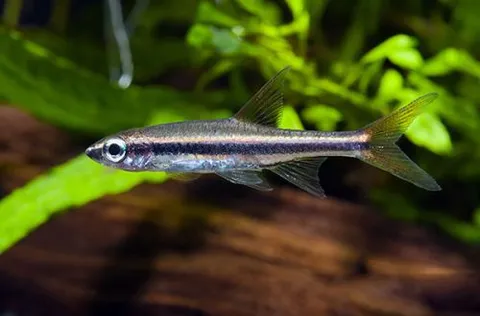
The Slender Rasbora, whose Latin name is Trigonopoma gracile, belongs to the Cyprinidae family. This miniature, active fish, kept in a school, can adorn any freshwater aquarium. It is characterized by its undemanding…

Clown Rasbora

Clown Rasbora

Rasbora kalochroma

Cyprinids (Cyprinidae)

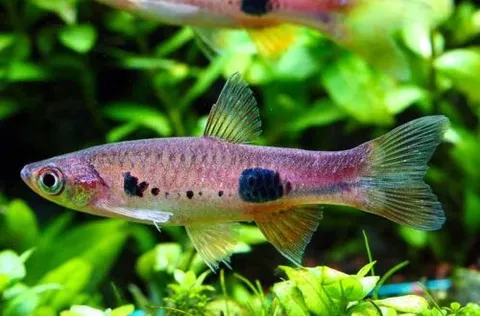
A member of the Cyprinidae family, the Clown Rasbora (scientific name Rasbora kalochroma) is characterized by its peaceful nature and relative ease of care, making it a good addition to a freshwater aquarium community.

Oliotius oligolepis

Oliotius oligolepis

Oliotius oligolepis

Cyprinids (Cyprinidae)

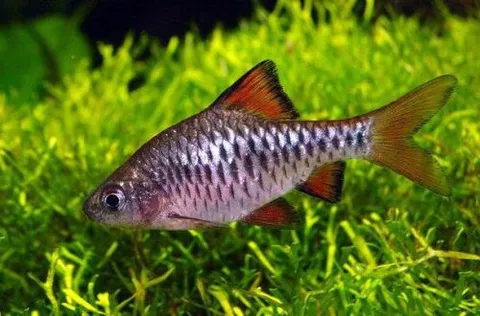
Oliotius oligolepis, also known as the Checkerboard Barb (scientific name Oliotius oligolepis), belongs to the Cyprinidae family. This aquarium fish is popular due to its unpretentiousness and ease of care. It coexists…

Four-banded Barb

Four-banded Barb

Puntigrus partipentazona

Cyprinids (Cyprinidae)

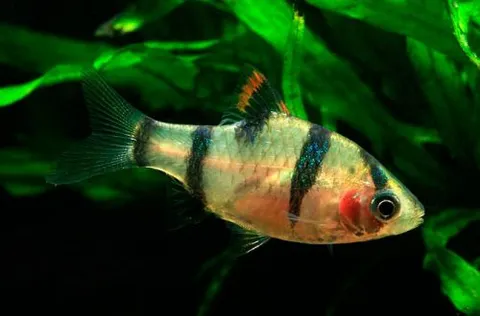
A representative of the Cyprinidae family, known scientifically as Puntigrus partipentazona, or the Four-banded Barb, is not frequently encountered in aquaristics. Often, these fish are sold alongside other barb species…

Other scientific names and conservation status

Other scientific names
Rasbora heteramorpha, Rasbora heteromorpa, Rasbora heteromorpha
Categories
Cyprinids
Conservation status
Least concernLC