Temperature21 – 26 °C
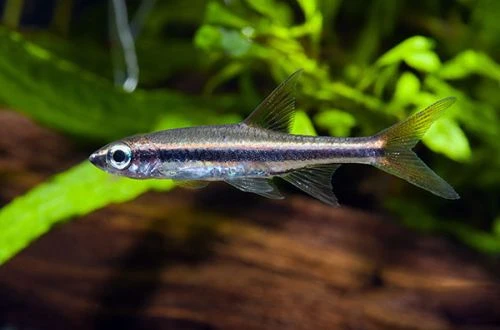
The Slender Rasbora, whose Latin name is Trigonopoma gracile, belongs to the Cyprinidae family. This miniature, active fish, kept in a school, can adorn any freshwater aquarium. It is characterized by its undemanding care and gets along well with many other aquarium inhabitants, making it suitable even for beginner aquarists.
Adults of this fish typically reach a length of about 5 cm. The body is slender, with large, pointed fins. Its appearance is notable for large eyes, which seem disproportionately large relative to the body. They are adapted for foraging in low light conditions and low water transparency. A wide black horizontal stripe runs along the body from head to tail. This stripe visually divides the body into two parts: a gray back and a silvery belly. Sexual dimorphism is not pronounced and is mainly manifested in size: females are generally slightly larger and have a rounder belly than males.
Its homeland is Southeast Asia, specifically the Malay Peninsula, as well as the large islands of Borneo and Sumatra from the Sunda Islands group. These fish prefer to inhabit swamps and associated rivers, where the water has a dark brown tint due to the high content of tannins. Typically, such bodies of water are located under a dense canopy of tropical forest and are abundant in plant debris: fallen leaves, branches, and tree trunks.
This peaceful, schooling fish will be a great addition to other non-aggressive species of comparable size. The Slender Rasbora looks particularly harmonious in an aquarium with fish also native to Southeast Asia. It is recommended to keep a school of 8–10 individuals, as the more fish in the group, the more comfortable they feel.
For a small school of these fish, an aquarium of at least 60 liters is considered optimal. When decorating, it is desirable to create subdued lighting, use dark substrate, and place many shade-loving aquatic plants and various snags. Despite this, the fish can adapt to other conditions and even exist in “bare” aquariums, where they are often sold in pet stores. Water parameters should be brought as close as possible to natural conditions, not only in terms of hydrochemical composition but also in the presence of tannins, which give the water a characteristic brown tint. For this, tree leaves, such as oak, or exotic leaves and Indian almond bark, are submerged in the aquarium.
Being an omnivorous species, the fish readily accepts most common aquarium foods. The recommended daily diet may include dry flakes or granules, supplemented with live or frozen brine shrimp, bloodworms, and daphnia. It is also acceptable to feed the fish exclusively high-quality dry foods from reputable manufacturers.
Under suitable conditions, spawning will occur with enviable regularity. As with most small cyprinids, the eggs are scattered in the water column, and the parents do not care for their offspring. In a community tank, the survival rate of fry, even with a large number of eggs, will be minimal. The young become easy prey for adult fish and suffer from a lack of food, as it is extremely difficult to provide them with constant food in a large body of water. If the goal is to save the entire brood, a separate tank with identical water parameters will be required, to which the eggs will be transferred. This spawning aquarium is equipped with a simple air-driven sponge filter and a heater. No additional lighting is required — ambient room light is sufficient. For decoration, artificial plants or mosses and ferns that can grow in dim light can be used. The incubation period lasts about 24 hours, and 3–4 days after hatching, the fry begin to move freely in search of food. Specialized microfoods or Artemia nauplii are used as food.
Slender Rasbora is a hardy and undemanding fish. When suitable keeping conditions are met, health problems usually do not arise. Diseases can appear in cases of injury, contact with already sick fish, or a significant deterioration of habitat parameters (for example, in a dirty aquarium or with poor nutrition).
When choosing Slender Rasbora, preference should be given to individuals with clean, transparent fins and uniform coloration without spots or film. It is important to assess the activity of the fish: healthy specimens should stay in a school and actively move in the water column, rather than hiding in corners or hovering near the surface. Avoid buying fish with signs of emaciation, sunken bellies, or damaged scales. — Inspect the aquarium in the store for dead or sick individuals, as this may indicate the poor condition of the entire batch. — Make sure the fish show a natural reaction to external stimuli. — Pay attention to the absence of signs of stress or rapid breathing, which often accompany improper keeping or transportation.
The essentials: size, tank volume, water parameters and care
An adult reaches 4–5 cm in length. Plan the tank around the maximum size: the fish quickly outgrows a cramped setup.
The recommended volume is 70 L. A smaller tank speeds up nitrate build-up and raises stress levels.
Temperature 21–26 °C, pH 4–7, hardness 1–8 dGH. Stability matters more than exact values: sudden swings are harder on the fish than a small deviation from the ideal.
Around 3 years when kept properly. Lifespan depends directly on tank volume, water quality and a varied diet.
Temperament: peaceful (regular). Keep this in mind when choosing tank mates.
Recommended setup: group (8–10 individuals). Ignoring this is a common cause of stress and disease.
Diet type: any (universal). Feed small portions that are finished within a couple of minutes — overfeeding does more harm than underfeeding.
The scientific name of the species is Trigonopoma gracile, family Cyprinids (Cyprinidae). It also appears in the literature as: Rasbora gracilis.
The water suits 197 of 208 plants in the catalogue — the easiest ones are shown first.
Afzelius's AnubiasAnacharisAnubiasBrazilian PennywortDwarf CloverDwarf CloverDwarf HygrophilaDwarf SagittariaDwarf ValGuppy GrassHornwortJava FernJava MossMoneywortMud SwordNair's LagenandraNarrow Leaf AnacharisNarrow-leaf CloverStringy MossSüsswassertangTaiwan MossTape GrassTemple PlantUssuri Watermilfoil
Matched by family, categories and overlapping keeping conditions
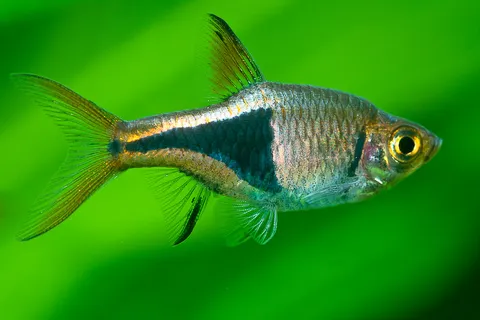
Trigonostigma heteromorpha
The Harlequin Rasbora, also known as the Wedge-spot Rasbora (Trigonostigma heteromorpha), belongs to the family Cyprinidae. This fish has been popular among aquarists since the early 20th century. Thanks to targeted…
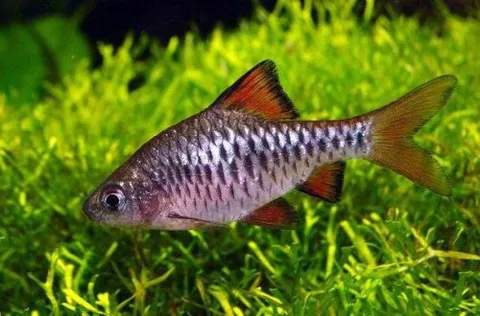
Oliotius oligolepis
Oliotius oligolepis, also known as the Checkerboard Barb (scientific name Oliotius oligolepis), belongs to the Cyprinidae family. This aquarium fish is popular due to its unpretentiousness and ease of care. It coexists…
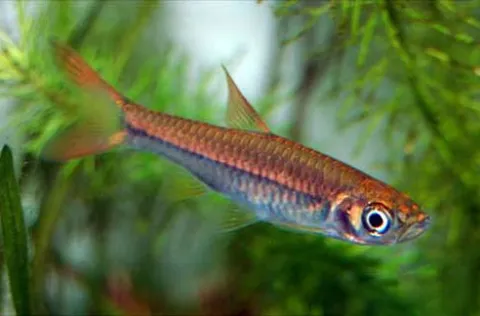
Rasbora tornieri
The Rasbora tornieri, known scientifically as Rasbora tornieri, belongs to the extensive Cyprinidae family. It is named after Gustav Tornier, a German zoologist and paleontologist. This species is low-maintenance and…
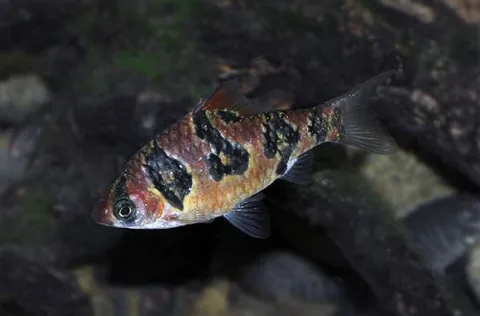
Desmopuntius rhomboocellatus
The Rhombus Barb, scientifically known as Desmopuntius rhomboocellatus, belongs to the family Cyprinidae. This small fish, with its distinctive body coloration and specific water chemistry requirements, thrives in…