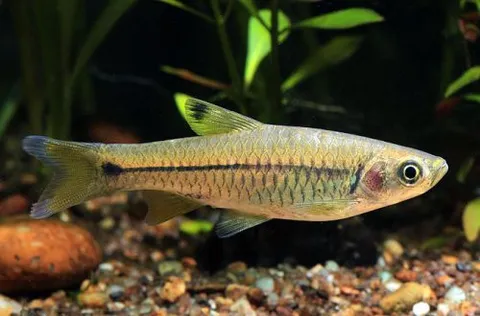
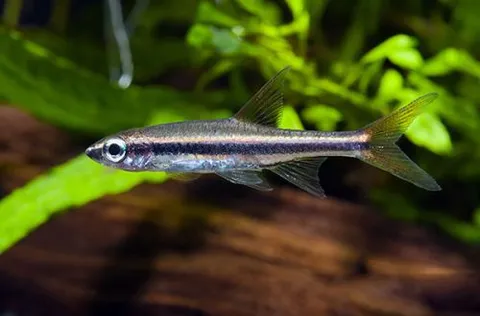
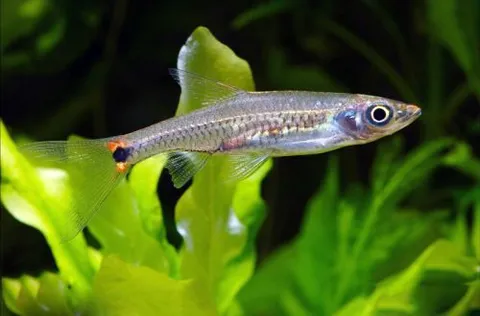
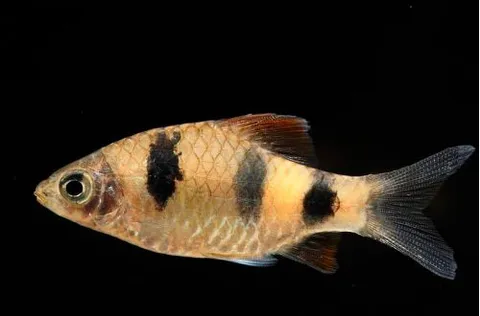
Oliotius oligolepis is an egg-laying species. In a home aquarium, spawning can occur in any season. Females lay eggs near the water surface, among plant thickets, while males fertilize them. After this, the eggs are left unattended. Parental instincts in barbs are poorly developed, so they may eat their eggs immediately after spawning. If the goal is to preserve offspring, it is more advisable to breed them in a separate tank — a spawning aquarium. Floating fine-leaved plants such as Myriophyllum aquaticum, Ceratophyllum demersum, Riccia fluitans, and similar ones are placed in it. Eggs caught in this dense plant network are relatively safe. To protect eggs that fall to the bottom, a coarse substrate with large gaps between particles, such as pebbles or decorative glass beads, is used. These voids serve as additional shelter. Recommended equipment includes a heater, aerator, low-power lamp, and a simple sponge filter. The aquarium is filled with water from the main aquarium. When you notice that the females have noticeably rounded, and the males are actively courting their chosen ones, this signals the beginning of the breeding period, and it's time to transfer the future parents to the spawning aquarium. One pair can lay up to 300 eggs. After spawning, the fish are returned to the main aquarium. Fry hatch after 24–28 hours and begin to swim freely after another day. For feeding the fry, it is recommended to use specialized micro-food, which can be purchased at pet stores.