Temperature16 – 24 °C
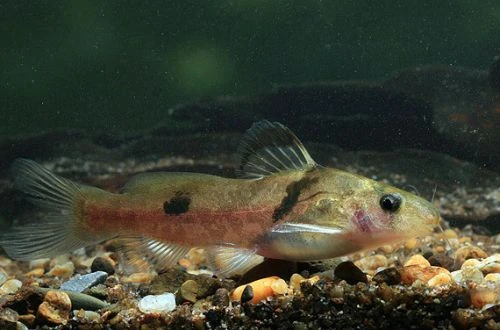
The Batasio fluviatilis catfish, known scientifically as Batasio fluviatilis, belongs to the family Bagridae, or naked catfishes. It is a relatively rare species in the aquarium trade, most often found among enthusiast aquarists. Its modest coloration and need for specific keeping conditions limit its distribution among hobbyists.
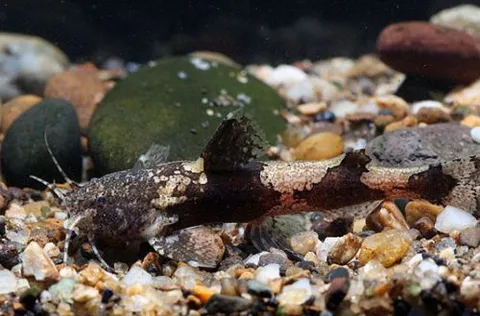
Adults typically reach 6–7 cm in length. The fish's body is quite plump, with a tail slightly compressed laterally. The head features sensitive pores and barbels that help it navigate and effectively find food. The coloration is predominantly gray, with delicate pinkish hues. The fins are semi-transparent. The body displays a characteristic pattern of two dark markings. Sexual dimorphism is weakly expressed, making it difficult to distinguish males from females.
Its natural habitat is in Southeast Asia, specifically in Thailand, in Nakhon Si Thammarat province in the south of the country, on the shore of the Gulf of Thailand; the species is also known from other localities below the Isthmus of Kra, including Peninsular Malaysia. These catfishes inhabit the headwaters of numerous small rivers. Typical biotopes are shallow river sections characterized by fast currents and often turbulent rapids. The bottom usually consists of sand, gravel, rocks, and boulders. The water here is clear, although its turbidity may increase during the rainy season. Aquatic and riparian vegetation is generally absent.
These peaceful and calm catfishes prefer to stay in groups of their own kind. Suitable tank mates are fish that can comfortably exist in similar fast-current conditions. For example, some species of loaches, particularly Gastromyzon, although it should be noted that the latter can sometimes display less than friendly behavior.
For a group of 3–4 individuals, the optimal aquarium volume starts from 100 liters. It is recommended to create conditions in the aquarium that closely resemble the bottom of a fast-flowing river. The decor should use a rocky substrate, supplemented with several snags. Artificial plants, as well as undemanding mosses and ferns that can be attached to driftwood elements, are permissible. The presence of internal current is an important aspect; it can be provided by an internal filter or a separate pump if an external filtration system is used. Batasio fluviatilis requires clean, flowing water and tolerates the accumulation of organic waste poorly. Therefore, weekly water changes of 30–50% of the volume with fresh water, as well as regular cleaning of the substrate and decor elements, are mandatory aquarium care procedures.
The diet of these fish should primarily consist of live or frozen foods, such as daphnia, artemia, and bloodworms. Occasionally, the fish adapt to dry sinking foods, such as flakes or granules.
Successful breeding in aquarium conditions is extremely rare. These fish are highly sensitive to water purity, and therefore spawning only occurs under impeccable environmental parameters. Typically, the trigger for spawning is the imitation of the rainy season, which implies a decrease in temperature and adjustment of hydrochemical indicators. Parental instincts in Batasio are very weakly developed; they do not create clutches. Fertilized eggs are left unattended and are often carried by water currents significant distances from the spawning site. This, to some extent, protects future offspring from being eaten by adult individuals. The incubation period is remarkably short—only 2 days. Shortly after hatching, the fry become completely independent.
Most often, diseases are caused by unsuitable keeping conditions. Maintaining a stable environment in the aquarium is a key factor for successful keeping. If any symptoms of illness appear, the first step is to check the water quality. If deviations are found, measures should be taken immediately to correct them. If symptoms persist or even worsen, medicinal treatment will be required.
When purchasing, choose active individuals without visible damage, sores, or signs of emaciation. Since this species is schooling, it is recommended to acquire a group of 3–4 individuals simultaneously to reduce stress during adaptation. In the store, pay attention to their behavior: healthy fish should show interest in food and not appear apathetic. Given that Batasio fluviatilis is a rather delicate species, be sure to clarify the keeping conditions in the retail aquarium, as the fish are sensitive to water quality and oxygen levels.
The essentials: size, tank volume, water parameters and care
An adult reaches 6–7 cm in length. Plan the tank around the maximum size: the fish quickly outgrows a cramped setup.
The recommended volume is 100 L. A smaller tank speeds up nitrate build-up and raises stress levels.
Temperature 16–24 °C, pH 5.5–7.5, hardness 1–12 dGH. Stability matters more than exact values: sudden swings are harder on the fish than a small deviation from the ideal.
Around 4 years when kept properly. Lifespan depends directly on tank volume, water quality and a varied diet.
Temperament: peaceful (regular). Keep this in mind when choosing tank mates.
Recommended setup: both solitary and in group (flexible). Ignoring this is a common cause of stress and disease.
Diet type: mixed diet (meat + plant-based). Feed small portions that are finished within a couple of minutes — overfeeding does more harm than underfeeding.
The scientific name of the species is Batasio fluviatilis, family Bagridae (naked catfishes). It also appears in the literature as: Batasio havmolleri, Leiocassis fluviatilis, Mystus havmolleri.
The water suits 197 of 208 plants in the catalogue — the easiest ones are shown first.
Afzelius's AnubiasAnacharisAnubiasBrazilian PennywortDwarf CloverDwarf CloverDwarf HygrophilaDwarf SagittariaDwarf ValGuppy GrassHornwortJava FernJava MossMoneywortMud SwordNarrow Leaf AnacharisNarrow-leaf CloverStringy MossSüsswassertangTaiwan MossTape GrassTemple PlantUssuri WatermilfoilWater Wisteria
Matched by family, categories and overlapping keeping conditions
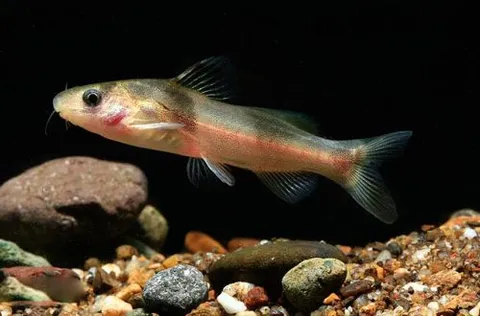
Batasio tigrinus
The Batasio Catfish, scientifically known as Batasio tigrinus, belongs to the Bagridae family (Bagrid Catfishes). These fish are peaceful and calm, easy to care for, and readily coexist with various species. Their…
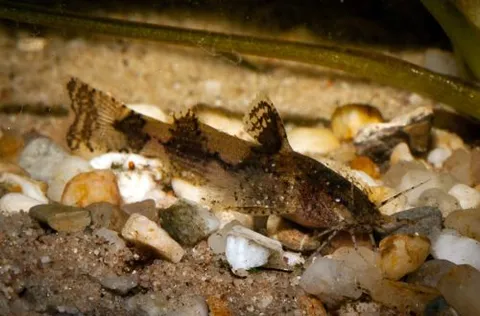
Akysis maculipinnis
The Akysis Catfish, scientifically known as Akysis maculipinnis, is a member of the Akysidae family. This miniature fish, sometimes called tiny, can be difficult to spot in an aquarium due to its predominantly nocturnal…
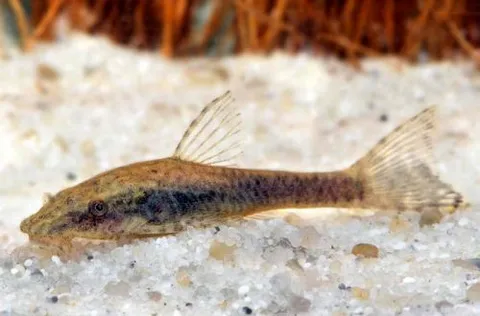
Otothyropsis piribebuy
Otothyropsis piribebuy, known as Otocinclus negros (formerly Otocinclus sp. "Negros"), belongs to the family Loricariidae, which includes armored catfishes. The native habitat of this small catfish is the waters of…
Akysis hendricksoni
Akysis hendricksoni is the scientific name given to this member of the Akysidae family, known as Hendrickson's Akysis. This inconspicuous catfish is not often found in aquariums; it is one of the few members of its…