Temperature20 – 27 °C
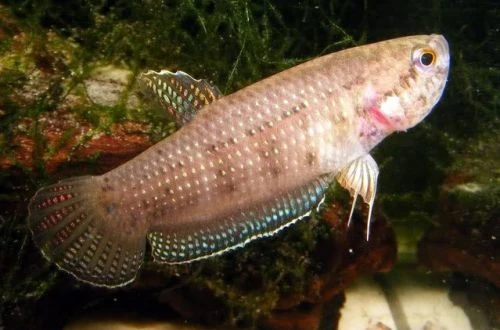
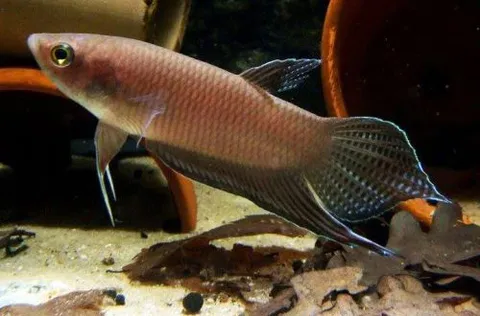
The scientific name Betta edithae, or Betta Edith, or Edith's Fighting Fish, indicates its belonging to the Osphronemidae family. This fish was named in honor of the researcher Edith Korthaus, a naturalist who participated in the discovery of many fish species on the island of Borneo. Despite its unpretentiousness, this species can pose challenges for novice aquarists, as its successful keeping requires maintaining low pH and dGH values.
Adults of this species reach a length of 5–6 cm. Sexual dimorphism is weakly expressed: males are slightly larger than females, and dark horizontal stripes are visible on their bodies against a light background, extending from head to tail. The fins and tail of males shimmer with iridescent blue hues. Females, on the other hand, are smaller and have a more uniform silvery or light gray coloration.
The natural habitat of this fish is located in Southeast Asia, in the Indonesian part of Borneo island. It was first discovered in the Barito River delta, which is in the South Kalimantan province. Later, it was established that its range is much wider and covers almost the entire island. Research is ongoing, and some biologists believe that samples found in different locations represent very closely related, but still distinct, species. In natural conditions, they inhabit swampy bodies of water and artificial canals created between oil palm plantations. The bottom of these waters is usually covered with a thick layer of fallen leaves, branches, snags, and other plant organic matter. The water acquires a rich brown tint due to the high concentration of dissolved humic acids and other tannins, which are formed during the decomposition of plant remains.
By nature, Edith's Betta is a peaceful and calm fish that coexists well with other non-aggressive species of similar size. Co-housing with very large fish should be avoided, as the Bettas may experience stress and feel endangered in their presence. Intraspecific relationships are characterized by rivalry between males for hierarchy and the attention of females. Although competition manifests as a "show of strength," fights usually do not occur, which allows them to be kept in mixed-sex groups or as male/female pairs.
For keeping a single pair or a small group of these fish, an aquarium of 70–80 liters is recommended. The aquarium decor should prioritize an abundance of floating plants, such as Salvinia, Riccia, as well as tropical lilies from the genus Nymphaea. Shade-loving varieties, such as Anubias, Cryptocoryne, mosses, and ferns, look good on the bottom. Natural snags and tree leaves, which are pre-soaked to prevent them from floating, serve as essential decorative elements. A leaf litter not only decorates the aquarium but also influences the water composition, bringing it closer to natural conditions by releasing tannins. The biological balance of the aquarium system is achieved through regular maintenance (e.g., partial water changes, waste removal) and the uninterrupted operation of equipment, especially the heating and filtration systems. It is important that the aquarium is covered to maintain a layer of warm, humid air above the water surface, which is necessary for the normal functioning of the labyrinth organ in Betta fish.
In their natural environment, their diet consists of insects and their larvae, as well as crustaceans and other invertebrates. In a home aquarium, they usually transition to alternative foods without problems once they recognize them as edible. It is recommended to offer them a balanced diet daily, including dry foods (flakes, granules), as well as frozen and live foods.
Under suitable conditions, spawning occurs quite frequently. With the onset of the breeding season, the dominant male and female form a temporary pair. Spawning is accompanied by a peculiar "embracing dance," during which the fish entwine around each other, and at the moment of culmination, eggs are released. All fertilized eggs are then placed in the male's mouth, where they will remain throughout the incubation period, which lasts 9–16 days. This method of brooding eggs is characteristic of many representatives of the fighting fish group and ensures much better preservation of offspring compared to simply laying eggs on the substrate or among vegetation. During brooding, the male seeks solitude in a quiet corner of the aquarium or in some shelter. If disturbed, he may accidentally swallow some or even all of the eggs. Fry emerge fully formed and are ready to accept micro-food. Specialized foods for juvenile aquarium fish, such as Artemia nauplii, are well suited for them.
Most health problems in fish often arise from unsuitable keeping conditions. Maintaining a stable and comfortable habitat is a key factor for successful keeping. If symptoms of illness appear, the first step is to check the water quality. If deviations are found, it is important to take immediate measures to eliminate them. If the symptoms do not disappear or worsen, medicinal treatment may be required.
When selecting individuals, pay attention to the fish's activity: healthy specimens should show curiosity and swim in the water column, rather than constantly hiding in corners. Avoid purchasing fish with signs of emaciation, fin damage, white spots, or film on the body, which may indicate parasitic or bacterial infections. In the store, the fish should have a clear, species-appropriate coloration without signs of stress-induced paling. It is recommended to acquire young individuals, as they adapt more easily to new aquarium conditions. Before purchasing, ask the seller what the fish are fed to ensure a smooth transition to your usual diet. It is also important to ensure that there are no aggressive tankmates, as constant stress from persecution negatively affects immunity.
The essentials: size, tank volume, water parameters and care
An adult reaches 5–6 cm in length. Plan the tank around the maximum size: the fish quickly outgrows a cramped setup.
The recommended volume is 70 L. A smaller tank speeds up nitrate build-up and raises stress levels.
Temperature 20–27 °C, pH 5–7, hardness 1–5 dGH. Stability matters more than exact values: sudden swings are harder on the fish than a small deviation from the ideal.
Around 3 years when kept properly. Lifespan depends directly on tank volume, water quality and a varied diet.
Temperament: peaceful (regular). Keep this in mind when choosing tank mates.
Recommended setup: mixed (solitary / pair / group). Ignoring this is a common cause of stress and disease.
Diet type: any (universal). Feed small portions that are finished within a couple of minutes — overfeeding does more harm than underfeeding.
The scientific name of the species is Betta edithae, family Osphronemidae.
The water suits 197 of 208 plants in the catalogue — the easiest ones are shown first.
Afzelius's AnubiasAnacharisAnubiasBrazilian PennywortDwarf CloverDwarf CloverDwarf HygrophilaDwarf SagittariaDwarf ValGuppy GrassHornwortJava FernJava MossMoneywortMud SwordNair's LagenandraNarrow Leaf AnacharisNarrow-leaf CloverStringy MossSüsswassertangTaiwan MossTape GrassTemple PlantUssuri Watermilfoil
Matched by family, categories and overlapping keeping conditions
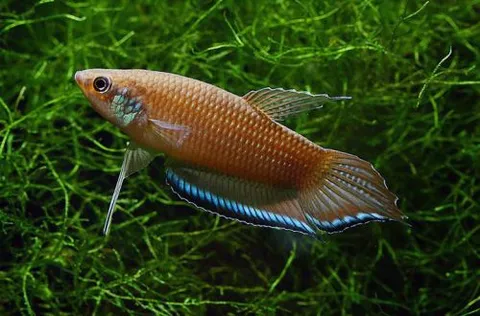
Betta enisae
Betta enisae, or as it is often called, the Energetic Betta, belongs to the family Osphronemidae, receiving its Russian name through adaptive translation from Latin. Despite this, one should not expect high mobility…
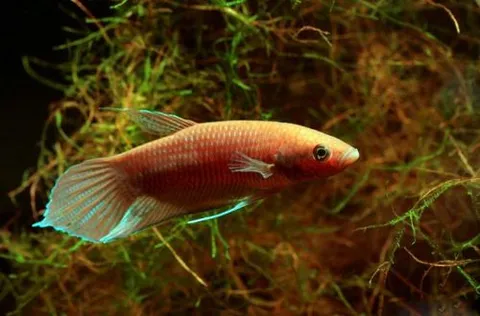
Betta akarensis
The scientific name Betta akarensis belongs to the family Osphronemidae, and this species is also known as the Akarensis Betta or Akar Fighting Fish. Its name is associated with its discovery location — the Akar River.…
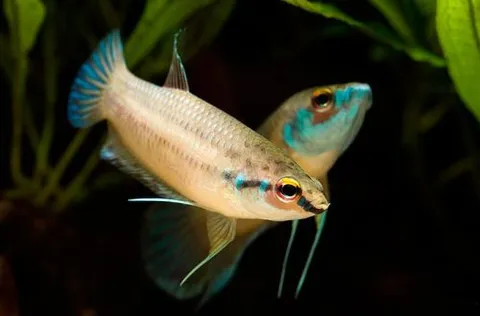
Betta kuehnei
The scientific name Betta kuehnei, or Kuehne's Betta, belongs to the family Osphronemidae. This fish was named in honor of collector Jens Kuehne, whose efforts brought it widespread recognition among aquarists. It is…
Betta balunga
The scientific name Betta balunga refers to a fish known as Betta balunga or Balunga Betta, belonging to the family Osphronemidae. These fish are named after the region on the island of Borneo where they were first…