Temperature21 – 27 °C
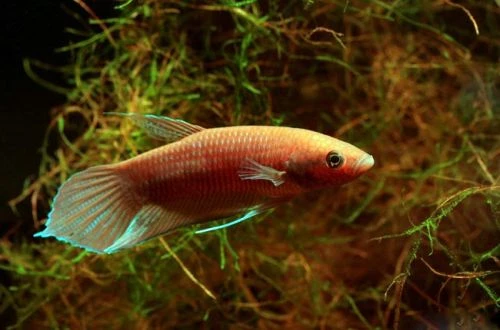
The scientific name Betta akarensis belongs to the family Osphronemidae, and this species is also known as the Akarensis Betta or Akar Fighting Fish. Its name is associated with its discovery location — the Akar River. This species has high demands regarding water quality and composition, and also has a difficult temperament, so it is not recommended for beginner aquarists.
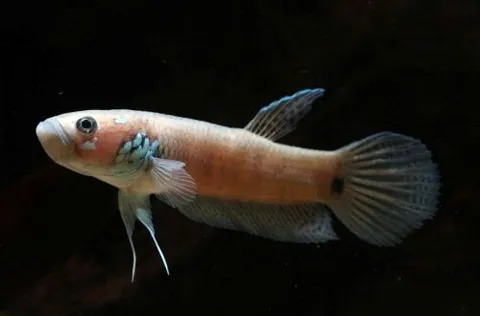
Adult fish grow up to 7–8 cm in length. Sexual dimorphism in this species is quite pronounced. Males are larger, their fins and tail have elongated, turquoise-edged tips, and their body coloration is dark red. Females are noticeably smaller, their fins are shorter and semi-transparent. The females' silvery bodies are adorned with horizontal black stripes extending from head to tail.
Its origin is associated with Southeast Asia, specifically the island of Borneo: the species is known from the Malaysian state of Sarawak and from Brunei. The main habitats are swampy areas of the Akar River basin; less often, this fish can be found in clear flowing waters. Typically, these bodies of water are dimly lit, surrounded by tropical forest, and the bottom is covered with a layer of fallen vegetation, such as leaves and branches. The decomposition of organic material gives the water a rich brown color due to the high concentration of various chemical compounds, including humic acids.
These fish belong to the fighting fish group, which determines some features of their behavior. Males exhibit pronounced aggression towards each other. Females are also not particularly peaceful; with insufficient space and shelters, they can engage in territorial skirmishes. In small aquariums, it is advisable to keep only one pair (male and female). A spacious aquarium and numerous shelters will help avoid conflicts, allowing for a larger group of individuals to be kept. Bettas get along well with other fish of comparable size. However, it is important to avoid cohabitation with large or, moreover, aggressive species that might intimidate the Betta.
For keeping one or two Betta Acar fish, the optimal aquarium volume starts from 70 L. The aquarium design should ideally closely mimic their natural habitat. This includes providing subdued lighting, possibly with floating plants for shading. It is recommended to use dark substrate, as well as driftwood and other decorative elements that can serve as hiding places. Adding dried leaves from certain trees will not only help recreate a natural look but also become a source of tannins, such as humic acids, characteristic of the Betta Acar environment. Maintaining low pH and dGH values is one of the key conditions for successful keeping, so proper water preparation is extremely important during partial water changes, which are an essential part of aquarium care. Water softening and acidification can be done automatically with appropriate equipment, but this requires significant financial investment. A more budget-friendly option is to manually adjust the hydrochemical composition. Creating the necessary aquatic environment is only part of the task; maintaining it is equally important. The stability of the biological system depends on weekly partial water changes, removal of organic waste (e.g., food remnants and excrement), and the uninterrupted operation of aquarium equipment, especially filters.
In their natural habitat, their diet primarily consists of insects and other invertebrates. If possible, they may also catch very small fish or fry. In aquarium conditions, they can be accustomed to a variety of alternative foods. Dry foods, such as flakes and pellets, can be their main diet, but for complete nutrition, it is necessary to regularly supplement with live or frozen artemia, daphnia, bloodworms, and other similar foods.
Acar Bettas are known for their exceptional parental care. Unlike many species, they do not create a traditional clutch, instead incubating the eggs directly in their mouths. This responsibility falls to the male. Egg development continues for 10 to 21 days, after which fully formed fry emerge, numbering up to about 60. During the brooding period, the male refrains from eating and seeks a secluded refuge. The female is also actively involved in the process, protecting the male and monitoring the surrounding territory. Parents do not pose a threat to their offspring, but other fish species cannot be trusted. If different species coexist in the same aquarium, it is recommended to move the fry to a separate tank with similar water parameters.
Most often, diseases are caused by unsuitable keeping conditions. Maintaining a stable environment in the aquarium is a key factor for successful keeping. If any symptoms of illness appear, the first step is to check the water quality. If deviations are found, measures should be taken immediately to correct them. If symptoms persist or even worsen, medicinal treatment will be required.
When selecting individuals, attention should be paid to the cleanliness of the skin and fins: absence of white spots, ulcers, growths, and signs of tissue damage. A healthy fish is active, swims in the water column or calmly stays in hiding, reacting to external stimuli. Avoid purchasing fish with sunken bellies, which may indicate emaciation or internal parasites, as well as individuals that constantly stay near the water surface, breathe heavily, or display apathetic behavior. Since this species is sensitive to environmental conditions, it is advisable to assess the overall condition of the aquarium in the store: water clarity and the absence of dead fish in neighboring tanks. It is recommended to acquire captive-bred individuals, as wild fish can be highly stressed and require specific adaptation conditions. Keep in mind that in retail aquariums, coloration may be paler due to stress, but it should recover after transfer to suitable conditions.
The essentials: size, tank volume, water parameters and care
An adult reaches 7–8 cm in length. Plan the tank around the maximum size: the fish quickly outgrows a cramped setup.
The recommended volume is 70 L. A smaller tank speeds up nitrate build-up and raises stress levels.
Temperature 21–27 °C, pH 5–7.5, hardness 1–15 dGH. Stability matters more than exact values: sudden swings are harder on the fish than a small deviation from the ideal.
Around 3 years when kept properly. Lifespan depends directly on tank volume, water quality and a varied diet.
Temperament: peaceful (regular). Keep this in mind when choosing tank mates.
Recommended setup: both solitary and in group (flexible). Ignoring this is a common cause of stress and disease.
Diet type: any (universal). Feed small portions that are finished within a couple of minutes — overfeeding does more harm than underfeeding.
The scientific name of the species is Betta akarensis, family Osphronemidae. It also appears in the literature as: Betta climacura.
The water suits 198 of 208 plants in the catalogue — the easiest ones are shown first.
Afzelius's AnubiasAnacharisAnubiasBrazilian PennywortDwarf CloverDwarf CloverDwarf HygrophilaDwarf SagittariaDwarf ValGuppy GrassHornwortJava FernJava MossMoneywortMud SwordNair's LagenandraNarrow Leaf AnacharisNarrow-leaf CloverStringy MossSüsswassertangTaiwan MossTape GrassTemple PlantUssuri Watermilfoil
Matched by family, categories and overlapping keeping conditions
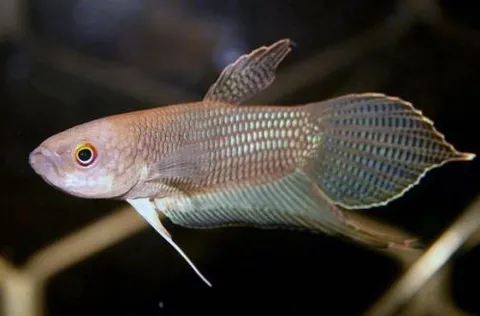
Betta ibanorum
The scientific name Betta ibanorum was given to this fish from the family Osphronemidae in honor of the inhabitants of northwestern Borneo, known as the Ibans. Known as the Iban Betta, it is characterized by its…
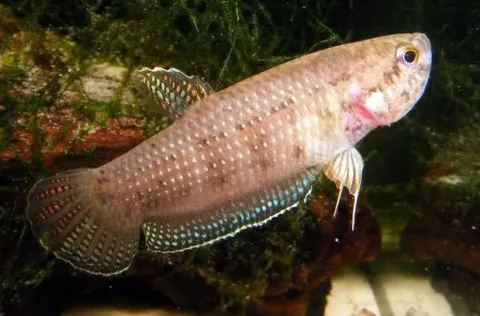
Betta edithae
The scientific name Betta edithae, or Betta Edith, or Edith's Fighting Fish, indicates its belonging to the Osphronemidae family. This fish was named in honor of the researcher Edith Korthaus, a naturalist who…
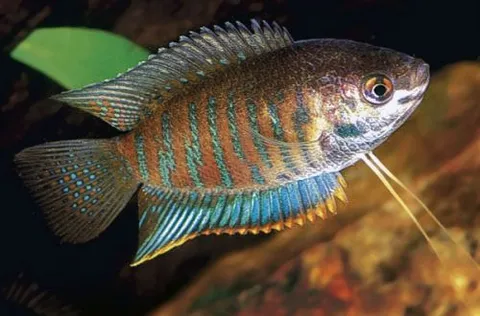
Trichogaster fasciata
Trichogaster fasciata, also known as the Banded Gourami or Striped Gourami, belongs to the family Osphronemidae. This fish possesses a range of qualities that make it an excellent choice for beginner aquarists: it is…
Betta ocellata
Betta ocellata, also known as the Ocellated Betta or Ocellata Betta, belongs to the family Osphronemidae. This fish has not gained widespread popularity among amateur aquarists because, despite its ease of keeping and…