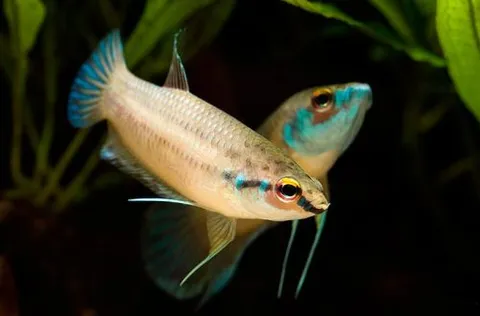
Betta kuehnei
Betta kuehnei
The scientific name Betta kuehnei, or Kuehne's Betta, belongs to the family Osphronemidae. This fish was named in honor of collector Jens Kuehne, whose efforts brought it widespread recognition among aquarists. It is…
Betta ocellata belongs to the family Osphronemidae. Despite being easy to keep and breed, this fish has not become popular in the hobby because of its dull coloration and complex intraspecific behaviour.
Adults reach 8–9 cm in length. Males and females differ: males have a broader head, more elongated fins, and more turquoise in their colouration. Overall, these fish are grey and lack brightness.
Betta ocellata is found in Southeast Asia, specifically on the island of Borneo. Its natural range is limited to the Malaysian state of Sabah and the northern part of East Kalimantan. The species inhabits diverse biotopes, from fast-flowing hill streams to swampy forest areas hidden in dense jungle.
Males are aggressive and often conflict with each other, especially in a small tank. Fights over dominance in the hierarchy are common. A weaker male that loses may suffer constant attacks if it cannot find shelter from the dominant fish. Females face the same risk if bought separately from a male or kept in isolation for a long time; they may be seen as rivals. The ideal setup is a group of one male and several females raised together from a young age, plus other non-aggressive fish of similar size.
A pair needs an aquarium of at least 70–80 litres. Keeping Betta ocellata is straightforward if you follow a few key rules: maintain suitable water chemistry, avoid strong currents, provide a lid to keep the air above the surface warm and humid, use dimmed lighting or floating plants for shade, and add hiding places. Use natural elements like driftwood and plants, or decorations for shelter. Long-term health depends on reliable equipment, especially the filter, plus regular maintenance: weekly partial water changes and prompt removal of food scraps and waste.
In the wild, Betta ocellata eats small insects, invertebrates and zooplankton. In the aquarium, they readily adapt to alternatives. Feed them a mix of high-quality dried, frozen and live foods.
Breeding is straightforward if the fish are kept in suitable water conditions with appropriate temperature and chemistry parameters. The fish must come from the same group. Pairing a random male and female from different sources is not recommended. During the breeding season, the pair courts and bonds. Spawning involves the fish embracing tightly, coiling around each other. The male then takes the fertilized eggs into his mouth and incubates them for 12–17 days. The fry hatch fully formed and are ready to accept specialized micro-food for young aquarium fish.
Most health problems arise from poor keeping conditions. Stable, comfortable water is key to success. If signs of disease appear, check the water quality first. Address any problems immediately. If symptoms persist or worsen, medication may be needed.
When choosing Betta ocellata, look for an active fish that shows curiosity rather than hiding in corners. Inspect the body for damage, sores, white coating or signs of starvation—transport stress can affect the fish. Avoid specimens with an unnaturally swollen belly or sunken sides. Check the fins: they should be intact without splits or erosion. Watch the behaviour: aggressive fights among fish in the tank often signal overcrowding and injury. Ask the seller about the conditions and diet to ensure a smooth transition to your aquarium.
There are no pair reviews for this species yet — check tankmates in the matcher.
All tankmatesThe water suits 197 of 208 plants in the catalogue — the easiest ones are shown first.
Afzelius's AnubiasAnacharisAnubiasBrazilian PennywortDwarf CloverDwarf CloverDwarf HygrophilaDwarf SagittariaDwarf ValGuppy GrassHornwortJava FernJava MossMoneywortMud SwordNarrow Leaf AnacharisNarrow-leaf CloverStringy MossSüsswassertangTaiwan MossTape GrassTemple PlantUssuri WatermilfoilWater Wisteria
Matching water does not mean the plant will stay intact.
The essentials: size, tank volume, water parameters and care
An adult reaches 8–9 cm in length. Plan the tank around the maximum size: the fish quickly outgrows a cramped setup.
The recommended volume is 70 L. A smaller tank speeds up nitrate build-up and raises stress levels.
Temperature 21–25 °C, pH 5.5–7.5, hardness 1–10 dGH. Stability matters more than exact values: sudden swings are harder on the fish than a small deviation from the ideal.
Around 3 years when kept properly. Lifespan depends directly on tank volume, water quality and a varied diet.
Temperament: peaceful (regular). Keep this in mind when choosing tank mates.
Recommended setup: pair (male/female). Ignoring this is a common cause of stress and disease.
Diet type: any (universal). Feed small portions that are finished within a couple of minutes — overfeeding does more harm than underfeeding.
The scientific name of the species is Betta ocellata, family Osphronemidae.
Matched by family, categories and overlapping keeping conditions
Betta kuehnei
The scientific name Betta kuehnei, or Kuehne's Betta, belongs to the family Osphronemidae. This fish was named in honor of collector Jens Kuehne, whose efforts brought it widespread recognition among aquarists. It is…
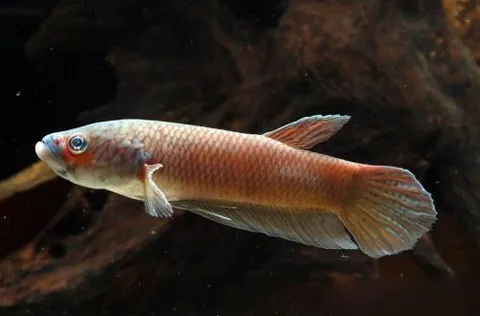
Betta ideii
The scientific name Betta ideii is given to Idei's Betta (or Idei's Fighting Fish), which belongs to the family Osphronemidae. It was named after Takashige Idei, a fish collector from Borneo who introduced many new…
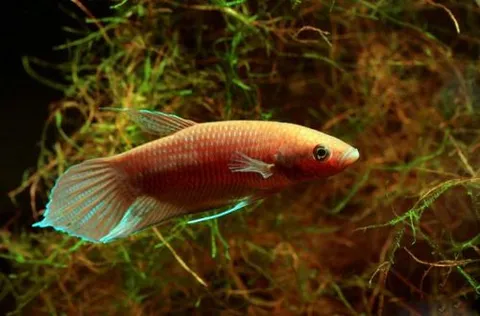
Betta akarensis
The scientific name Betta akarensis belongs to the family Osphronemidae, and this species is also known as the Akarensis Betta or Akar Fighting Fish. Its name is associated with its discovery location — the Akar River.…
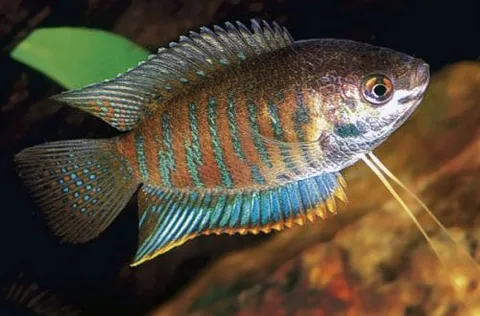
Trichogaster fasciata
Trichogaster fasciata, also known as the Banded Gourami or Striped Gourami, belongs to the family Osphronemidae. This fish possesses a range of qualities that make it an excellent choice for beginner aquarists: it is…