Temperature20 – 26 °C
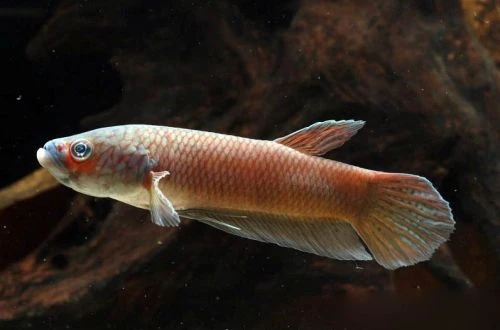
The scientific name Betta ideii is given to Idei's Betta (or Idei's Fighting Fish), which belongs to the family Osphronemidae. It was named after Takashige Idei, a fish collector from Borneo who introduced many new species to the aquarium hobby. This species is not recommended for beginner aquarists, as the complexities of intraspecific relationships must be considered when purchasing, and the aquatic environment must be maintained within a fairly narrow range of permissible hydrochemical values and temperatures.
Adults of this fish reach a length of 9 to 11 cm. Their bodies are slender and robust, with rather compact fins. Males grow larger and more elongated, often displaying reddish hues in their coloration. Females, though more graceful, do not possess such a vibrant color palette.
This species originates from Southeast Asia. Wild populations inhabit the southern part of Borneo Island, in the Indonesian province of Kalimantan Selatan, as well as the small neighboring island of Pulau Laut, separated by the Laut Strait. It is known that the fish were collected in coastal river basins flowing into the aforementioned strait. These fish prefer flowing bodies of water with clear water, located among dense, humid tropical forests. The bottom of such bodies of water usually consists of sand and stones, mixed with fallen leaves and twigs.
This species belongs to the group of Fighting Fish, and its behavior fully justifies this name. Males constantly compete for the attention of females, which often leads to skirmishes and peculiar fights. In a small aquarium, the dominant male gains a leading position, while the loser is forced to hide on the periphery, subjected to periodic attacks. It should be noted that in cramped conditions, females, especially if they were introduced later or are part of another group, can also be persecuted. In a spacious tank, this problem is less acute. Towards other species, these fish are surprisingly peaceful and get along well with non-aggressive species of comparable size.
For keeping a single pair of fish, an aquarium of 80 liters or more is sufficient. Acclimatized Betta ideii are not demanding regarding decor and can comfortably exist even in a semi-empty tank, as is often seen with breeders and in pet stores. Although such conditions are permissible, they cannot be considered ideal. In a home aquarium, some elements should be provided to enhance the fish's comfort: ensure subdued lighting and create hiding places, for example, from driftwood and dense plant thickets. The choice of decorative elements and their arrangement remains at the discretion of the aquarist, based on their preferences and capabilities. However, when it comes to the aquatic environment, there is no room for compromise. The fish need strictly defined conditions – soft, slightly acidic water with minimal organic waste, such as food remnants and excrement. Maintaining biological balance completely depends on the regularity of aquarium maintenance and the uninterrupted operation of equipment.
In natural conditions, the diet of this fish consists of small insects, various invertebrates, and zooplankton. In aquarium conditions, they have successfully adapted to alternative foods. Daily feeding can include popular dry, frozen, and live foods.
Unlike most other fish species, Idei's Bettas brood their eggs in their mouths rather than laying them on the substrate or among vegetation. During reproduction, the fish perform a so-called "embracing dance," during which the eggs are fertilized. At the end of the incubation period, fully formed fry emerge, ready to accept micro-food immediately. The young can stay near their parents, but in a community tank, other fish will certainly try to eat them. Therefore, it is recommended to transfer the fry to a separate aquarium with similar water conditions. Breeding seems like a simple task if Betta ideii are kept in a suitable environment and receive quality nutrition. However, there is one important nuance: a male and female form a pair only if they grew up together. If adult males and females were randomly selected, for example, purchased from different pet stores, then, as already mentioned, the male will most likely persecute the female, perceiving her as a competitor.
Most health problems in fish often arise from unsuitable keeping conditions. Maintaining a stable and comfortable habitat is a key factor for successful keeping. If symptoms of illness appear, the first step is to check the water quality. If deviations are found, it is important to take immediate measures to eliminate them. If the symptoms do not disappear or worsen, medicinal treatment may be required.
When selecting individuals, attention should be paid to their activity and the absence of visible damage, such as ulcers, film, or fin rot. A healthy fish should show curiosity, have clear eyes, and scales tightly pressed to the body. Avoid purchasing fish that look emaciated, constantly hide, or show signs of apathy, as this species is sensitive to transport conditions and stress. It is recommended to acquire specimens kept in separate containers or in a species-specific aquarium with a minimal number of neighbors to assess their natural behavior and the absence of aggression from other inhabitants. Before purchasing, it is advisable to clarify with the seller the fish's diet and their reaction to food, as adaptation to new feeding conditions can be difficult.
The essentials: size, tank volume, water parameters and care
An adult reaches 9–11 cm in length. Plan the tank around the maximum size: the fish quickly outgrows a cramped setup.
The recommended volume is 80 L. A smaller tank speeds up nitrate build-up and raises stress levels.
Temperature 20–26 °C, pH 5.5–7.5, hardness 1–10 dGH. Stability matters more than exact values: sudden swings are harder on the fish than a small deviation from the ideal.
Around 4 years when kept properly. Lifespan depends directly on tank volume, water quality and a varied diet.
Temperament: peaceful (regular). Keep this in mind when choosing tank mates.
Recommended setup: pair (male/female). Ignoring this is a common cause of stress and disease.
Diet type: any (universal). Feed small portions that are finished within a couple of minutes — overfeeding does more harm than underfeeding.
The scientific name of the species is Betta ideii, family Osphronemidae.
The water suits 198 of 208 plants in the catalogue — the easiest ones are shown first.
Afzelius's AnubiasAnacharisAnubiasBrazilian PennywortDwarf CloverDwarf CloverDwarf HygrophilaDwarf SagittariaDwarf ValGuppy GrassHornwortJava FernJava MossMoneywortMud SwordNair's LagenandraNarrow Leaf AnacharisNarrow-leaf CloverStringy MossSüsswassertangTaiwan MossTape GrassTemple PlantUssuri Watermilfoil
Matched by family, categories and overlapping keeping conditions
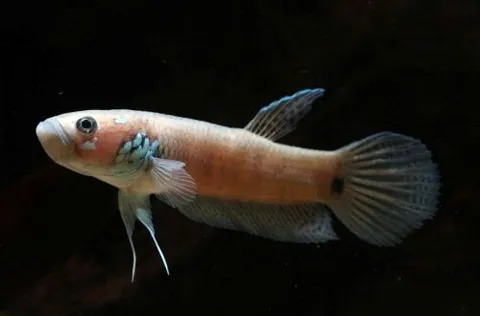
Betta ocellata
Betta ocellata, also known as the Ocellated Betta or Ocellata Betta, belongs to the family Osphronemidae. This fish has not gained widespread popularity among amateur aquarists because, despite its ease of keeping and…
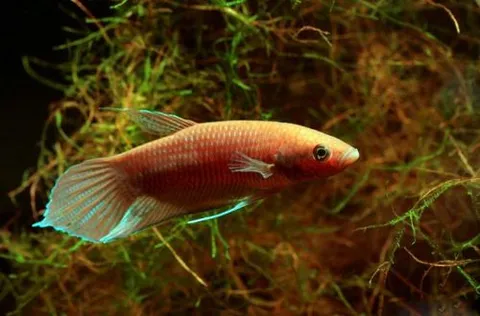
Betta akarensis
The scientific name Betta akarensis belongs to the family Osphronemidae, and this species is also known as the Akarensis Betta or Akar Fighting Fish. Its name is associated with its discovery location — the Akar River.…
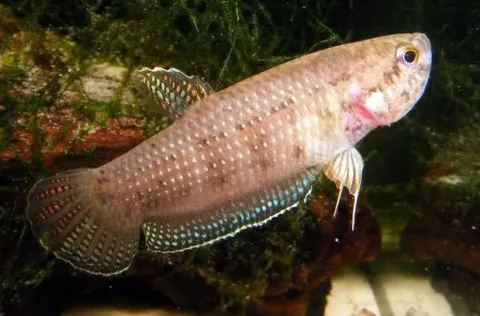
Betta edithae
The scientific name Betta edithae, or Betta Edith, or Edith's Fighting Fish, indicates its belonging to the Osphronemidae family. This fish was named in honor of the researcher Edith Korthaus, a naturalist who…
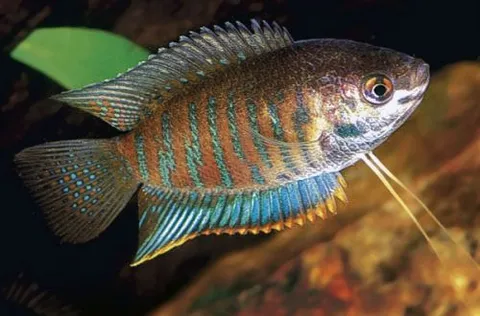
Trichogaster fasciata
Trichogaster fasciata, also known as the Banded Gourami or Striped Gourami, belongs to the family Osphronemidae. This fish possesses a range of qualities that make it an excellent choice for beginner aquarists: it is…