Temperature23 – 27 °C
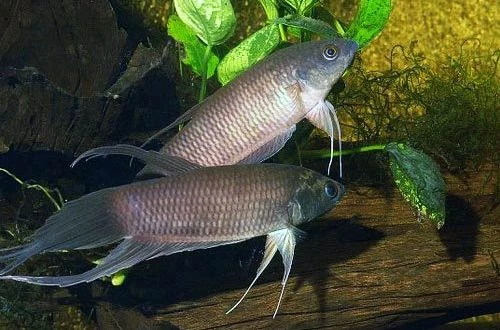
Betta renata, or Renata's Betta, belongs to the family Osphronemidae and received its scientific name. It is not the most vibrant representative of fighting fish, perhaps which is why it doesn't often attract the attention of aquarists. However, this fish exhibits a peaceful disposition and coexists well with other species that thrive in similar conditions.
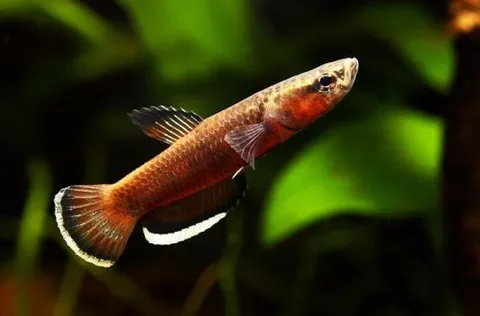
Adults grow up to 8 cm in length. These fish have a robust, elongated body. Their primary coloration consists of grey tones with small dark pigment spots, while the belly is usually light. The edge of the mouth is framed by a dark line. Males differ from females by their larger size and more developed, lush fins.
The natural habitat of this species is found in Southeast Asia, in the central and southern parts of Sumatra Island, specifically in the Indonesian provinces of Jambi and South Sumatra. Betta renata inhabits peat swamps, as well as associated streams and rivers located deep within the humid tropical rainforest. Sunlight barely penetrates the dense tree canopy, resulting in an almost complete absence of aquatic vegetation. Only along the banks can one find thickets of mosses and ferns. The bottom of these water bodies is entirely covered with decomposing organic materials: fallen leaves, tree branches, and various snags. The decomposition processes of plant remains lead to the release of humic acids and other tannins into the water, giving it a rich brown hue.
Although this species is classified as a fighting fish, in this case, it is merely a classification. Renata's Betta does not show aggression and is distinguished by its peaceful nature towards other aquarium inhabitants. Intraspecific relationships among males are built on principles of territorial dominance. Rivalry for hierarchy within the group is sometimes accompanied by displays of strength, but rarely leads to actual skirmishes.
The recommended aquarium volume for a pair or small group of these fish starts from 80 liters. Since Betta renata originates from tropical swamps, it would be very appropriate to recreate features of its natural environment in the aquascape. This means subdued lighting, plenty of driftwood on a dark substrate, possibly the addition of a few shade-loving plants, and a layer of fallen leaves from certain trees. The leaves will not only help form a water composition similar to their natural habitat but also become a basis for the development of colonies of beneficial microorganisms, such as paramecia, which can serve as a valuable additional food source for fry. Successful long-term keeping of Betta renata directly depends on the stability of water parameters within acceptable temperature and hydrochemical ranges. These fish require warm, acidic, and soft water, and tolerate excessive accumulation of organic waste, such as food remnants and excrement, poorly. The necessary stability is achieved through the uninterrupted operation of installed equipment and regular aquarium maintenance procedures. Among these, the most important is a weekly 15–20% water change with fresh water. The newly added water must match the pH and dGH values.
In their natural environment, these fish feed on zooplankton, as well as small aquatic insects, their larvae, and worms. Fish acclimated for sale generally adapt easily to a varied diet. Common aquarium foods, available in dry, frozen, or live forms, can form the basis of their daily diet. Many manufacturers produce special foods specifically designed for Bettas.
These fish have developed a unique adaptation to preserve their offspring in conditions of high competition. They do not lay eggs on the bottom or among plants, but instead brood them in their mouths, with the male taking on the responsibility for the eggs. During spawning, which is usually accompanied by a tight embrace where the fish wrap around each other, the eggs initially enter the mouths of both parents. However, after spawning, the female transfers them to her partner. The male then retreats to a secluded corner of the aquarium, away from other fish, while the female guards him from potential threats. The incubation period lasts from 17 to 20 days, after which fully formed fry emerge, capable of immediately consuming microscopic food, such as Artemia nauplii. It should be noted, however, that young males sometimes swallow eggs or release them prematurely if they are startled or under severe stress. Overall, breeding this species is quite straightforward, but the only difficulty lies in the survival of the fry, who require not only suitable food but also a warm, humid air layer above the water surface for the normal development of their labyrinth organ.
Most health problems in fish often arise from unsuitable keeping conditions. Maintaining a stable and comfortable habitat is a key factor for successful keeping. If symptoms of illness appear, the first step is to check the water quality. If deviations are found, it is important to take immediate measures to eliminate them. If the symptoms do not disappear or worsen, medicinal treatment may be required.
When choosing Betta renata, it should be considered that the species is rarely widely available and is often supplied as wild-caught. Inspect the fish for intact fins and the absence of whitish coatings or sores on the body, which may indicate bacterial infections developing due to transport stress. A healthy specimen should show curiosity, actively react to movement near the glass, and not exhibit signs of emaciation or a sunken belly. Avoid purchasing fish that constantly stay at the water surface, breathe heavily, or display lethargic behavior, as this may indicate impaired labyrinth organ function or intoxication from waste products in overcrowded retail tanks.
The essentials: size, tank volume, water parameters and care
An adult reaches 8 cm in length. Plan the tank around the maximum size: the fish quickly outgrows a cramped setup.
The recommended volume is 80 L. A smaller tank speeds up nitrate build-up and raises stress levels.
Temperature 23–27 °C, pH 4–6, hardness 0–5 dGH. Stability matters more than exact values: sudden swings are harder on the fish than a small deviation from the ideal.
Around 3 years when kept properly. Lifespan depends directly on tank volume, water quality and a varied diet.
Temperament: peaceful (regular). Keep this in mind when choosing tank mates.
Recommended setup: mixed (solitary / pair / group). Ignoring this is a common cause of stress and disease.
Diet type: any (universal). Feed small portions that are finished within a couple of minutes — overfeeding does more harm than underfeeding.
The scientific name of the species is Betta renata, family Osphronemidae.
The water suits 171 of 208 plants in the catalogue — the easiest ones are shown first.
African Onion PlantAmazon FrogbitAmazon SwordAnacharisAnubiasArrowhead CryptDwarf CloverDwarf CloverDwarf HygrophilaDwarf SagittariaGuppy GrassHornwortJava FernJava MossMoneywortMud SwordNair's LagenandraNarrow Leaf AnacharisNarrow-leaf CloverStringy MossSüsswassertangTaiwan MossTemple PlantUssuri Watermilfoil
Matched by family, categories and overlapping keeping conditions
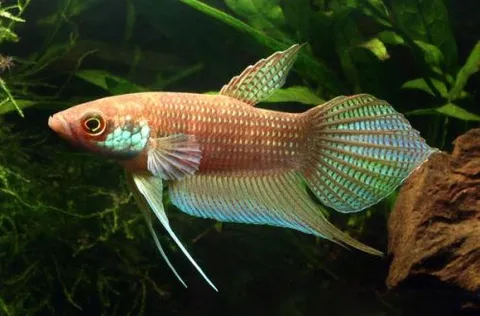
Betta raja
The Masked Betta, also known as Betta raja, belongs to the family Osphronemidae. Although this species is part of the fighting fish group, it is characterized by a peaceful and calm disposition, showing no aggression.…
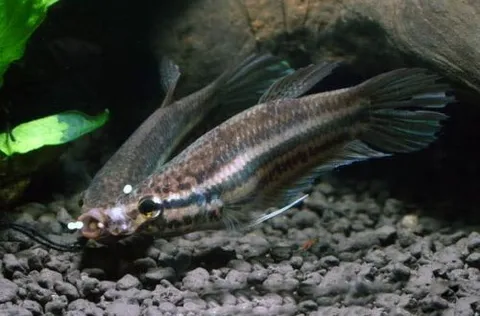
Betta prima
Betta prima, also known as Betta prima, is a member of the family Osphronemidae. This peaceful and calm fish coexists well with other similarly sized species. Its care and breeding do not present any particular…
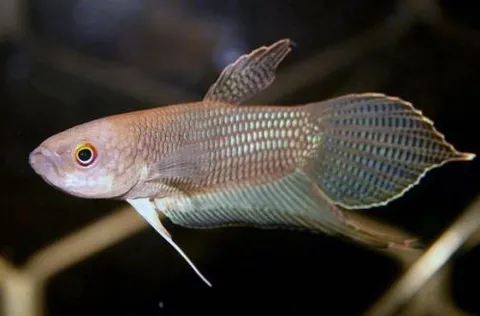
Betta ibanorum
The scientific name Betta ibanorum was given to this fish from the family Osphronemidae in honor of the inhabitants of northwestern Borneo, known as the Ibans. Known as the Iban Betta, it is characterized by its…
Betta albimarginata
Betta albimarginata, or the White-Seam Betta (scientific name Betta albimarginata), belongs to the family Osphronemidae. This miniature fish has a bright and attractive appearance, but these characteristics mainly apply…