Temperature24 – 28 °C
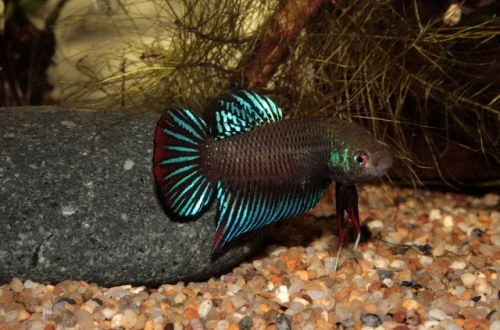
The scientific name Betta imbellis belongs to the family Osphronemidae, indicating its kinship with the Black Betta or Dwarf Betta. However, many colloquial names for the fish include “dwarf,” which is not entirely accurate, as its size is quite comparable to other members of the Betta genus. This fish stands out for its ease of care and breeding. It coexists well with many other aquarium inhabitants, and large aquariums allow for keeping several males, which is quite unusual for fighting fish.
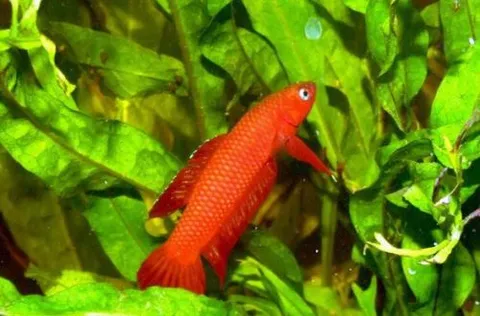
Adults of this fish reach a length of 5–6 cm. Their coloration is predominantly brown, adorned with bright blue speckles across the body. The fin rays also display a blue tint against a red background. Males are distinguished from females by their richer color and more developed fins and tail. It should be noted that color variations may differ slightly depending on geographical origin, as populations have been isolated for quite some time, although they can interbreed when kept together. This circumstance prevents them from being classified as separate species.
Their natural habitat includes the southern regions of Thailand, part of peninsular Malaysia, and the northern territories of Sumatra. Here, the fish inhabits swampy areas of tropical forests. These biotopes are characterized by significant fluctuations in water levels, depending on the alternation of dry and wet seasons. The water here is still or slow-moving, often shaded by vegetation and poor in oxygen. A few populations are also known from brackish water in coastal areas.
Although these fish are fighting fish, dwarf betta males exhibit significantly less aggression compared to other members of the genus, and their skirmishes rarely result in serious injuries. Nevertheless, for aquarium keeping, it is advisable to limit to one male. Females of the same species or other peaceful species of similar size and temperament can accompany it. Avoid keeping them with larger and more active fish species that could frighten such small inhabitants.
For a single pair, an aquarium of at least 40 liters is sufficient. For decoration, preference is given to tall, shade-loving plants that reach the water surface. Large snags and various shelters can be placed on the sandy bottom: for example, decorative objects such as sunken ships or castles, as well as ceramic pots overturned on their side. In their natural environment, the bottom of water bodies is often covered with plant debris (leaves, branches, fruits, grass, etc.). In an aquarium, oak leaves can be used to simulate these conditions. They are first dried, and then soaked until they begin to sink; otherwise, they will simply float. Leaves not only complement the decor but also create special water conditions, as they enrich the water with tannins during decomposition, giving it a light brown tint. The hydrochemical parameters of the water should be slightly acidic with low hardness. It is recommended to install a filter that uses alder cones as a filter material, which will help further acidify the water. It is important to ensure that there is a lid over the aquarium, as a moist and warm layer of air forms beneath it at the surface, which is critically important for the respiration of labyrinth fish. Aquarium care includes weekly partial water changes (10–15% of the volume), regular cleaning of the substrate from organic contaminants (excrement, uneaten food remnants), and periodic replacement of leaves, if used.
High-quality dry foods are suitable for these fish, which should ideally be supplemented with live food such as Artemia, Daphnia, or bloodworms. Alternatively, specialized formulations for fighting fish, which include the Dwarf Betta, can be used. Such foods already contain all the necessary vitamins and trace elements that promote growth and maintain vibrant coloration. When choosing, preference should be given to products from well-known brands.
At the beginning of the breeding season, the male builds a bubble nest, using broad leaves, dense floating vegetation, or natural shelters on the bottom, such as caves that may be part of the aquarium decor. During this work, the male behaves quite aggressively towards the female, not allowing her to approach the nest until it is fully completed. Before spawning, the female's color dulls, and dark horizontal stripes become visible on her sides. Spawning itself is accompanied by special “embraces,” where the fish seem to entwine around each other. At the moment of peak tension, milt and several eggs are released, which are then carefully placed into the nest. This process is repeated several times until about 150 eggs are laid. After this, the female departs, and the male remains to guard and care for the future offspring. Fry appear after 24–48 hours and remain in the nest for another 3–4 days. During this time, the male diligently returns any fry that accidentally fall out or swim away back to the nest. As soon as the fry begin to swim freely, the male's interest in them wanes. Adults are not prone to cannibalism and generally do not eat their offspring. However, this does not apply to other aquarium inhabitants, so it is recommended to move the fry to a separate tank with identical water conditions. They should be fed specialized foods for aquarium fish fry.
One of the main causes of most fish diseases is inadequate living conditions and a low-quality diet. If the first signs of illness are noticed, it is first necessary to check the water parameters to rule out elevated levels of dangerous compounds (ammonia, nitrites, nitrates, and others). If deviations are found, the indicators should be stabilized to normal, and only then should targeted treatment begin.
When choosing a black betta, pay attention to the fish's activity: healthy individuals should show curiosity and swim in the water column, rather than constantly hiding in corners. It is important to inspect the body for the absence of white film, ulcers, fin damage, and signs of frayed scales. Also, ensure that the fish in the store do not appear emaciated and that their breathing is even and calm. Avoid purchasing individuals that appear apathetic or have unnaturally clamped fins, as this may indicate stress or infectious diseases. When purchasing a pair or group, it is advisable to observe their interaction to rule out the presence of aggressive individuals with serious injuries.
The essentials: size, tank volume, water parameters and care
An adult reaches 6 cm in length. Plan the tank around the maximum size: the fish quickly outgrows a cramped setup.
The recommended volume is 40 L. A smaller tank speeds up nitrate build-up and raises stress levels.
Temperature 24–28 °C, pH 5.5–7.5, hardness 1–15 dGH. Stability matters more than exact values: sudden swings are harder on the fish than a small deviation from the ideal.
Around 3 years when kept properly. Lifespan depends directly on tank volume, water quality and a varied diet.
Temperament: semi-peaceful (including aggression during spawning / intraspecific conflicts). Keep this in mind when choosing tank mates.
Recommended setup: pair (male/female). Ignoring this is a common cause of stress and disease.
Diet type: any (universal). Feed small portions that are finished within a couple of minutes — overfeeding does more harm than underfeeding.
The scientific name of the species is Betta imbellis, family Osphronemidae.
The water suits 197 of 208 plants in the catalogue — the easiest ones are shown first.
Afzelius's AnubiasAnacharisAnubiasBrazilian PennywortDwarf CloverDwarf CloverDwarf HygrophilaDwarf SagittariaDwarf ValGuppy GrassHornwortJava FernJava MossMoneywortMud SwordNair's LagenandraNarrow Leaf AnacharisNarrow-leaf CloverStringy MossSüsswassertangTaiwan MossTape GrassTemple PlantUssuri Watermilfoil
Matched by family, categories and overlapping keeping conditions
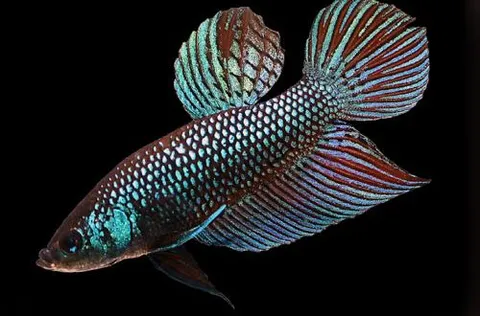
Betta smaragdina
Betta smaragdina, also known as the Emerald Betta or Green Betta, is a member of the family Osphronemidae. This fish is attractive due to its beauty and relative ease of care, provided some basic requirements are met.…
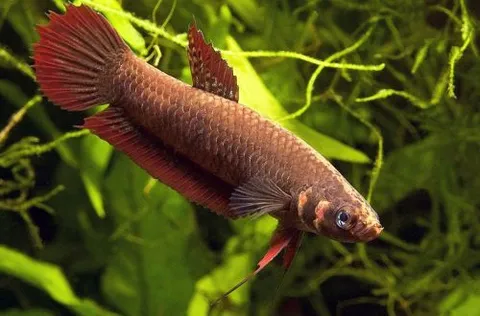
Betta coccina
Betta coccina, known as the Wine Red Betta, belongs to the family Osphronemidae. This beautiful fighting fish is distinguished by its rich crimson hue. If the necessary keeping conditions are met, it is quite easy to…
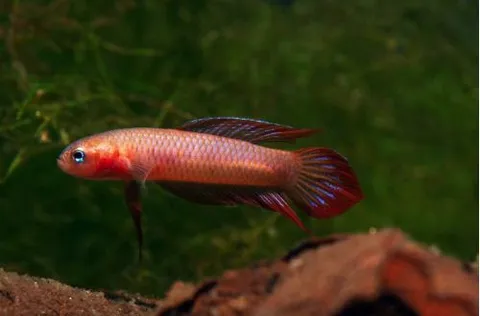
Betta burdigala
Betta burdigala, or Bordeaux Betta, belongs to the family Osphronemidae. A distinctive feature of this fish is its beautiful red coloration, which reminded French researchers of the noble color of the famous Bordeaux…
Betta uberis
Betta uberis, or Betta Ubera, is classified in the family Osphronemidae. This species of Betta fish is not recommended for beginner aquarists, as it requires maintaining very strict hydrochemical water parameters.