Temperature20 – 24 °C
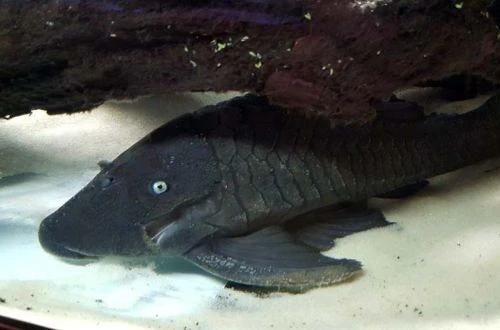
Panaque suttonorum, also known as the Blue-Eyed Panaque or Sutton's Panaque, belongs to the Loricariidae family, which includes armored catfish. In Venezuela and other South American countries, the word "panaque" is traditionally used as a general name for the entire genus of these fish. The name "Suttoni" is a Russian transliteration of the surname of Frederica Sutton, a doctor of science and ichthyologist from Venezuela, whose contribution to the study of the region's ichthyofauna was very significant.
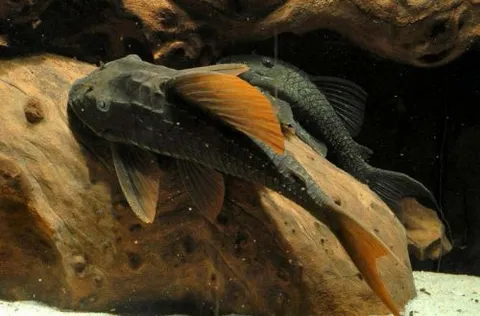
Adults of this species can grow up to 28 cm in length. The catfish's body is robust, protected by a dense "armor" of bony plates. The coloration is predominantly dark gray. A striking and characteristic feature is its blue eyes. On its large head, there is a semblance of long whiskers, which on the sides appear as tufts of stiff bristles. Similar bristles are also located along the edge of the pectoral fins. The mouth, resembling a suction cup and studded with rows of short teeth, is located on the underside of the head and is adapted for consuming wood fibers and algae.
This catfish is an inhabitant of South American waters. Its natural range extends through the tributaries of Lake Maracaibo lagoon, located in northern Venezuela. It prefers to stay in the bottom layers, where it finds shelter among numerous snags and submerged fallen trees.
The Blue-Eyed Panaque is characterized by a nocturnal lifestyle, so its peak activity occurs during twilight hours. During the day, it usually hides. In spacious aquariums with a sufficient number of shelters (e.g., snags), this species behaves as relatively peaceful. However, if space is insufficient, competition for territory may arise, sometimes escalating into skirmishes. Good compatibility is observed with fish that inhabit the water column or near its surface.
For the comfortable keeping of one adult Blue-Eyed Panaque, an aquarium of at least 250 liters is required. Untreated natural snags are an important element of the decor, as this catfish feeds on wood fibers and algae growing on wood. Other decorative elements of the underwater landscape are not as significant. In natural habitats, the aquatic environment is stable, so for the well-being of the catfish, rather narrow ranges of temperature, pH, and dGH are necessary. It is sensitive to water pollution by organic waste. In addition to a continuously operating filtration system, regular aquarium cleaning is extremely important.
As mentioned earlier, the diet of Sutton's Panaque mainly consists of algae. In addition, the catfish readily consumes specialized sinking dry flakes, algae-based tablets, and pieces of fresh vegetables such as cucumber, peas, green beans, and potatoes.
Breeding is not documented. Panaque are cave spawners: the eggs are laid in a narrow shelter and the male guards and ventilates the clutch. This species is collected from the wild in limited numbers, large specimens need a great deal of space, and no reliable way to sex the fish or trigger spawning has been described.
This species is susceptible to diseases typical for armored catfish, which arise from improper keeping conditions. The most common are bacterial infections of the skin and fins, as well as parasitic infestations under stress or poor water quality. Fish are extremely sensitive to low oxygen levels and the accumulation of organic waste, which can lead to a general weakening of the immune system. Prevention involves maintaining high filtration intensity, regular water changes, and ensuring stable current.
When purchasing, attention should be paid to the fish's activity during twilight hours and the condition of its skin. Healthy individuals should have clean coloration without whitish film, ulcers, or fin damage. It is important to visually assess the fish's plumpness: a sunken abdomen is a sign of emaciation or internal parasites. At the store, it is recommended to clarify the keeping conditions and diet, as adaptation to new foods after capture from the natural environment can be difficult.
The essentials: size, tank volume, water parameters and care
An adult reaches 28 cm in length. Plan the tank around the maximum size: the fish quickly outgrows a cramped setup.
The recommended volume is 250 L. A smaller tank speeds up nitrate build-up and raises stress levels.
Temperature 20–24 °C, pH 6.2–7.5, hardness 2–18 dGH. Stability matters more than exact values: sudden swings are harder on the fish than a small deviation from the ideal.
Around 12 years when kept properly. Lifespan depends directly on tank volume, water quality and a varied diet.
Temperament: semi-peaceful (aggression when space is limited). Keep this in mind when choosing tank mates.
Recommended setup: solitary. Ignoring this is a common cause of stress and disease.
Diet type: plant-based (algae, vegetables). Feed small portions that are finished within a couple of minutes — overfeeding does more harm than underfeeding.
The scientific name of the species is Panaque suttonorum, family Armored Catfishes (Loricariidae). It also appears in the literature as: Panaque suttoni.
The water suits 196 of 208 plants in the catalogue — the easiest ones are shown first.
Afzelius's AnubiasAnacharisAnubiasBrazilian PennywortDwarf CloverDwarf CloverDwarf HygrophilaDwarf SagittariaDwarf ValGuppy GrassHornwortJava FernJava MossMoneywortMud SwordNarrow Leaf AnacharisNarrow-leaf CloverStringy MossSüsswassertangTaiwan MossTape GrassTemple PlantUssuri WatermilfoilWater Wisteria
Matched by family, categories and overlapping keeping conditions
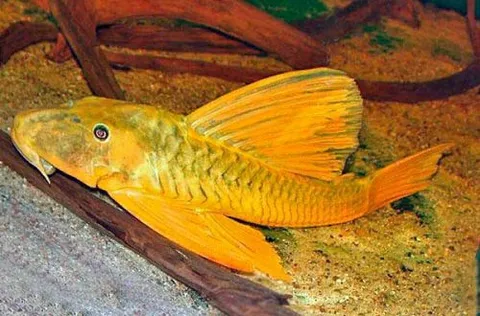
Hypostomus luteus
The Golden Pleco, scientifically known as Hypostomus luteus, belongs to the family Loricariidae, also called Armored Catfishes. The natural habitat of this catfish is the waters of the South American continent. It can…
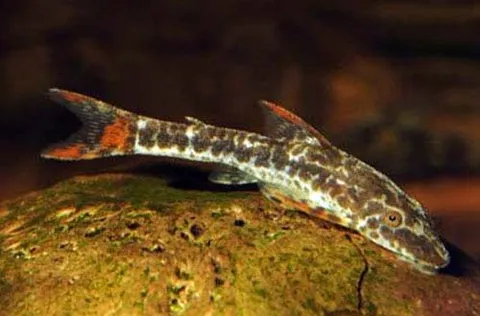
Parotocinclus maculicauda
Parotocinclus maculicauda, known as the Red-finned Parotocinclus, belongs to the family Loricariidae, which includes the Armored Catfishes. This fish is a native of South America, found in the coastal river systems of…
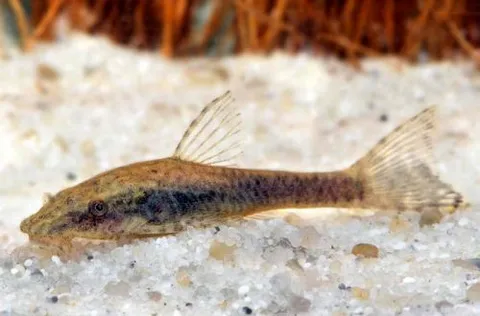
Otothyropsis piribebuy
Otothyropsis piribebuy, known as Otocinclus negros (formerly Otocinclus sp. "Negros"), belongs to the family Loricariidae, which includes armored catfishes. The native habitat of this small catfish is the waters of…
Hypostomus cochliodon
Hypostomus cochliodon, known as the Cochliodon Pleco, is a member of the family Loricariidae, or armored catfish. This catfish originates from the waters of South America, specifically found in the large river basins of…