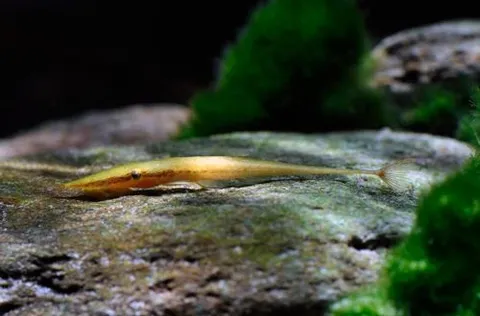
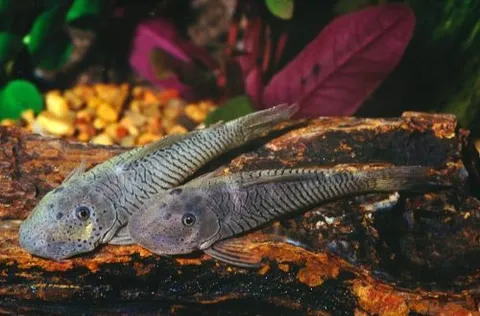
Armored Catfishes (Loricariidae)

Red-finned Parotocinclus

Parotocinclus maculicauda

Parotocinclus maculicauda, known as the Red-finned Parotocinclus, belongs to the family Loricariidae, which includes the Armored Catfishes. This fish is a native of South America, found in the coastal river systems of Brazil, from Santa Catarina to Rio de Janeiro.

Tank
from 50 L (13 gal)
Temperature
20 – 24 °C (68 – 75 °F)
Size in aquarium
6 cm (2.4 in)
Acidity
pH 6.5–7.5
Natural rangeRange on the map
  • Santa Catarina area
  • Rio de Janeiro area
  • Brazil

Tank conditions

Plan the tank stocking
Temperature
20 – 24 °C (68 – 75 °F)
Water pH
Neutral (6.5) – Neutral (7.5)
Water dH
Very soft (2) – Very hard (20)
Water salinity
no salt (freshwater)
Size in aquarium
6 cm (2.4 in)
Lifespan
4 years
Temperament
Peaceful (regular)
Toward small fish
not a predator
Required aquarium volume
from 50 L (13 gal)
Lighting
moderate (regular)
Substrate
any (no restrictions)
Water flow
weak
Swimming level
near the bottom
Feeding
Plant-based algae, vegetables
Keeping
Both solitary and in group flexible
  • Lifespan. A lifespan to expect under good care, not a measured value: it depends heavily on tank volume, water quality and diet — and for selectively bred forms, on their origin as well.
  • Toward small fish. Based on the Predators category in the catalog or the temperament in the species parameters. “A risk to small fish” means the species is not a predator by habit, yet will swallow any fish that fits in its mouth.
  • Required aquarium volume. This is a husbandry recommendation, not a measured value: the volume depends on the keeping mode (both solitary and in group (flexible)), footprint, decor and tank mates.

Care and keeping

Description

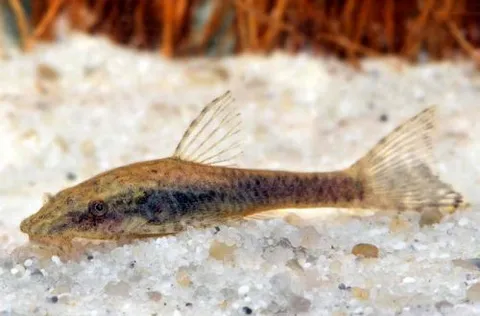
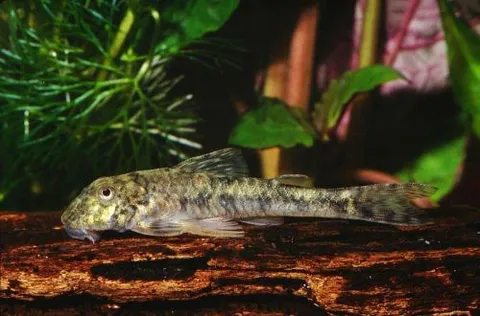
Adults of this fish species do not exceed 6 cm in length. A distinctive feature is its elongated body, topped by a large, conical head. The life of a benthic dweller, so miniature, is full of dangers, so nature has endowed the catfish with eyes positioned high on the head and directed upwards for timely detection of predators. Also, for protection, the first rays of all fins, including the caudal fin, are noticeably thickened, forming a kind of spines. The coloration of P. maculicauda is mottled: rounded brown speckles are visible on a light background. The fins, like the tail, often have a reddish or brick hue. Interestingly, the parotocinclus resembles its close relatives – the otocinclus – but differs from them by the presence of a tiny anal fin, which is essentially the only clear distinction between these two genera.
Habitat

The species is endemic to the southeastern part of Brazil, inhabiting coastal river systems between the states of Santa Catarina and Rio de Janeiro. The fish populate shallow areas of rivers and streams with slow or fast currents, where they primarily stay near the bottom. In their natural habitat, they prefer areas with rocky or sandy substrate, often found among submerged snags and dense aquatic vegetation, where they feed on periphyton.

Behavior and Compatibility

The Red-finned Parotocinclus is a peaceful species, exhibiting friendliness and preferring the company of its own kind and other non-aggressive fish of comparable size.

Care and Maintenance

For a group of 4–5 individuals, an aquarium of 50–60 liters will be a suitable option. The choice of decor is not critical: the catfish feels perfectly at home both among dense thickets of aquatic vegetation and surrounded by rock formations or snags. However, it should be noted that the unique dietary preferences of the Red-finned Parotocinclus can lead to damage to some plant species. An important condition for successful and long-term keeping is maintaining clean and relatively cool water (20–24°C). At the same time, the range of permissible hydrochemical water parameters is quite wide, which significantly simplifies the water preparation process.

Diet

This fish is omnivorous. Its diet can be based on widely available dry foods such as flakes and pellets. It is recommended to regularly enrich the menu with plant-based foods, adding, for example, thin slices of cucumbers, zucchini, or lettuce leaves. Protein components, including fresh or frozen bloodworms, artemia, and daphnia, will be an excellent addition. It is worth noting that these catfishes can actively consume algae, as well as soft parts of aquarium plants.

Breeding and Reproduction

A temperature of about 24°C in clean water with a slightly acidic or almost neutral pH is optimal for successful spawning. Typically, the female lays 10–20 eggs, often preferring to deposit the clutch on plant leaves. It should be noted that the fry develop quite slowly.

Diseases

The Red-finned Parotocinclus, like other members of the armored catfish family, is sensitive to abrupt changes in water hydrochemical parameters and the accumulation of organic waste. The main factors provoking diseases are high concentrations of nitrogenous compounds (ammonia, nitrites, nitrates) and insufficient aeration. — Bacterial infections: often develop when the skin or fins are damaged in polluted water conditions, manifesting as erosions, redness, or fin rot. — Parasitic infestations: fish can be susceptible to protozoan or skin parasites when stressed by unsuitable keeping conditions. Disease prevention involves maintaining a stable biological balance in the aquarium, regular water changes, and good filtration. It is extremely important to avoid using aggressive chemical treatments, as this species is highly sensitive to medications containing copper or malachite green in high concentrations.

How to choose

When selecting individuals, attention should be paid to the activity of the fish and the integrity of their skin. Healthy parotocinclus should show curiosity, actively explore surfaces in search of food, and have no visible damage, ulcers, or white film on their bodies. Avoid purchasing fish with severely sunken bellies, as this may indicate prolonged starvation or emaciation. In the store, the fish should appear plump, and their breathing should be even, without signs of labored breathing.

Compatibility

There are no pair reviews for this species yet — check tankmates in the matcher.

All tankmates

Plants and this fish

Matching water does not mean the plant will stay intact.

Frequently asked questions

The essentials: size, tank volume, water parameters and care

How big does Red-finned Parotocinclus get?

An adult reaches 6 cm in length. Plan the tank around the maximum size: the fish quickly outgrows a cramped setup.

What size aquarium does Red-finned Parotocinclus need?

The recommended volume is 50 L. A smaller tank speeds up nitrate build-up and raises stress levels.

What water parameters does Red-finned Parotocinclus need?

Temperature 20–24 °C, pH 6.5–7.5, hardness 2–20 dGH. Stability matters more than exact values: sudden swings are harder on the fish than a small deviation from the ideal.

How long does Red-finned Parotocinclus live?

Around 4 years when kept properly. Lifespan depends directly on tank volume, water quality and a varied diet.

Is Red-finned Parotocinclus aggressive?

Temperament: peaceful (regular). Keep this in mind when choosing tank mates.

How many Red-finned Parotocinclus should be kept together?

Recommended setup: both solitary and in group (flexible). Ignoring this is a common cause of stress and disease.

What does Red-finned Parotocinclus eat?

Diet type: plant-based (algae, vegetables). Feed small portions that are finished within a couple of minutes — overfeeding does more harm than underfeeding.

What is the scientific name of Red-finned Parotocinclus?

The scientific name of the species is Parotocinclus maculicauda, family Armored Catfishes (Loricariidae). It also appears in the literature as: Otocinclus maculicauda, Parotocinclus steindachneri.

Similar fishes

Matched by family, categories and overlapping keeping conditions

Otocinclus negros

Otocinclus negros

Otothyropsis piribebuy

Armored Catfishes (Loricariidae)

Otothyropsis piribebuy, known as Otocinclus negros (formerly Otocinclus sp. "Negros"), belongs to the family Loricariidae, which includes armored catfishes. The native habitat of this small catfish is the waters of…

Whiptail Catfish

Whiptail Catfish

Acestridium dichromum

Armored Catfishes (Loricariidae)

The Whiptail Catfish, or Acestridium dichromum, belongs to the family Loricariidae, which includes armored catfish. This species first became available to aquarists in the late 1990s, making it relatively new to the…

"Striped Bulldog Pleco"

"Striped Bulldog Pleco"

Chaetostoma formosae

Armored Catfishes (Loricariidae)

The "Striped Bulldog Pleco" catfish, scientifically known as Chaetostoma formosae, is a member of the armored catfish family (Loricariidae). Keeping this fish presents certain challenges, as it has strict requirements…

Other scientific names and conservation status

Other scientific names
Otocinclus maculicauda, Parotocinclus steindachneri
Categories
Catfish, Cold-water
Conservation status
Least concernLC