Temperature20 – 26 °C
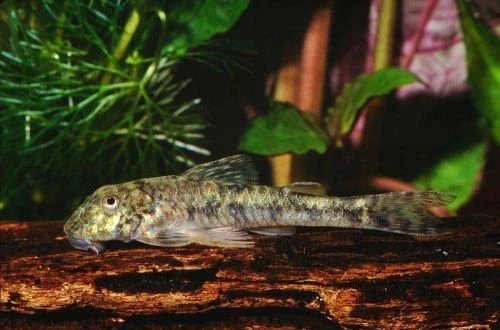
Parotocinclus jumbo, or the jumbo dwarf suckermouth catfish, belongs to the armored catfish family (Loricariidae). It is noteworthy that "jumbo" translates to "giant," which at first glance may seem unexpected, as the length of this fish does not exceed 6 cm. However, when compared to other members of its genus, this species can indeed be considered quite large.
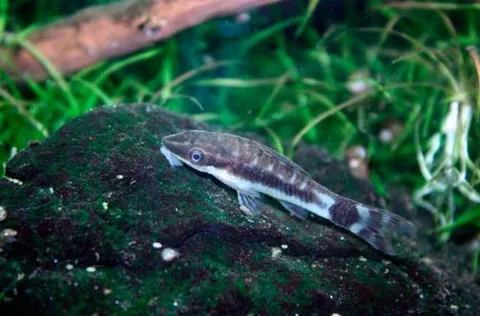
Adults reach a maximum length of 6 cm. Outwardly, these fish resemble Otocinclus. Their key distinguishing feature is the presence of an adipose fin. They have a large head, and their eyes are positioned closer to the top of the head. The coloration is typically gray, with noticeable greenish and golden hues.
The homeland of this catfish is the waters of South America. It inhabits river systems located on the eastern tip of the continent, in the Brazilian states of Paraíba, Pernambuco, and Ceará. It prefers shallow areas of small rivers and streams characterized by weak currents and a bottom composed of sand and stones.
These fish feel more comfortable in a group of their own kind. They coexist perfectly with many popular aquarium fish. It is important to avoid keeping them with large, aggressive, or territorial species.
For a group of 4–5 fish, the minimum aquarium volume is 40 liters. Parotocinclus jumbo spends most of its time on the bottom, and if danger arises, it can partially burrow into the substrate. Therefore, soft sandy substrate should be used in the aquarium setup. Other decor elements can be chosen at will; however, natural driftwood and dense plant thickets are welcome. This species is considered unpretentious and hardy, capable of adapting to a fairly wide range of hydrochemical parameters. Its care is not difficult, provided regular aquarium maintenance and weekly partial water changes, which helps prevent the accumulation of organic waste.
The diet should be based on foods with a high content of vegetable components, as well as finely chopped fresh vegetables such as zucchini, cucumber, lettuce, or spinach. It is important that these products sink or can be secured in the bottom zone.
Breeding rarely succeeds. Unlike the larger plecos, Otocinclus and Parotocinclus build no nest: the female glues her eggs one to three at a time onto plant leaves and the glass, and the whole clutch comes to 30–50 eggs. The parents give no care and may eat the eggs, so the breeders are removed after spawning. The eggs are translucent and about 1.5 mm across; at 25 °C they hatch in 48–72 hours.
No diseases that affect only this species have been described. Under suitable conditions — clean water, a balanced diet and calm tank mates — health problems usually do not arise. The most common cause of illness is a decline in conditions: it weakens the immune system, and the fish becomes vulnerable to infections that are always present in an aquarium. At the first signs of trouble — lethargy, wasting, refusal of food or clamped fins — check the basic water parameters and the levels of ammonia, nitrite and nitrate first. Restoring acceptable conditions often lets the fish recover on its own. Catfish of this group have naked, scaleless skin and are therefore more sensitive to medication than most aquarium fish. Products based on malachite green and copper should be used with care and at about half the dose stated on the packaging. What needs attention here is not disease but starvation. These fish are wild-caught, and the journey from the collecting site takes several weeks during which they get almost no food. A large share of a shipment dies within the first month after purchase, and the cause is usually hunger rather than infection. When choosing fish, avoid specimens with a sunken belly, and once home provide biofilm growth straight away along with vegetable tablets and blanched vegetables.
When purchasing, pay attention to the fish's activity; it should show interest in foraging in the bottom layer. Healthy individuals have clean skin without white plaque, ulcers, or fin damage. Avoid acquiring fish with severely sunken bellies, as this may indicate emaciation or internal parasitic infections, which are common in newly imported catfish.
The essentials: size, tank volume, water parameters and care
An adult reaches 6 cm in length. Plan the tank around the maximum size: the fish quickly outgrows a cramped setup.
The recommended volume is 40 L. A smaller tank speeds up nitrate build-up and raises stress levels.
Temperature 20–26 °C, pH 6.4–7.4, hardness 5–15 dGH. Stability matters more than exact values: sudden swings are harder on the fish than a small deviation from the ideal.
Around 5 years when kept properly. Lifespan depends directly on tank volume, water quality and a varied diet.
Temperament: peaceful (regular). Keep this in mind when choosing tank mates.
Recommended setup: small group (3–4 individuals). Ignoring this is a common cause of stress and disease.
Diet type: plant-based (algae, vegetables). Feed small portions that are finished within a couple of minutes — overfeeding does more harm than underfeeding.
The scientific name of the species is Parotocinclus jumbo, family Armored Catfishes (Loricariidae).
The water suits 197 of 208 plants in the catalogue — the easiest ones are shown first.
Afzelius's AnubiasAnacharisAnubiasBrazilian PennywortDwarf CloverDwarf CloverDwarf HygrophilaDwarf SagittariaDwarf ValGuppy GrassHornwortJava FernJava MossMoneywortMud SwordNair's LagenandraNarrow Leaf AnacharisNarrow-leaf CloverStringy MossSüsswassertangTaiwan MossTape GrassTemple PlantUssuri Watermilfoil
Matched by family, categories and overlapping keeping conditions
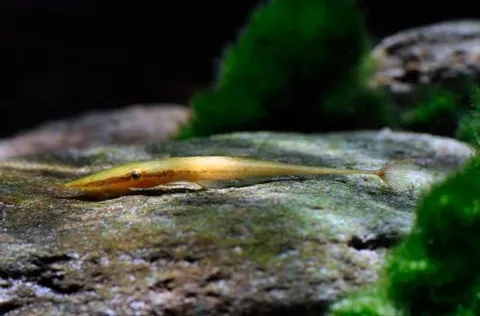
Acestridium dichromum
The Whiptail Catfish, or Acestridium dichromum, belongs to the family Loricariidae, which includes armored catfish. This species first became available to aquarists in the late 1990s, making it relatively new to the…
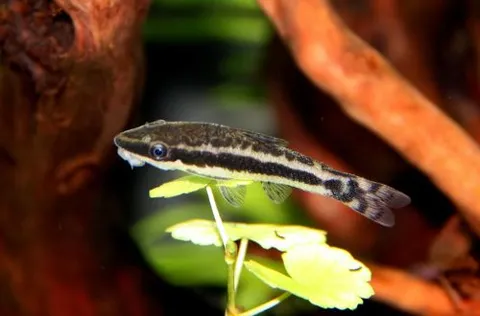
Otocinclus affinis
Otocinclus affinis, known scientifically as Otocinclus affinis, belongs to the Loricariidae family, which includes armored catfish. This fish is peaceful and calm, but its inconspicuous coloration prevents it from…
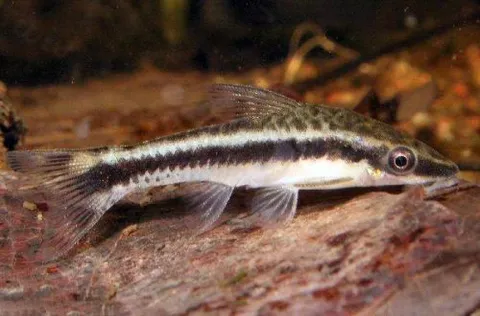
Otocinclus vittatus
Otocinclus vittatus, the scientific name for the dwarf oto, belongs to the armored catfish family (Loricariidae). This species is often used in aquariums to control algae growth. Despite its unassuming coloration, the…
Otocinclus hoppei
Hoppe's Otocinclus, Otocinclus hoppei — its scientific name — is a member of the armored catfish family (Loricariidae). This fish is native to South America, where it inhabits the Madeira and Ucayali river basins, part…